Every Best Picture winner has a story to tell, and I don’t mean a screenplay.
The movie that wins Best Picture each year always has a narrative to go along with it, the kind that film historians will be reciting years from now and the same kind producers are selling to the Academy as we speak.
It’s becoming more preordained each day that “The King’s Speech” will triumph against the field. While I once imagined the story a victory for “The Social Network” to tell, that narrative is dwindling as we approach a moment of history that will be more familiar in terms of the Oscar history we already know.
But each of these stories does deserve to be told, if only for the reason that nearly anything could happen Sunday.
Dark horse nominees like “True Grit,” “The Fighter” and “Black Swan” each have yarns to spin.
For the Coen brothers, if they win, they can be assured that they were the directors to revive the Western. Before people saw “True Grit,” it was seen as the remake of a John Wayne movie, and now it is becoming the film that modernized Western dialogue and on-location cinematography. What better way to tag the film as a true “epic” than an Oscar win?
For “The Fighter,” it’s that the true story of the year can be something down-to-earth and relatable. A Best Picture win for it would say, people like Micky and Dicky are real. We know these people. They’re not Harvard nerds or reckless explorers or royalty. And it would mean a chance to see more great sports movies, maybe even recreate the “Rocky” legacy.
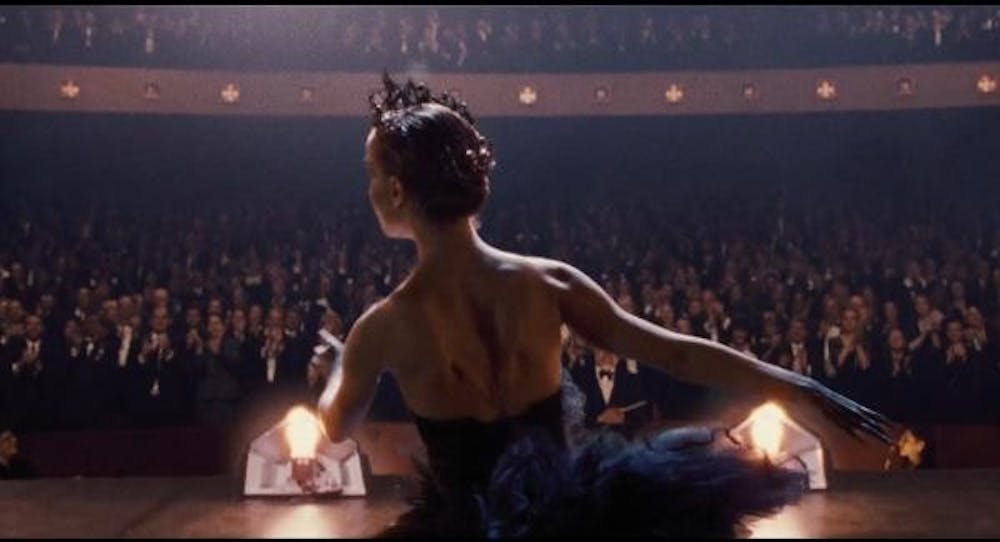
For Darren Aronofsky and “Black Swan,” suddenly we’d all get the hint that a real art film could win the biggest award in Hollywood. Critics said winning an Oscar allowed the Coens to make “A Serious Man.” Aronofsky is one of our finest new directors. Imagine what he could do if given the credit (something much better than an X-Men movie).
Those stories are all possibilities and promising ones at that, but the one that is most likely to stick belongs to the “The King’s Speech.” Every year audiences waste millions of dollars on extravagant action films, mindless comedies and needless sequels, and this year they took a break to see a film where people simply talked, laughed and cried.
It was a film that looked more like a movie from the Golden Age than any in the last decade. It told an inspirational story of how a timid monarch led the masses into the most memorable war of all time and how he did so through personality, hard work and friendship.
That’s the story Hollywood wants to tell in 2010. It’s not a bad one. Audiences will eat it up and in fact have already.
However, these are the Academy values we’re more familiar with. Last year they surprised us by demonstrating how politics, great filmmaking, women directors and low popularity can conquer all, and it became the biggest fluke in Oscar history.
It’s a shame, because I would’ve thought the narrative for “The Social Network” would already be written for the historians. It’s a film that defines how we communicate here and now. It’s a time capsule, sealed and buried for future generations.
And yet, what will those future generations discover when they dig up “The Social Network”? They will see the same brilliantly understated and intelligent film we all did. I hate to think that a movie as good as “The King’s Speech” could be dated years from now, but its historical narrative has been told before.
I can’t rewrite Oscar history, but hopefully this bit of discussion and dissent allows me to add my own chapter.
Oscar history in the making
Get stories like this in your inbox
Subscribe