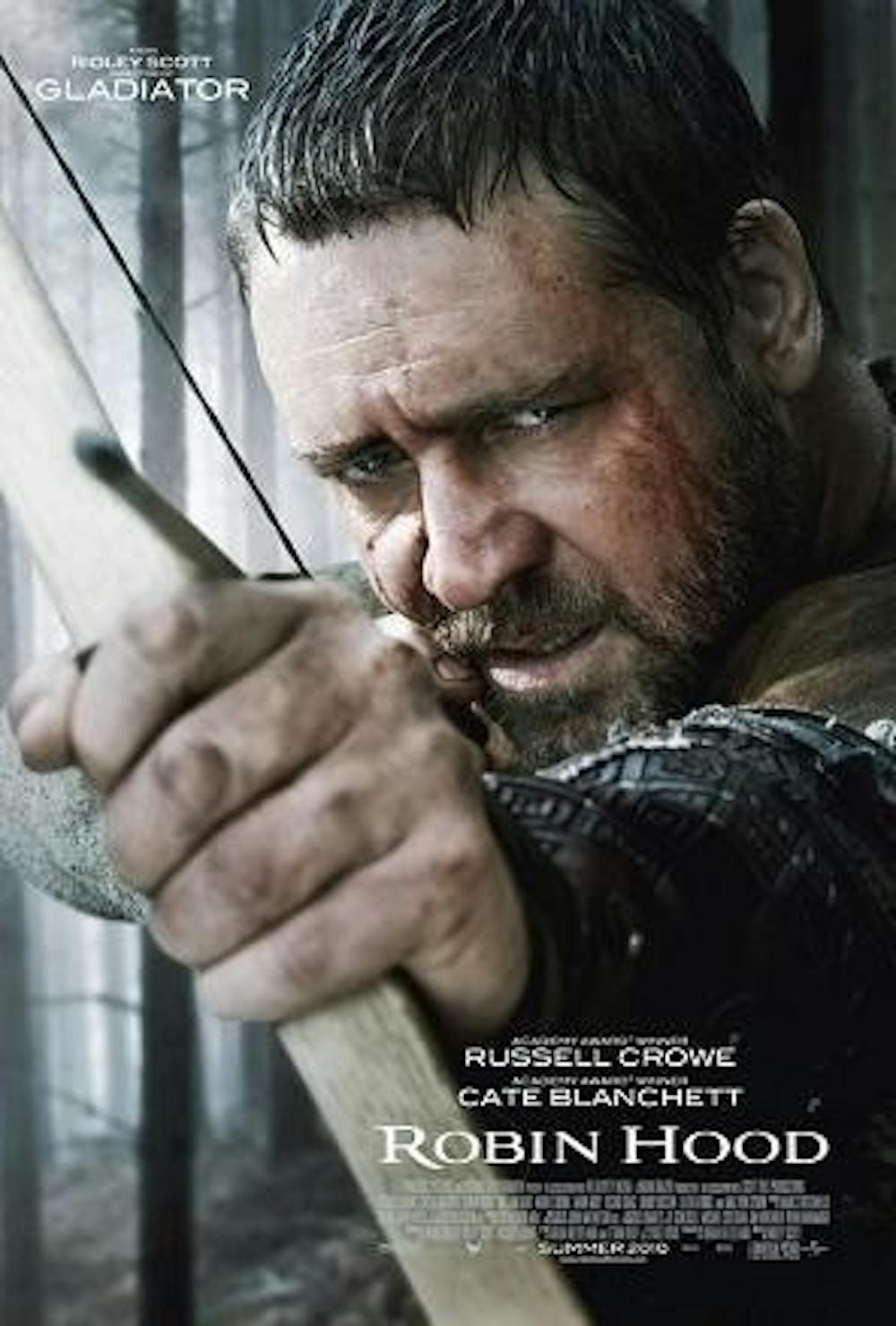
If you’re going to tell me how a story ends, you’d better make me enjoy the ride. Ridley Scott’s “Robin Hood” is the tale of how Robin Hood became an outlaw and explains as much in the opening synopsis.
“Great!” you might say. “Ridley Scott, Russell Crowe and Cate Blanchett are going to tell me how one of the coolest heroes of all time became famous? I want in!”
Two hours later, all you really want is to go home, but the movie plays on. So, what exactly happened?
There are three directions this film could have taken — the route of the historical epic (think “Braveheart”), the cool, rock ‘n’ roll take on history (“A Knight’s Tale”), or the badass kill-’em-all history flick (“Gladiator”). “Robin Hood” instead tries to mash all three together, leaving zero time for character development and the viewer confused and detached.
In this version, Robin Hood is an archer in the English army willing to steal armor from some dead knights he happens upon one day. From there, things kind of just fall into place: Robin meets the new king. The dead knight’s father wants Robin to pretend to be his son (weird) and sleep with his dead son’s wife, Marian (weirder).
Oh, by the way, Robin’s dad wrote the Magna Carta — another element that’s difficult to buy into. All the while, the French are attacking, but don’t worry — Robin shows up with someone’s army to order the English king around and cut people up.
The only relation to the Robin Hood legend this film has is its name; the way familiar characters fade in and out at random makes it seem as if their names are all the film wants.
Visually, from the set design to the photography to the action scenes, “Robin Hood” is fantastic. But when the final action comes, it’s too late. You’re done begging it to make you care.
Stealing money from patrons, not the poor
Get stories like this in your inbox
Subscribe