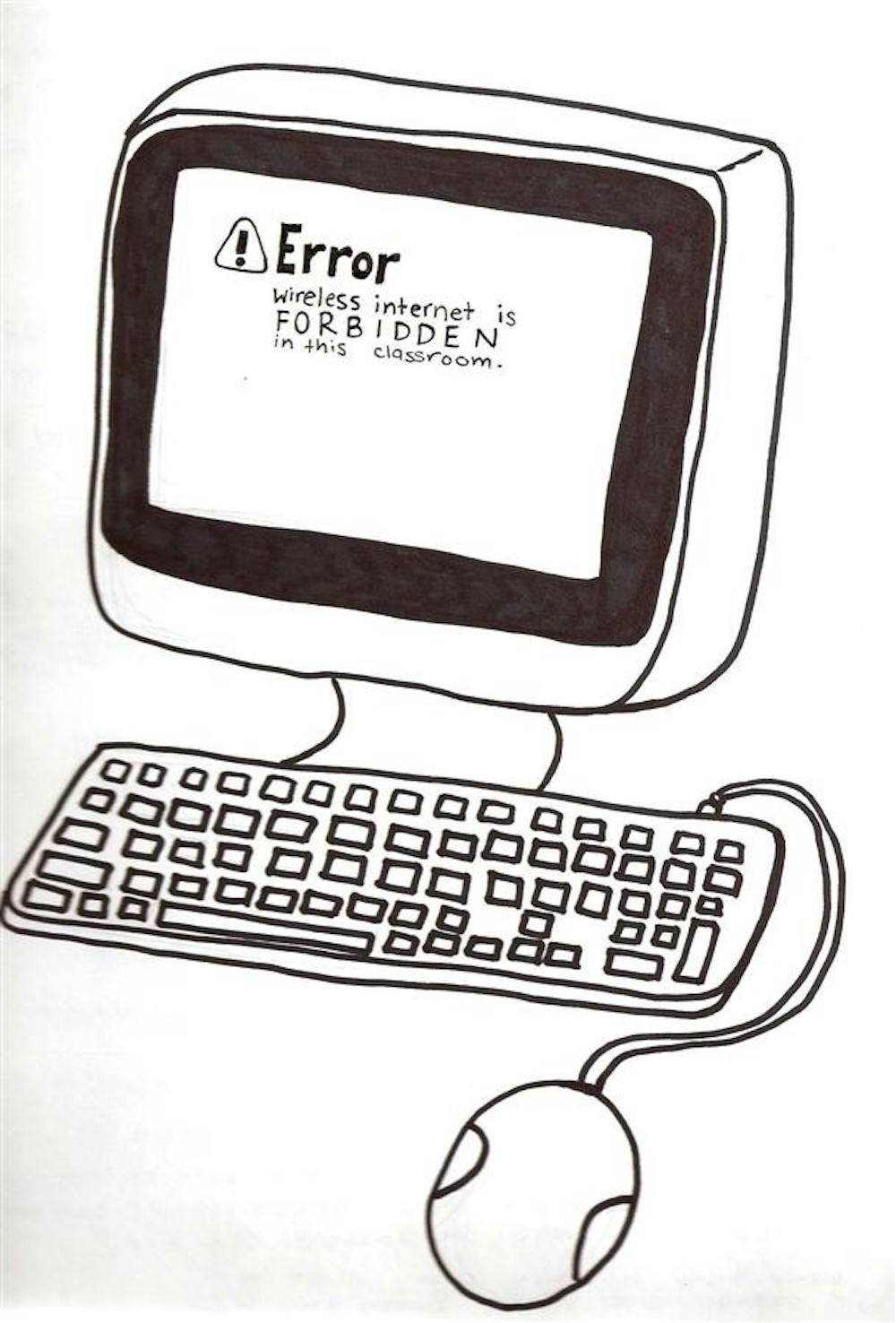
The University of Chicago Law School decided to remove the wireless connections in classrooms during class time to “ensure the value of classroom experience.” In other words, the school is sick of trying to teach students who are really just on Facebook.
The idea of cutting off access to the Internet in classes might infuriate some students, many of whom bring laptops to class regularly. However, the policy is actually meant to help those students.
Professors hate teaching to students who are playing games or surfing the net, so many of them ban laptops altogether because they can’t think of a way to keep students off the Internet but still allow their computers. While it does mean that those professors don’t have to compete with Facebook for attention, the policy hurts students who bring laptops because they find it easier to take notes in Word than in a notebook.
The University of Chicago discovered that it had the capacity to turn off the wireless Internet in individual classes. The logic being that it wouldn’t be accessible to students for the duration of their classes. Once they step outside the room, they can connect again.
Though many professors and students use the Internet as part of lectures or presentations, the limits don’t appear to cause trouble. If the professor’s computer can’t connect with an Ethernet cable, then the wireless can easily be switched back on as needed.
The new policy benefits all students, not just those taking laptop notes. Countless numbers of people know how distracting it is to see other peoples’ laptop activities. Whether people are playing games, chatting on Facebook or reading gossip sites, it attracts the attention of those behind and next to them. Losing access to the Internet not only keeps the attention of those who would be surfing, but also those who are distracted by their neighbors.
“As soon as we discovered that we had the capacity turn off Internet access during class time, we felt that we ought to move in that direction,” said University of Chicago Law School Dean Saul Levmore. “Our goal is to provide the best legal educational experience in the country, with students and faculty focused on the exchange of ideas in a thorough, engaging manner.” Levmore added that many students supported the new policy.
It’s not just the University of Chicago. Schools across the country, especially law schools, are banning laptops in classes, policies that are largely led by individual professors. Several teachers have conducted personal studies and noticed that students who used laptops in class generally scored significantly lower than those who did not.
Some students feel that they have a right to do as they wish during class – and as long as they sit near the back of a lecture hall, how will the professor notice what they’re really doing? Simply put, goofing around during class is disrespectful to professors. For an expensive education time in the classroom should not be squandered. If you really can’t live without the Internet for an hour, don’t bother to go to class.
Banning the Internet in class doesn’t solve all problems. There are still non-Internet games such as Solitaire and FreeCell, not to mention devices such as cell phones that keep people distracted. However, forcibly banning the Internet during class time reduces the amount of distractions and helps students concentrate.
If the alternative is banning computers in class, and hurting those who would use them to take notes, taking away wireless is a good way to keep students’ attention.
Wireless worries
Get stories like this in your inbox
Subscribe