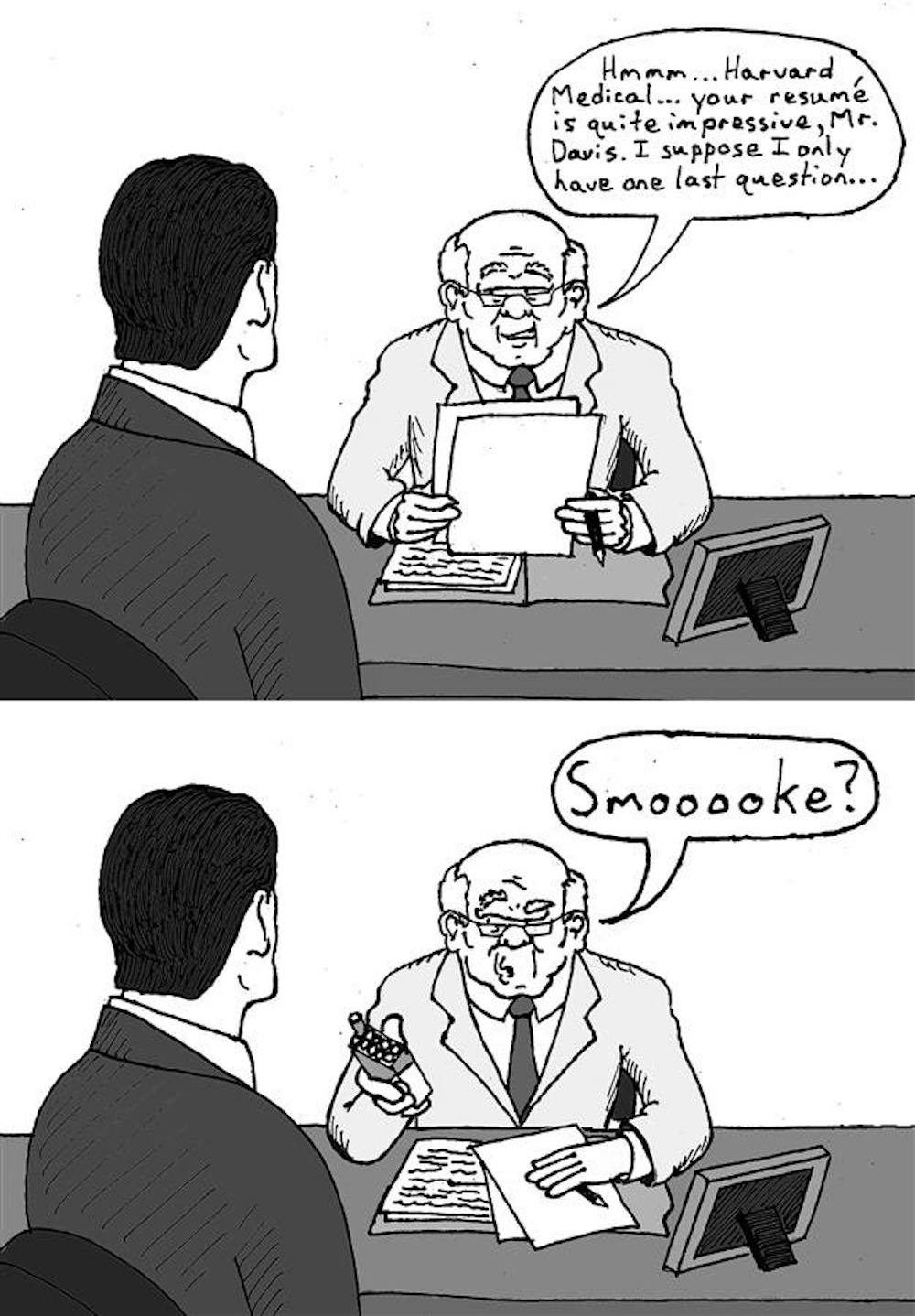
A Chattanooga, Tenn., hospital has enacted a policy of not hiring cigarette smokers and will begin screening new applicants for nicotine. In fact, any detectable level of nicotine, such as that from nicotine gum or patches, will preclude a would-be employee from being hired. Hospital representatives have stated that the purpose of this policy is to send a message about their stance against smoking, not to save money on health care by simply avoiding unhealthy employees.
This is a visible statement to the public about the gravity of the health risks associated with tobacco. And what institution could be better suited than a hospital to set an example for their patients? This policy promotes a satisfying sense of practicing what you preach, as health care providers are frequently fighting the consequences of tobacco use and strongly advising their patients to give up their nicotine habit.
On the contrary, this comes off as a conspicuous instance of job discrimination. There are no grounds on which the hospital could claim that an employee that smokes cigarettes would be less capable at performing their job than a non-smoker. Hospital regulations regarding tobacco use on the job and on hospital grounds are very legitimate, but forbidding employees to engage in a legal act in the privacy of their own home is going too far.
Furthermore, such a policy is a very slippery slope. Imagine that applicants to Memorial Hospital were also screened on a basis of their body fat percentage, citing that at a certain level, people have a greater risk of developing diabetes. Or if they had to have their blood cholesterol levels checked, as elevated levels make individuals more likely to suffer from cardiovascular disease.
Both of these potential tests could be indicative of an unhealthy diet. Diet and tobacco use are not directly equivalent, but they are both lifestyle choices that have an obvious consequence on a person’s health. The hospital could make the same argument that they are setting an example and promoting healthy lifestyles. However, the hospital would consequently be discriminating against possible employees based on their physique and even based on heredity.
A better avenue for the hospital to send a message against tobacco use would be to offer free services and medications to help its employees break the habit. This would demonstrate the hospital’s motivation by showing both its economic willingness to solve this problem and compassion toward its employees struggling with addiction.
Refusal to hire smokers
Get stories like this in your inbox
Subscribe