Countless apocalyptic prophecies have been made throughout the course of history, each with its own bandwagon of followers. But nothing can compare to the magnitude of the 2012 phenomenon and those in preparation for its arrival.
With help from the Internet, ideas circulating around the 2012 sensation have spread to all corners of the world. Facebook groups, Web pages and chat rooms are filled with people coming together to discuss this mysterious event.
Those who think there’s merit in the phenomenon are using the Internet to make plans and sell tools. Dennis McClung’s Web site, www.2012supplies.com, offers disaster preparedness survival supplies, emergency survival supplies, 2012 survival kits and more “for 2012 and beyond.”
McClung is a firm believer in Solar Cycle 24, the idea based on NASA’s prediction of increased solar activity in 2012.
“One of the greatest geomagnetic storms in history was the Carrington event in 1859, and what happened then was it wiped out the only grid we had at the time, which was the telegraph system,” he said. “If something like that happened in 2012, we would basically be reduced to a third-world country here in America.”
McClung said that he does not claim to prophesize exactly what will occur come Dec. 21, 2012, but believes that we are too reliant upon electricity at the current time and foresees further economic turmoil, which, combined with “the global tension that we have,” could easily result in World War III.
In order to protect himself and his family, McClung has completely transformed his lifestyle in preparation for a potential doomsday.
Though he’s not at 100 percent yet, McClung plans on being completely self-reliant by 2012. He has a greenhouse for growing produce, has food stockpiled, will be completely solar powered and even has nuclear, biological and chemical protective suits in the house, just in case.
McClung’s wife is in the medical field, and McClung said that he can build virtually anything, making them both “good to have around for people if anything does happen,” he said.
“Regardless of what your beliefs are on 2012, or lack thereof, it’s a great thing to be self-reliant and prepared,” he said. “If more folks are self-reliant, that’s better for Earth as a whole and if anything does happen, then there will be less chaos and more of us preparing.”
Susan Lepselter, an assistant professor in the department of communication and culture who studies contemporary American folklore, said that many rationalists “tend to assume that people who believe in these ideas are idiots.” She believes that instead of making fun of believers, people should look into what is being believed and figure out why.
”What is it expressing?” she said. “Why does it seem to be so true that at this moment that we’re at the end?”
She thinks some people fear sudden change and advancement in the world and use ideas like 2012 as an outlet.
Quetzil Castaneda, who is currently a research associate in the anthropology department and an instructor in the minority languages and cultures of Latin America program, agrees. He said that in an ever-changing world, “individuals feel incapacitated to live a meaningful life” and uses the example of “a rogue black hole” – which some 2012 theorists predict – as actually being a metaphor for something like the War on Terror.
“Ultimately, I think it’s a way of washing out their guilt and their anxiety over being hopeless,” he said. “Because we live in a situation where we’re incapacitated to do anything really significant in terms of changing the forms of real sociopolitical and economic structures that we live in.”
But regardless of your motive to believe, Lepselter asserts that survivalism “was a big part of life in America for a long time,” but “isn’t valued so much anymore.”
“We live in a time where you’re supposed to get fast food and, you know, not be worried about surviving in the same way,” Lepselter said. “And some of that knowledge about how to survive, you can see it get transformed into these fabulous configurations when really they have a practical basis in American history.”
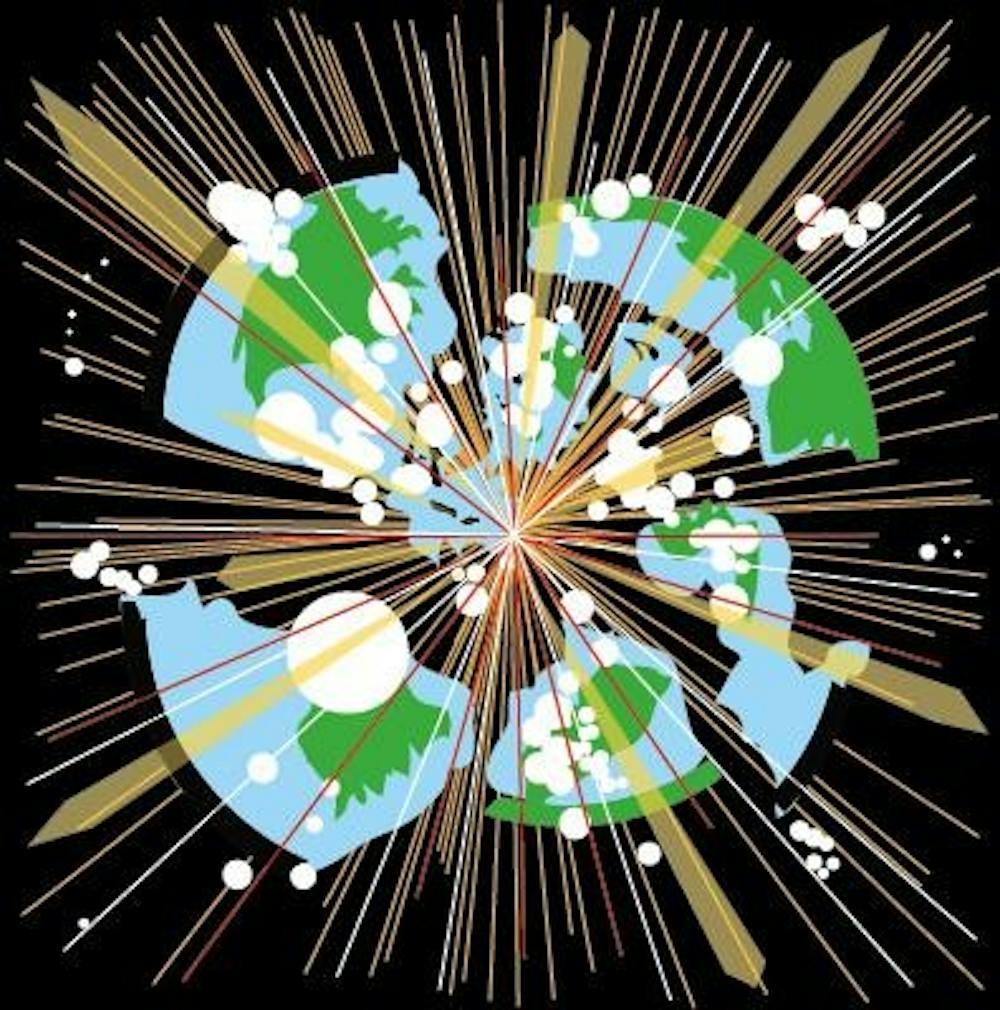
The end is near
Professors and laymen share their thoughts on the 2012 phenomenon
Get stories like this in your inbox
Subscribe