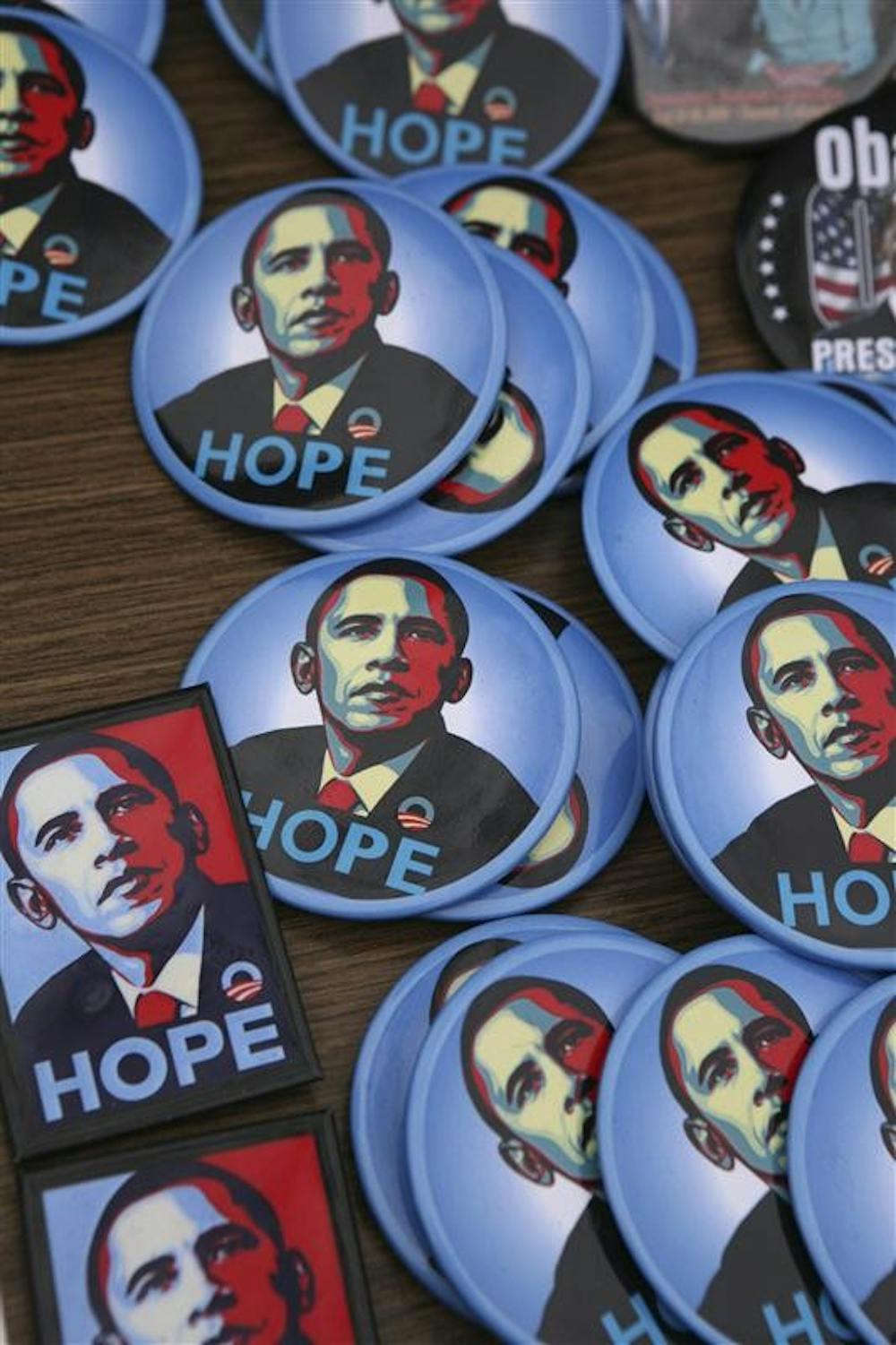
It started out simple – three patriotic colors, two eyes facing upward and one short but bold statement: hope.
As street artist Shepard Fairey’s “Hope” poster made its way into popular culture, other artists were also creating iconic artwork of the then-presidential candidate Barack Obama. Now a year, an inauguration and several “Hope” spoofs later, artists have shaped the president’s image through creative expression.
Senior and President of IU College Democrats AnnElyse Gibbons said part of the president’s appeal to artists lies in his campaign. Dynamic graphics, engaging videos and colorful posters helped Obama bring an imaginative spin to the art of campaigning.
“The stuff that he put out was so creative and innovative,” she said. “It brought a creative side to something that is usually very staunch and uncreative.”
Previous elections show how artistic expression and image play a vital role during elections. In 1972, Andy Warhol painted over an image of Richard Nixon in fluorescent colors and scrawled “Vote McGovern” below the cartoon – like the depiction in support of candidate George McGovern, who ran against Nixon that year.
Associate professor in the IU History of Art Department Dawna Schuld said Obama had an artistic edge over John McCain because he entered the race as a newcomer and lacked the public image that McCain had, which left room for artistic interpretation.
“Obama’s campaign was very visual, and an image has immediate impact,” she said. “McCain’s campaign focused on words.”
Artists that supported Obama were able to take his platforms and policies and communicate them through their work.
Associate professor in the IU Communication and Culture Department Susan Lepselter said that because Obama presented himself as a sign of change, much of the artwork about Obama was positive.
“People really saw Obama as a vehicle of possibility in a new way,” she said.
Artists also reinvented some of the most popular pieces of campaign artwork. As “Dope” and “Nope” posters as well as McCain versions of Warhol’s picture of Nixon emerged, voters had more artistic pieces of campaign material to take in.
“The best indication of success is when something is spoofed and reused,” Lepselter said.
A year since the election, the artistic representation of Obama has evolved to reflect negative views on Obama’s policies and decisions in office. Schuld noted a shift in some of the works and said artwork before the election was used to promote his candidacy, but now reflects his performance in office.
“There’s a big difference between running for president and being the president,” she said.
Some negative images seen since his inauguration have included “Hope” posters warped with images of Joseph Stalin or with words such as “Liar.”
Gibbons said she finds negative takes on positive Obama artwork to be uncreative and degrading, but appreciates the original works she’s seen since Obama’s inauguration.
“I find the images that people are creating about him to be so powerful,” she said.
Creating a presidency: The art of election
Get stories like this in your inbox
Subscribe