Before Hanggai formed in 2005, lead man Ilchi was bored with the music he was making.
He’d been in a punk band for a few years, but just didn’t have the heart for that type of sound anymore.
Ilchi was visiting his family in their ancestral homeland of Inner Mongolia when he stumbled upon Huun Huur-Tu, a band from the Russian republic of Tuva, which sits on the border of Mongolia.
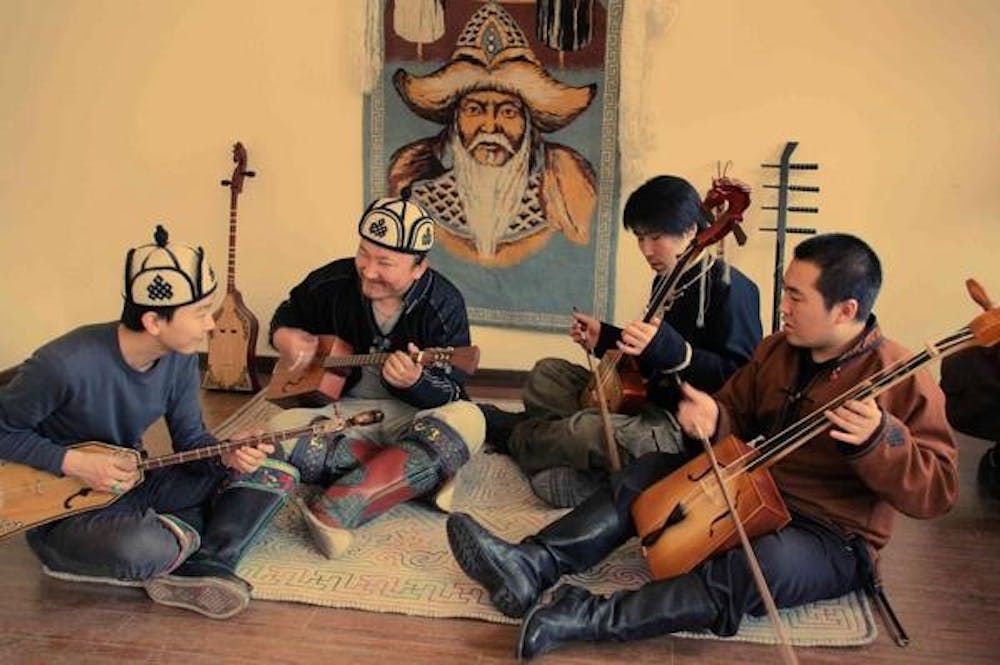
After becoming enchanted with Huun Huur-Tu’s folk sound – especially their demonstration of the region’s indigenous throat-singing – Ilchi traveled to Mongolia to learn throat-singing for himself and set up his Mongolian folk band, Hanggai.
“Some people have called it China grass,” he said, alluding to the idea that China’s folk music is born out of Mongolia’s traditional songs the way American bluegrass music is born out of Appalachia.
“It’s grassland music – songs based on nomadic life, updated for the 21st century.”
The music market in China is inhospitable to anything that isn’t pop, Ilchi said, and most pop artists rip off American and British music rather than create anything homegrown.
Although it’s gotten better during the last few years, China’s live music scene is still feeble.
“There’s no crossover between the live music scene and what you hear on the radio and on TV,” Ilchi said.
Hanggai formed in this music climate out of a need for cultural preservation. If young bands like Hanggai don’t keep the musical traditions alive, Ilchi said, folk songs and the nomadic lifestyles they represent will die out.
“We see it as our responsibility to bring this culture to life again and to introduce as many people to it as possible,” he said.
The interview with Ilchi was translated through Hanggai manager Robin Haller.
Mongolian folk comes to America
Get stories like this in your inbox
Subscribe