WE SAY Taxing carbon is a good idea, even in coal-powered Indiana.
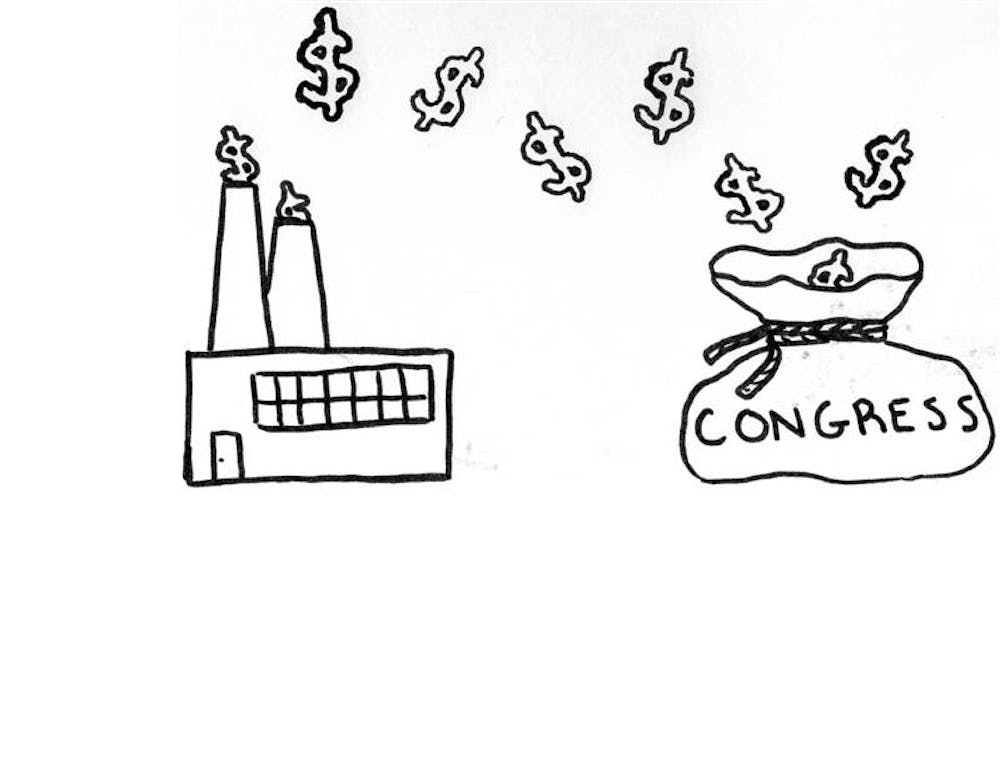
Three members of Congress, including two Republicans, have proposed a carbon tax. But because Indiana relies on coal for 95 percent of its power, we’d be paying more than most.
According to the Miami Herald, “Businesses and homeowners who rely heavily on coal for electric power – such as those in Kentucky and Missouri – would face significantly steeper price increases because coal produces much more carbon dioxide.”
That article mentions Duke Energy, a utility company that serves Indiana, Ohio and Kentucky. Like most utility companies, during regulation decisions, states usually allow these kinds of companies to pass on the cost of electricity in the form of higher prices. So if this carbon tax were to pass, Indiana consumers could expect to pay higher bills.
Although the idea of a direct tax is technically different than President Obama’s proposed cap-and-trade scheme, both essentially serve the same purpose – to curb greenhouse gas emissions through market mechanisms. Whereas cap-and-trade indirectly sets a price on carbon emissions, a direct tax explicitly does so.
In the past, support for cap-and-trade has been low in Indiana, particularly among Republicans. Unfortunately, the same will be true for this direct carbon tax. In fact, explicitly calling this a tax has made it difficult for some Republicans, like one of its creators, U.S. Rep. Bob Inglis of South Carolina, to sell.
The measure initially imposes a tax of $15 per ton of carbon dioxide on the producers and distributors of gasoline, natural gas and coal, with the tax rising to $100 per ton throughout three decades. We agree that any change should be gradual, and this process of phasing the tax is practical, especially during a recession. The beginning years of the tax wouldn’t increase prices enough to significantly lower consumer spending.
There has been criticism of carbon taxes, or the cap-and-trade scheme, which in effect functions like a tax, and we’ve visited them before, most notably during discussion of the Kyoto Protocol. Critics claim that U.S. firms will be made less competitive and become more likely to outsource jobs to nations that aren’t imposed with so many regulatory costs, like China or India.
Although this is sound economics, there are still economists who embrace a direct carbon tax like this one, including our introductory economics textbook author N. Gregory Mankiw. As well, Michael Levi, Council on Foreign Affairs Fellow for Energy and the Environment, supports delayed measures like the one in this tax, because it will “reduce current uncertainty about the shape of future greenhouse gas regulations ... (which) is a deterrent to investment.”
The true costs of burning coal in Indiana, or emitting carbon anywhere, need to be fully incorporated into their markets. And there’s no better way to do that than by using the market itself, which this direct tax does.
Curbing carbon
Get stories like this in your inbox
Subscribe