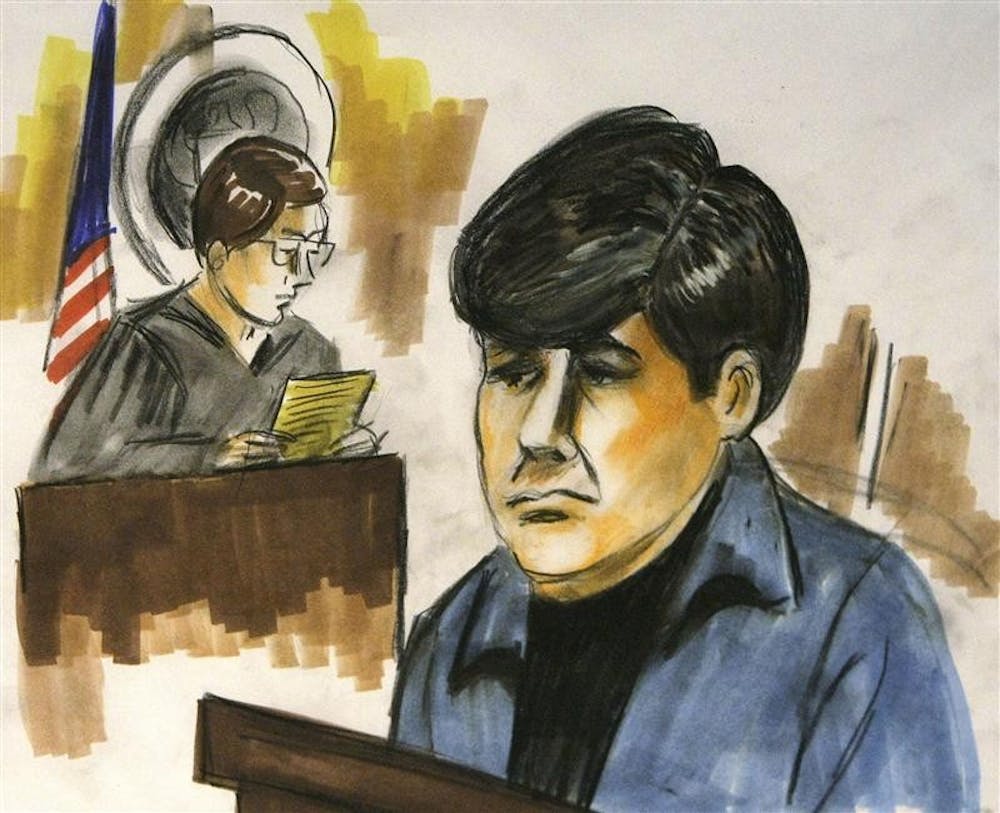
Tuesday’s arrest of Illinois Gov. Rod Blagojevich came as no surprise to many on IU’s campus.
Blagojevich was arrested Tuesday morning by federal authorities for corruption charges that stem from suspicion that he tried to sell or seek favors for the U.S. Senate seat formerly held by President-elect Barack Obama.
Junior Brandon Peters is from the Chicago area and said judging from past Illinois administrations, it was not a huge surprise that the governor would get arrested.
“With the corruption that has been in Illinois politics in the last decade, nothing is too surprising,” Peters said.
IU School of Law and School of Public and Environmental Affairs professor Jim Barnes said he was not too familiar with Blagojevich’s administration but said there has been a history of Illinois governors that have had trouble with the law.
“One would have hoped that the message would have gotten through to the current occupants that he had to be on his best behavior,” Barnes said.
Blagojevich was arrested after prosecutors said he was caught on wiretaps scheming to sell Obama’s vacant Senate seat for cash or a plum job for himself in the new administration.
Prosecutors did not accuse Obama of any wrongdoing or even knowing about the matter. The president-elect said: “I had no contact with the governor or his office, and so I was not aware of what was happening.”
According to court papers, the governor tried to make it known through emissaries, including union officials and fundraisers, that the seat could be had for the right price. Blagojevich allegedly had a salary in mind – $250,000 to $300,00 a year – and also spoke of collecting half-million and million-dollar political contributions.
Blagojevich was charged with two counts: conspiracy to commit fraud, which carries a maximum penalty of 20 years in prison, and solicitation to commit bribery, which is punishable by up 10 years. He was released on his own recognizance.
Blagojevich also was charged with illegally threatening to withhold state assistance to Tribune Co., owner of the Chicago Tribune, to force the newspaper to fire editorial writers who had criticized him.
Also arrested was Blagojevich’s chief of staff, John Harris, who was accused of taking part in the schemes to enrich the governor.
Blagojevich also considered appointing himself to the Senate seat, telling his deputy governor that if “they’re not going to offer me anything of value, I might as well take it,” prosecutors said.
He said becoming a senator might help him avoid impeachment and also remake his image for a possible presidential run in 2016, according to court papers. And he allegedly said he would have access to greater resources if he were indicted while in the Senate.
The future of Blagojevich is unknown, but Barnes said the Illinois legislature should take action to fill the Senate seat Obama left open.
He also said there might be a cloud that will hang over that position now.
For graduate student Josh Gordon, the arrest was politics as usual.
“Politicians always try to profit from a public position,” Gordon said.
Gordon said he is from Costa Rica and two former presidents there were arrested for corruption. He said political corruption can happen anywhere. Blagojevich was released on a $4,500 bail Tuesday. Gordon said he thought it should have been set higher considering the severity of the charges.
Illinois lawmakers are looking into calling a session next week to set a special election to choose the state’s next senator.
-The Associated Press contributed to the report.
Corruption charges: Students say crimes no surprise
Get stories like this in your inbox
Subscribe