
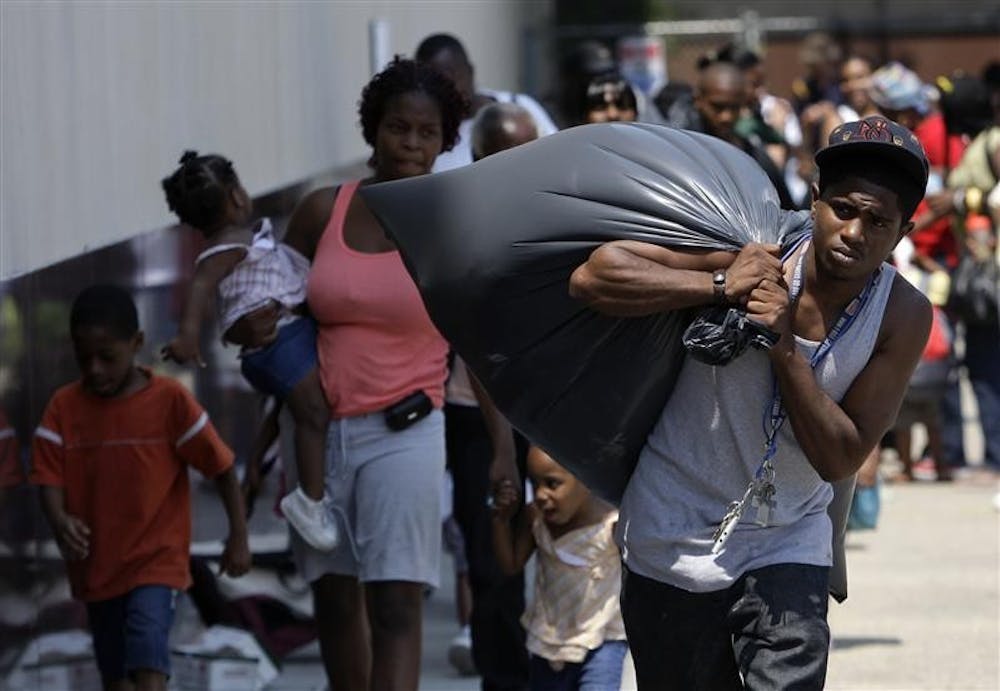
NEW ORLEANS – Scarred by still-fresh memories of Katrina and spooked by Hurricane Gustav's rapid move toward Category 5 strength, a million residents of the Gulf Coast fled on Saturday – well ahead of the official order to get out of the way of a storm taking dead aim at Louisiana.
Residents took to buses, trains, planes and car – clogging roadways leading away from New Orleans, still reeling three years after Hurricane Katrina flooded 80 percent of the city and killed about 1,600 across the region.
Gustav had already killed more than 80 people in the Caribbean, and if current forecasts hold up, it would make landfall early Tuesday morning along Louisiana's central coast.
That would spare New Orleans from a direct hit, but forecasters warned it was still too soon to say exactly where the storm will go. Residents weren't taking any chances judging by the bumper-to-bumper traffic pouring from the city. Gas stations along interstate highways were running out of fuel, and phone circuits were jammed.
Forecasters at the National Hurricane Center said they were surprised at how quickly Gustav gained strength as it charged toward Cuba. It went from a tropical storm to a Category 4 hurricane in about 24 hours, and was likely to become a Category 5 – with sustained winds of 156 mph or more – by Sunday.
"That puts a different light on our evacuations and hopefully that will send a very clear message to the people in the Gulf Coast to really pay attention," said Federal Emergency Management Agency chief David Paulison.
A mandatory evacuation order was expected as early as Saturday night. Hotels closed, and the New Orleans airport prepared to follow suit. Mayor Ray Nagin, saying the danger to the city was growing, told tourists to leave. Homeland Security Secretary Michael Chertoff planned to travel to Louisiana on Sunday to observe preparations.
Unlike Katrina, when thousands took refuge inside the Superdome, there will be no "last resort" shelter, and those who stay behind accept "all responsibility for themselves and their loved ones," said the city's emergency preparedness director, Jerry Sneed.
Yet the presence of 2,000 National Guard troops that were expected to join 1,400 New Orleans police officers patrolling the streets following the evacuation – along with Gov. Bobby Jindal's request to neighboring states for rescue teams – suggested officials were expecting stragglers.
Many residents said the evacuation was more orderly than Katrina, although a plan to electronically log and track evacuees with a bar code system failed and was aborted to keep the buses moving. Officials said information on evacuees would be taken when they reached their destinations.
Advocates criticized the decision not to establish a shelter, warning that day laborers and the poorest residents will fall through the cracks.
Father west, where Gustav appeared more likely to make landfall, Guard troops were also being sent to Lake Charles. But the state's ports and oil refineries were still operating and had no plans to shut down.
The National Hurricane Center issued a hurricane watch for Alabama, Mississippi, Louisiana and part of Texas. A hurricane watch means hurricane conditions are possible within the watch area, generally within 36 hours.
Authorities in Mississippi, also battered by Katrina, had already begun evacuating the mentally ill and aged from facilities along the coast, and East Texas counties were making arrangements to do the same.
National Guard soldiers on Mississippi's coast were going door-to-door to alert thousands of families in FEMA trailers and cottages that they should be prepared to evacuate Sunday.
In Alabama, shelters were opened and 3,000 National Guard personnel assembled to help evacuees from Mississippi and Louisiana.
"If we don't get the wind and rain, we stand ready to help them," said Gov. Bob Riley.
Hurricane Gustav strengthens, New Orleans prepares
Get stories like this in your inbox
Subscribe


