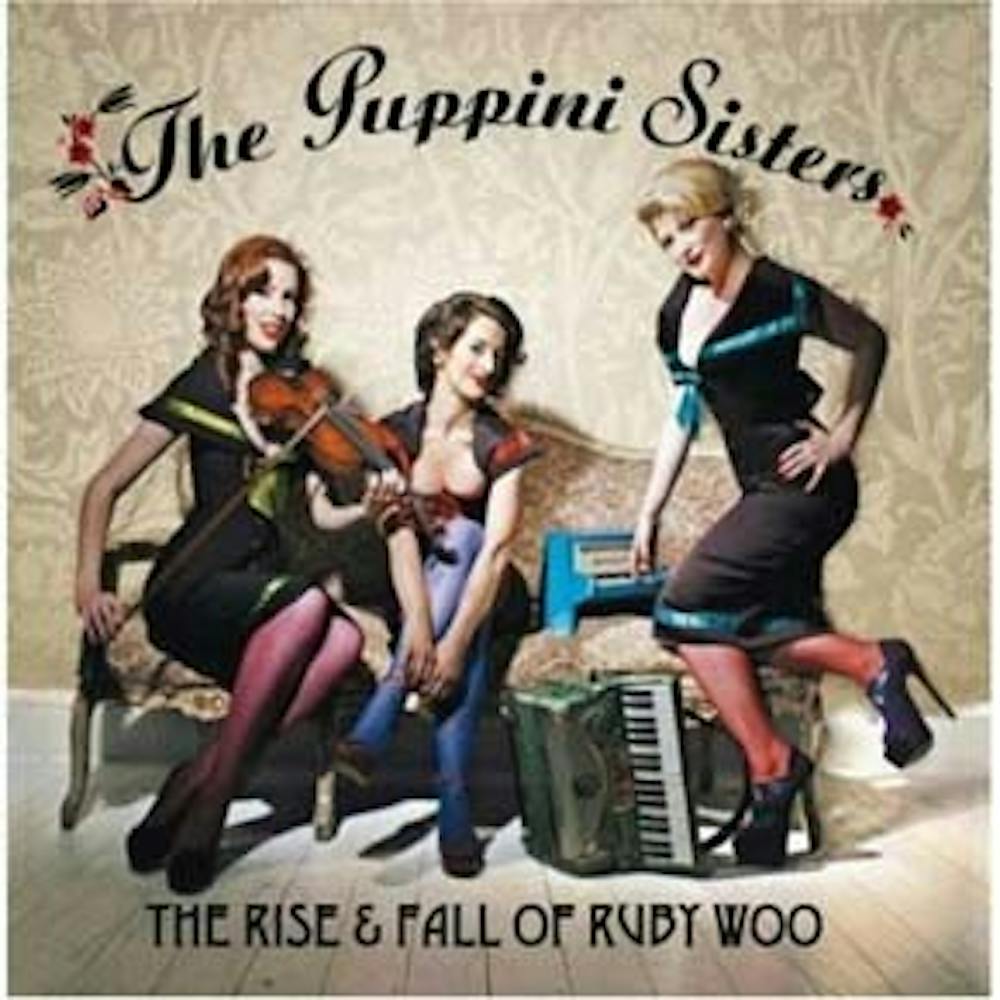
First things first: The Puppini Sisters are a vocal trio that dresses up in burlesque outfits to sing ironic pop covers (Beyonce’s “Crazy In Love”), a few originals (“Jilted”) and nearly-forgotten relics of popular music (Duke Ellington’s “It Don’t Mean A Thing If It Ain’t Got That Swing”) in the style of World War II-era vocal groups. Most will be suspicious of a group whose shtick invariably precedes its music, and this is no exception. Its first and preceding album, mostly of ’30s and ’40s-style songs, was a novelty piece through and through. The Rise & Fall of Ruby Woo, however, is markedly different from its predecessor Betcha Bottom Dollar and shows much improvement.
One gets the overall impression that the “sisters” mean business this time around. Many of the songs are jazzier and tighter. They play more of their own instruments and put forth, for the first time, their own songwriting efforts. We hear lots of show-off scatting that evidences their shared jazz background. Their supporting cast of musicians is Saran-wrap-tight, and they show it off by chopping along at a furious tempo on the album’s opening track.
Still, Ruby Woo remains problematic. The biggest issue is the almost unrelenting three-part harmony. Hearing three voices at once gives a certain character to these songs, but is limited expressively. It works only for a very particular kind of song. Enter the dilemma of the novelty group: What was originally its selling point has become a limiting factor. Unless it can learn how to creatively exploit this facet of its sound and diversify its vocal arrangements, it’s stuck.
One of the album’s hallmark tracks “I Can’t Believe I’m Not A Millionaire” finally shows the sisters singing solo, but they resort to the melodramatic affectation typical of musicals to convey the words being sung. While this may work on stage, it’s a bit much on record. Elsewhere, the Puppinis’ singing is so pitch perfect that emotion doesn’t have space to wriggle through. The cumulative effect is ultimately impressive, but unaffecting, and that’s Ruby Woo in a nutshell.
'Sisters' mean business
Get stories like this in your inbox
Subscribe