
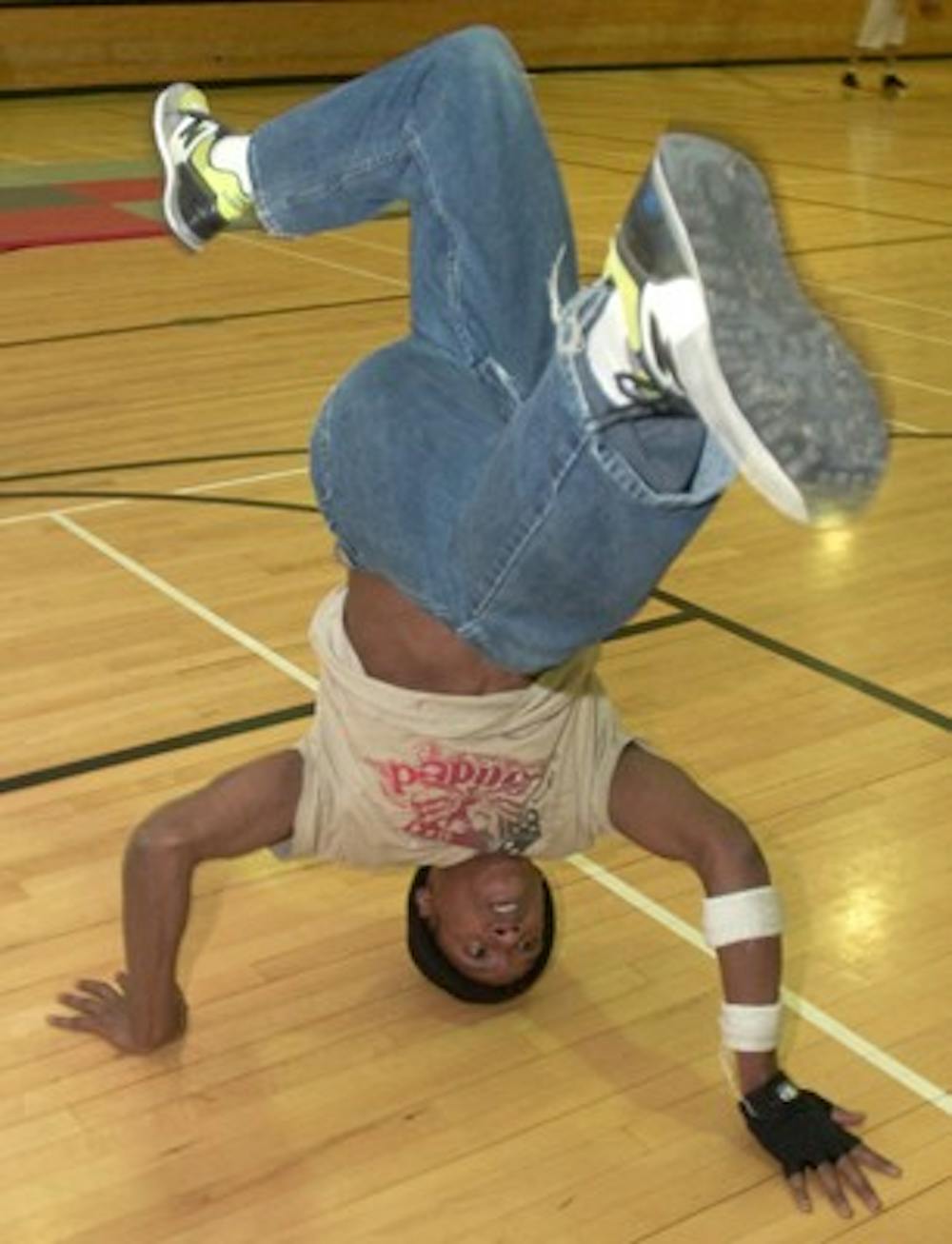
On a Thursday evening, music blares from the student activities room in Briscoe Quad. As the IU Breakdance Club practices, students walking by stop to watch the team twist and turn to the beat.\nMost of the club’s members joined after witnessing a practice for themselves. Though several members had never practiced the dance form before joining, they now enjoy performing and competing.\n“No one criticizes you here,” sophomore and club vice president Justin Wolverton said. “It’s an open environment.”\nWhether they are performing for school events or competing in battles against other schools, the club welcomes diversity. The club provides an opportunity for students to express their creativity through dance and music.\nThe club began in September 2001 with the intent to improve break dancers’ skills and bring the break dancing culture to campus. Although the club used to be called IU Bboys, it has always been open to anyone interested in breaking, even those without experience.\n“It looks almost impossible at first,” freshman member Leo Zhang said. “When you get it, there’s no stopping you.”\nZhang joined the club after watching the team perform earlier in the year. He practiced on his own in his spare time before coming to college. \nThe club competes in informal and formal battles against other school teams. In an informal battle, breakers take turns dancing until the crowd declares a winner, while the outcome of formal battles depends on judges who have had substantial break dancing experience.\nClub president and sophomore Keane Rowley said breakers battle either for money or respect, but battles between rivals become the most watched.\n“People come from everywhere to see those battles because they get heated,” he said.\nDuring a battle, Wolverton said, breakers “want to try to demean the other person as much as (they) can.”\n Wolverton said one of his favorite moves is called a “suicide,” in which he jumps as high as he can and makes it look as if he has lost control as he falls to the ground.\nBreak dancing styles have evolved since the art originated in the 1970s, but basic moves remain the same. Rowley said breakers work on three sets of moves: toprock, moves performed while standing up; downrock or footwork, which deals with moves on the ground; and power, which usually involves upper-body strength and has some of the most challenging moves.\nNew members of the club learn the basics from other members, but Rowley said break dancing requires originality and free-styling. Known for its improvisational nature, break dancing sets itself apart from other forms of dance due to its lack of choreography. \n“There are moves that you can make up for yourself that even professionals haven’t done,” Rowley said. “People appreciate that.”\nThe club also performs at campus events, but receives more attention from practices and battles, especially those held outdoors.\n“The great thing about break dancing is that all you need is a boom box and a floor,” Rowley said.
IU Breakdance Club competes to the beat
Get stories like this in your inbox
Subscribe



