
Under a new United States Department of Education rule, universities will have to prove their program graduates earn more than the typical high school diploma holder.
If the programs fail the earnings test for two out of three consecutive award years, they risk losing eligibility to participate in the Federal Direct Loan program. If a program fails three times in a row, it could lose Title IV Pell Grant eligibility.
Earnings will be calculated using graduates’ median earnings four years after graduation. Those wages will be compared to the median earnings for adults 25-34 with only a high school diploma in either the state where the college is located or nationwide, depending on the university’s enrollment makeup. At Indiana University, in-state students total more than 70% of the undergraduate population.
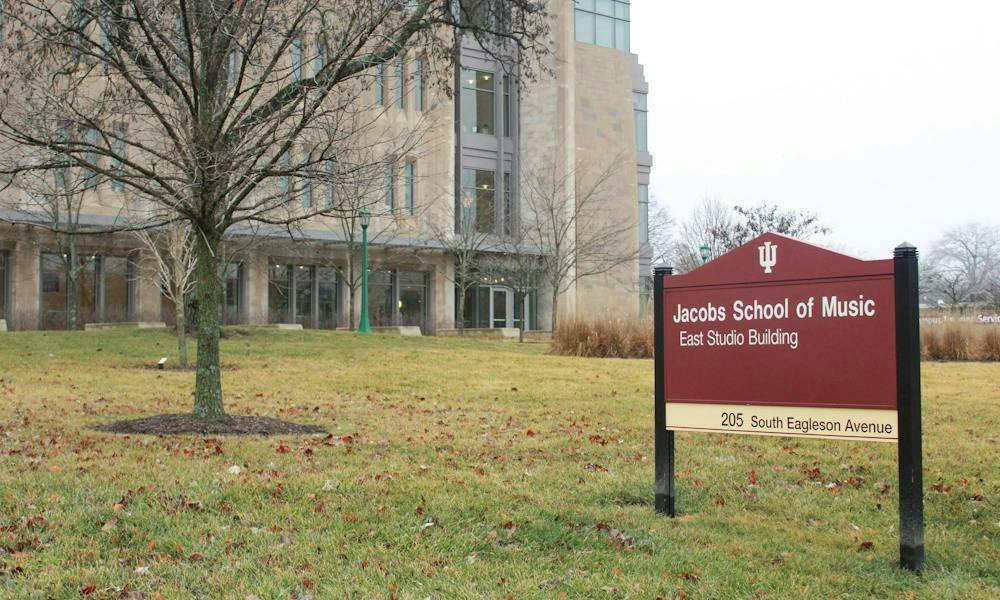
According to the Department of Education College Scorecard, high school graduates in Indiana earn a median annual salary of $36,492. The scorecard, which collects data from undergraduate students who received federal financial aid, puts those who graduated from IU with a bachelor’s degree in music at $28,727 in median annual earnings.
Nationally, certificate programs in cosmetology and degrees in early childhood education, theater, music and studio art are at the greatest risk of failure.
The earnings rule also applies to graduate degree programs, which must prove they earn more than bachelor’s degree holders. The median wage for students five years after earning a bachelor’s degree at an Indiana public college is about $52,000, according to a 2024 report from the Indiana Commission for Higher Education. According to the College Scorecard, IU’s master’s degrees for fine and studio arts and for music earn under that threshold.
The rule is aimed at tackling the United States’ $1.7 trillion federal student loan portfolio. Under Secretary of Education Nicholas Kent said in a press release the framework would safeguard taxpayer dollars and “protect students from taking on unmanageable debt for programs that cannot demonstrate a reasonable return on investment.”
Some IU graduates who took on student loans say the decision could limit students’ choices.
Chelsea Kaminski graduated from IU in 2020 with her master’s in music education and music theory. She took out federal student loans to help pay for her education and said she thought there is a fundamental problem with how students fund their education and that “tuition is so unbelievably expensive.”
“For people who really have a genuine interest in music, they may not be able to pursue that anymore because it’s totally unattainable, unaffordable,” Kaminski said. “And so I think even just like giving people who want to go to college less options, like less freedom to choose, you know, what they want to study, what they want to do in life, I think that’s a big problem.”
Kaminski said she thought universities could stop accepting so many students instead and that low wages were reflective of the current job market.
“I think it’s trying to fix something that is a legitimate problem,” Kaminski said. “But I think it’s ignoring like so many other factors.”
Caroline Goodwin graduated from IU with a Bachelor of Science in voice with an outside field in history in 2021 and later her Master of Music in voice in 2023. Without taking out federal direct loans, she said she either would have had to switch careers, wait to go to master’s school or take out expensive private loans.
She said one of her concerns with the new rule would be its potential impact on low-income students. The arts as a whole are already inaccessible to low-income students and their families, Goodwin said, because it’s not always a lucrative career.
“What I’m afraid we’re going to see is that only the wealthiest students are getting degrees in music and some of the other arts programs that might get their Title IV funding cut,” Goodwin said. “And we’re going to be losing a huge talent pool of students from lower-income families.”
Goodwin said students take big financial decisions like taking out loans seriously. They know, she said, music careers may not be as high earning as other careers, but she felt it was up to each person to decide the financial risk they would be willing to take.
Evan Bossenbroek earned his bachelor’s in music education from IU in 2021 and had to take out federal student loans to pay for his degree, which he is still paying off.
He said there are already barriers for students with lower socioeconomic statuses to study music due to the cost of lessons, instruments and travel to auditions.
“It’s going to further restrict the already biased system towards the wealthy and the privileged even more,” Bossenbroek said. “And along those lines, like that’s going to reflect in diversity of the program, just because of the way that race and class are intertwined in American society.”
The new rule is not the only measure that could change which fields students can enter. Indiana Senate Enrolled Act 199, which became law in March, requires universities to request approval from the state to continue offering low-earning degree programs whose graduates earn less than the average earnings of Hoosiers with only a high school diploma.
If approval is not given, the university has to eliminate the degree program. The act went into effect in July, and the final list of affected programs will be released next year. An early list from the education department in January named 16 degree programs and 21 certificates at risk in Indiana.
The low earnings test from the education department will be calculated to apply during the 2027-28 award year, meaning some degree programs could be identified as low-earning starting in the 2028-29 award year.


