In today’s college football landscape, having a big name, image and likeness fund is almost essential for having successful seasons. Spending money within the transfer portal has given historically losing teams the chance to become great.
Indiana football hasn’t missed that opportunity.
In November 2023, Indiana University Athletic Director Scott Dolson announced the school’s new football coach: Curt Cignetti, former coach of James Madison University.
At the time, Indiana was coming off just a three-win season. Indiana was the losingest team in college football history. It was known as a basketball school; Indiana is a basketball state, after all. But Cignetti changed that almost immediately.
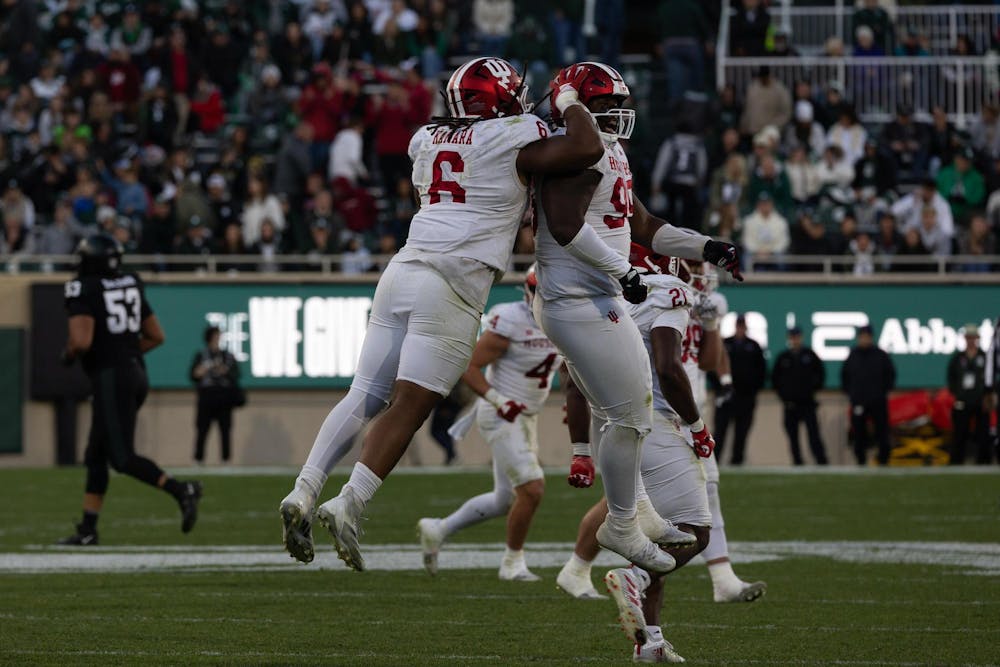
Instead of taking the traditional route recruiting high school prospects, Cignetti decided he didn’t want to wait for development. Instead, he aimed for the transfer portal. In his first portal cycle, Cignetti signed 31 commits, including 13 from JMU. Cornerback D’Angelo Ponds, defensive linemen Tyrique Tucker and Mikail Kamara, wide receiver Elijah Sarratt and linebacker Aiden Fisher, all former Dukes, were the key commits to this Indiana class, which ranked 29th in the country, per 247 sports.
The new additions helped lead the Hoosiers to an 11-1 regular season and a College Football Playoff berth, where they would head to South Bend to play the University of Notre Dame. The Fighting Irish got the best of Indiana, winning it 27-17. Despite this, Indiana had just capped off its best season in school history, and the Hoosier fanbase was hopeful for the future, and for good reason.
Going into that offseason, Cignetti earned 23 commits, with multiple returning starters, as well. Among these commits was quarterback Fernando Mendoza, who would go on to win the Heisman Trophy, defensive lineman Stephen Daley, offensive lineman Pat Coogan and running back Roman Hemby. These key contributors catapulted Indiana to its first football national championship and an undefeated season.
Meanwhile, historical football powerhouse Clemson University and its head coach Dabo Swinney took the other route. Swinney is outspoken in his frustration with the transfer portal, saying that a team’s culture is more important.
The head coach continued to mostly recruit through high school. This decision sent Clemson into a downfall.
From 2015 to 2020, Clemson football was essentially a College Football Playoff lock. During this span, Swinney would lead Clemson to four national championship appearances in five years, winning two. Elite talent came through Clemson’s program. Quarterbacks Deshaun Watson and Trevor Lawrence, running back Travis Etienne Jr. and defensive lineman Dexter Lawrence were some of the best players in the country.
Today, Clemson’s refusal to take advantage of the transfer portal has made it fall behind. Although the Tigers made the College Football Playoff in 2024, they finished with four losses, and six the following year.
Following another disappointing, 7-6 season in 2025, Swinney brought in 11 transfers prior to the 2026 season, the most in program history.
Indiana isn’t the only team that has benefited from the portal, either. From 1984 to 2018, Southern Methodist University had just one 10-win season. Over the past three seasons, and with the help of 85 transfers through the portal, the Mustangs have recorded two 10-plus win seasons as well as a College Football Playoff berth in 2024.
But while the transfer portal and NIL spending have given the sport much more parity, schools still need the funds to capitalize.
Players in the portal from smaller schools get lured away by bigger programs, which are able to offer them more NIL money. In turn, it is difficult for these smaller programs to keep the players they develop. Instead, the top programs come in and swoop up the best talents, who they don’t need to develop from scratch.
So, while the transfer portal has given less-established programs a chance at competing year in and year out, it also leaves their former teams fighting to replace the talent. For example, the University of North Texas last year won 12 games last year and played in the American Athletic Conference championship. This success led to their coach leaving for Oklahoma State University, taking star quarterback Drew Mestemaker and 16 others with him.
North Texas had to rebuild from scratch. The Mean Green got throttled by Indiana in their first game of the season 52-16, showing the parity among Power Four teams doesn’t always extend to smaller programs.
Indiana, which was once known as a basketball school that wasn’t able to fill the stands at Memorial Stadium, now has a football team that expects to be competing for championships every year in front of sold-out crowds.
The days of relying only on high school recruiting are over. With the help of the transfer portal, college football has seen increasing parity across the nation. But simultaneously, many Power Four programs approach the offseason in “pay-to-win” mode, creating a culture rooted in financial inequalities.
That is the new reality of college football. Programs like Indiana have adapted, while others, like Clemson, have been slower to embrace it. The door to being competitive is more open now than ever, but getting through it requires money.
Hayden Pope (haypope@iu.edu) is a senior studying sports media and is the Indiana Daily Student’s national sports columnist.