Editor's note: All opinions, columns and letters reflect the views of the individual writer and not necessarily those of the IDS or its staffers.
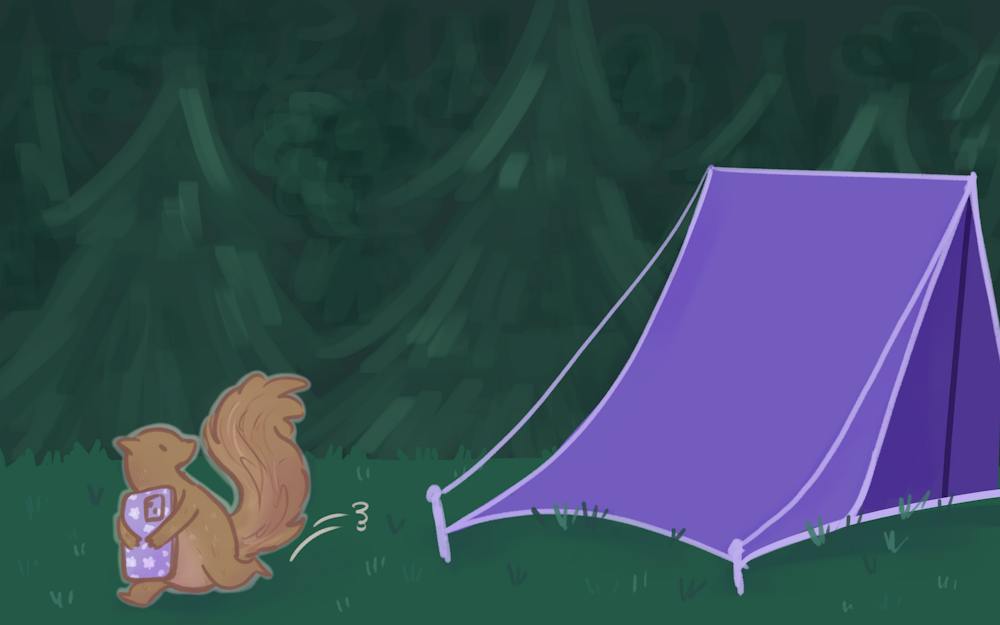
Two weekends in a row this semester, I escaped campus and ventured into the woods. Being out in nature, warmed by the sun, I felt very at peace. It wasn’t just the chirping of the birds and the rustle of the leaves in the wind. I made a conscious effort to disconnect from technology. It meant leaving my phone in the tent, not checking notifications right away and remaining present in the current moment.
This is easier said than done. After all, adults aged 18 to 24 send or receive an average of 109 text messages per day. Even when we are with friends, staying connected to those who aren’t up for an adventure in the woods is tempting.
I’ll admit that disconnecting felt strange. The first weekend, my phone died the first night. I sat with it in my hand and realized that I didn’t actually need it. We had very little service, so contact with the outside world was limited anyway. We had buildings with air conditioning and electricity, but there was no reason to fight for a space to plug in my phone immediately. Getting away from campus and some of our responsibilities was the point of a retreat out in nature.
My hand itched for the device. But, none of the camp activities that weekend required the use of my phone. For the first time in so long, I didn’t have any obligation to be available. There was no checking my email over the weekend, no logging on to check my grades. I was off the clock.
I left it in the cabin the next morning, and I felt free.
Having a cell phone in your pocket means anyone can send you a message at any time and expect an instant response. We are constantly checking our phones, whether it’s to scroll or to read yet another dreaded Microsoft Teams message. No one can simply avoid that angry red notification forever.
These facts have essentially eradicated the concept of a “work-life balance.”
Work-life balance is defined as the amount of time spent at work set against the amount of time spent with family, friends or hobbies. The balance is meant to preserve the sanctity of time away from work because everyone deserves to have periods of rest and relaxation.
However, if we are always expected to be able to answer messages, or at least receive them, that encroaches on our relaxation time. One moment, I’m watching football with my family, the next my boss is texting me about a meeting. All of a sudden, I’m stressed about work again, in the time I am supposed to be taking for myself.
It is easy to say that personal boundaries should be set. Do not immediately answer the work messages on principle.
However, that can be hard. When it is right there at our fingertips, it is tempting to respond right away. Forgetting to respond in the morning or when the weekend is over is a real possibility. Maybe impressing the boss by being reliable is an important goal.
Instead, employers and even professors should set clear expectations. No communication outside of work hours unless for emergencies. It can go for both sides; after all, bosses need time to relax too.
Just because cell phones are available and convenient, doesn’t mean it's always necessary to use them.
The work-life balance must be brought back. It shouldn’t take a weekend in the woods to get a moment away.
Sasha Burton (she/her) is an elementary education major with minors in Spanish and English.