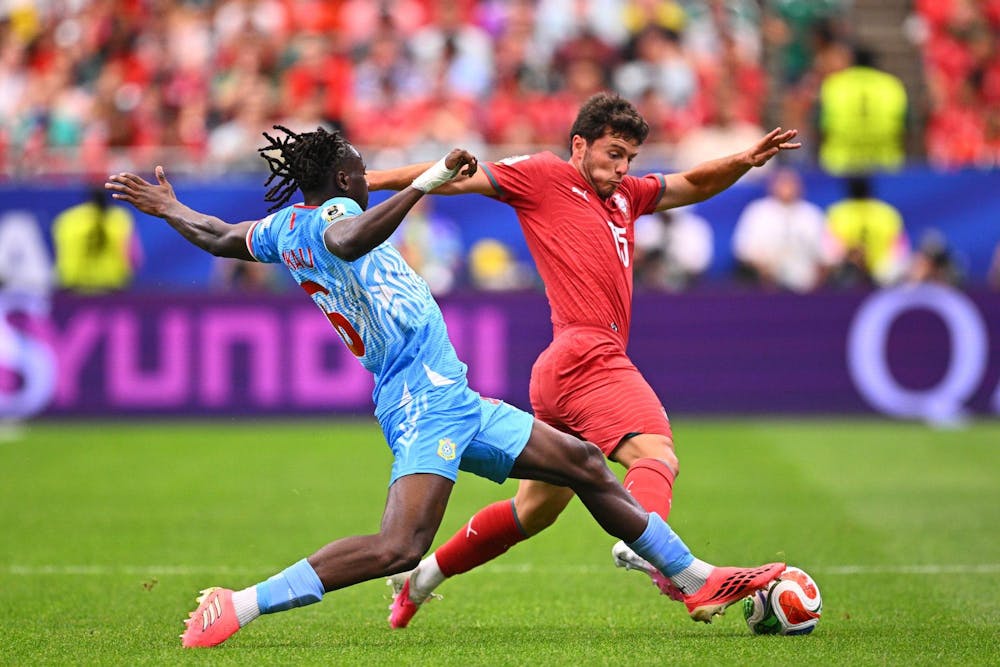
Editor's note: All opinions, columns and letters reflect the views of the individual writer and not necessarily those of the IDS or its staffers.
Who would’ve imagined that Cape Verde, an island country off the western coast of Africa with a population of half a million people, would rattle Argentina during their match July 3?
To make it simple, Argentina has Lionel Messi, an eight-time winner of the Ballon d’Or, the most prestigious prize awarded to the best football player at the time. This alone seemingly gave Argentina — who won the World Cup in 2022 — an advantage, while Cape Verde wasn’t even known.
And yet, the team pushed the defending champions to their limit. Argentina needed extra time to secure a 3-2 victory after Cape Verde equalized twice and was still willing to defend their team.
This made Cape Verde the biggest surprise of the tournament. The team’s draw with Spain was its first surprise. Then came its draw with Uruguay. And even though its match with Argentina ended in defeat, Cape Verde wasn’t as easy an opponent as he expected: “The match was ugly for us. We struggled,” Messi told ESPN.
I remember checking the World Cup groups — the teams that play one another during the first stage of the tournament — weeks before it started, and deciding that Scotland, Curaçao, Ivory Coast, Cape Verde and the Congo would not advance from the group stage. They were facing powerhouses in the sport with deeper World Cup histories, stronger players, and more international experience.
I was only right with Curaçao. But even the Curaçaoan team scored its first goal in its first-ever World Cup appearance, an accomplishment that years before wasn’t considered possible.
It turns out that the teams that have stolen the attention this year have been the minor teams.
The Congo was another country that surprised fans. In its first World Cup appearance in over 50 years, the nation made it to the second stage of the event. Though the team lost 2–1 to England, its performance throughout the World Cup, including a draw against Portugal, unified a country wrought by political division. People danced in the streets and proudly waved the Congolese flag, celebrating their nation despite the struggles that politics and war have caused.
The small football nations were expected to leave early. Put against the dominant countries in the sport, like Argentina or France, they fall short in every statistic.
Portugal had 75% of ball possession. Congo only had 25% throughout the match.
Germany has scored 239 goals across their four FIFA World Cups played. Curaçao only just scored their first one.
But the players left everything on the field.
Like Livano Comenencia, who scored the goal for Curaçao 21 minutes into the match. Or when Yoane Wissa scored the goal against Portugal, which was also the first goal for the Congo after 52 years of not qualifying in the World Cup.
These teams knew the tournament would be complicated, but instead of accepting their defeat, they put on a fight and show the world that being a small country compared to the likes of Argentina, Brazil or France, doesn’t mean instant defeat.
That’s what sports are actually about.
They give people a chance to prove that expectations do not always guarantee victory. Like IU’s own football team. No one believed we could win; however, we surprised everyone by winning the national championship.
Just because someone’s better than you, or because everyone is betting that you’re going to lose, doesn’t mean that’s true. When Argentina took the lead through Lionel Messi, the match seemed to be unfolding as everyone expected. Instead, Cape Verde ended up answering two times. The first one came from Deroy Duarte in the second half, and then with Sidny Cabral during extra time. For more than 120 minutes, they forced Argentina to fight for every opportunity. It took an own goal, meaning that they scored on themselves, in the 111th minute to secure the 3-2 victory for Argentina.
When the final whistle blew, Cape Verde had been eliminated. However, the match proved to us that a country of about half a million people can still push one of football’s greatest nations to the limit.
Cape Verde, Curaçao and the Congo left a big surprise, and gained our respect because they put everything on the field when it’s time to play. They knew well that the teams they were against were bigger and more experienced than them. But they still fought and ended up giving their people a reason to celebrate.
That’s why these teams matter. Their victories and defeats became moments of national pride. Just as memorable as how it was for IU fans to witness their team become national champions. That feeling united students and fans across every part of the country, and now it was the turn of these small teams to show what they had.
They didn’t win the match, but they won something bigger. The respect of every viewer and player.
It won’t be the World Cup, but it’s a part of history that everyone will remember.
Astrid Alomia (she/her) is a sophomore studying journalism with a concentration in public relations and a minor in marketing.