
The Cannes Film Festival is widely considered the most prestigious film festival in the world due to its longstanding reputation and extreme exclusivity. Each year, around 22 films are selected for the main competition, which features eight awards, including the festival’s highest prize for best picture: the Palme d’Or.
At the festival, appointed juries comprised of international artists gather to select the winners of each award category. This year’s main competition jury was led by esteemed director Park Chan-wook, with notable jurors such as Demi Moore, Stellan Skarsgård and Ruth Negga.
Aside from the main competition, other films are selected in categories like Un Certain Regard, which features upcoming filmmakers’ directorial debuts.
The main competition’s awards were bestowed Saturday at the closing ceremony. Here are this year’s winners.
Palme d’Or – Golden Palm
This is the highest prize awarded at Cannes and is given to the director of the Best Feature Film. This year, the award was given to Cristian Mungiu for “Fjord.” The film follows a Romanian and Norwegian conservative couple who face scrutiny after moving to the wife’s progressive hometown, when their youngest daughter arrives at school covered in bruises. “Fjord” tackles heavy themes of religion and questions the ethics behind continuing increasingly radicalized traditions.
Palme d’Or du court métrage – Best Short Film
This is the festival’s most prestigious short film award. It was awarded to Federico Luis for his film “For the Opponents,” which follows a young boy from a rough neighborhood in Tepito, who dreams of becoming a boxing champion.
Grand Prix – Grand Prize of the Festival
The Grand Prix is the festival’s second-most prestigious prize behind the Palme d’Or. It is awarded to the director of the winning film.
This year’s winner is Andrey Zvyagintsev for “Minotaur.” This film follows Gleb (Dmitriy Mazurov), a Russian business owner whose life is turned upside down as he faces immense pressure from his job and the discovery of his wife’s affair, all during the height of the Russo-Ukrainian War. The film draws parallels between Russia’s involvement in the war and Gleb’s mental breakdown.
Prix de la mise en scène – Best Director
This award is presented to the film with the highest directing achievement. This year, multiple recipients for two separate films won the award, which has only happened on six other occasions. Javier Calvo and Javier Ambrossi earned it for “The Black Ball” and Paweł Pawlikowski for his film “Fatherland.”
“The Black Ball” explores homosexuality through three different eras connected to desire, pain, and inheritance. It is set in Republican Spain in 1932, the Civil War in 1937 and contemporary Spain in 2017. The timelines are not joined narratively but embody the ageless struggle to communicate.
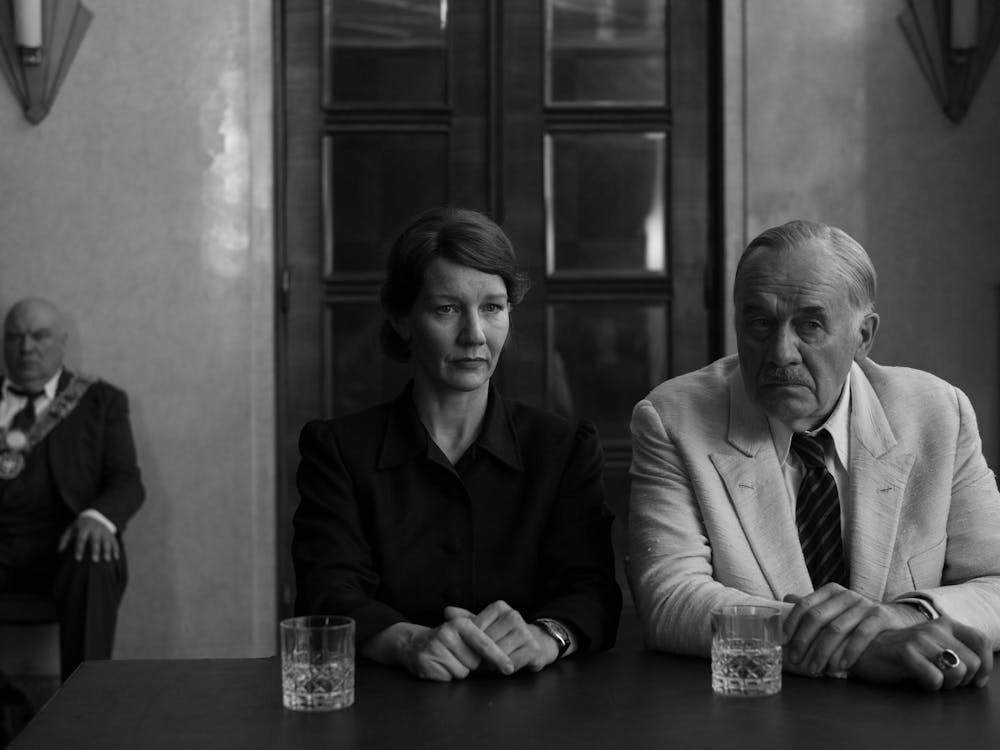
“Fatherland” centers on the relationship between the Nobel Prize-winning writer, Thomas Mann, and his daughter Erika as they embark on a road trip across Germany during the height of the Cold War. The film explores themes of identity, family and guilt amid the turmoil of post-war Europe.
Prix du Jury – Jury Prize
The Prix du Jury is the third most prestigious prize at the festival, awarded to the winning film’s director.
Valeska Grisebach was given this year’s award for her film, “The Dreamed Adventure.” The film follows Veska (Yana Radeva) as she helps an old friend whose car has been stolen near the border between Bulgaria, Greece and Turkey. As they reconnect, Veska is pulled into the shady criminal world that lies beneath the town she presumed to be innocent.
Prix d’interprétation masculine – Best Actor
This award is given to an actor who delivered the most outstanding performance. While it’s not common, the prize has occasionally been awarded to multiple performers.
This year, the award was given to both Emmanuel Macchia and Valentin Campagne for their performances in “Coward.” The film follows Pierre (Macchia), a French soldier in World War I who’s eager to prove himself. During the war, he meets Francis (Campagne), who puts on a theatrical revue to raise their comrades’ spirits. “Coward” explores themes of sexuality and escapism in a wartime setting.
Prix d’interprétation féminine – Best Actress
This year’s award winners, Virginie Efira and Tao Okamoto, each took home the prize for their performances in “All of a Sudden.” This movie follows Marie-Lou Fontaine (Efira), a nursing home director, whose care philosophy revolves around listening and respecting residents’ dignity, despite pushback from some of her staff. When she encounters Mari Morisaki (Okamoto), a terminally ill playwright, the two form a close bond and turn the facility into a symbol of resistance and humanity.
Prix du Scénario – Best Screenplay
The best screenwriter of the competing films is recognized for their outstanding work.
This year’s winner is Emmanuel Marre for writing “A Man of His Time.” Taking place in World War II, this film follows Henri Marre (Swann Arlaud), who arrives in Vichy, France, carrying copies of his manuscript “Notre Salut.” He believes the manifesto will rescue France from the Vichy regime with its patriotic convictions and his engineer’s methodology: efficiency above all.
On many occasions, Cannes-winning films such as "Sentimental Value” go on to be strong competitors for major Academy Awards, especially in the category for best international film. While award season may be a long ways away, these acclaimed projects are certainly worth keeping an eye on.


