
Editor's note: All opinions, columns and letters reflect the views of the individual writer and not necessarily those of the IDS or its staffers.
The age of instant communication was born without much fuss. Barack Obama’s 2008 campaign took over YouTube and people kept up their Snapchat streaks. Our globalized culture took in social media as a tool through which it could express itself.
What happened next should have been obvious in retrospect. The tool of instant communication grew into an amorphous shoggoth and began, on its own, molding people and culture. Screen times jumped, and content became shorter and more dopamine-focused. We are now at the point where many of life’s interactions are sent through algorithms focused on rage and instant gratification.
This revolution resulted in institutions left and right buckling at the seams; just look around and you’ll see it throughout politics, leisure and journalism. What’s made my pessimism worse is how our society’s responding: illogically.
Journalism will have to survive this crisis one way or another to keep us in a functioning society — one where power is held to account, where people know and understand what's going on around them, where there are informed voters and decision-makers. It’s mine and most of my staff’s dream that the world understand the gears that turn it, including the dings in them, as intimately as possible.
If my industry pulls the transition off, we could live in a world where journalism becomes the perfect platform to fight back against the paradoxical forces of instant communication that push us apart.
If we pull it off.
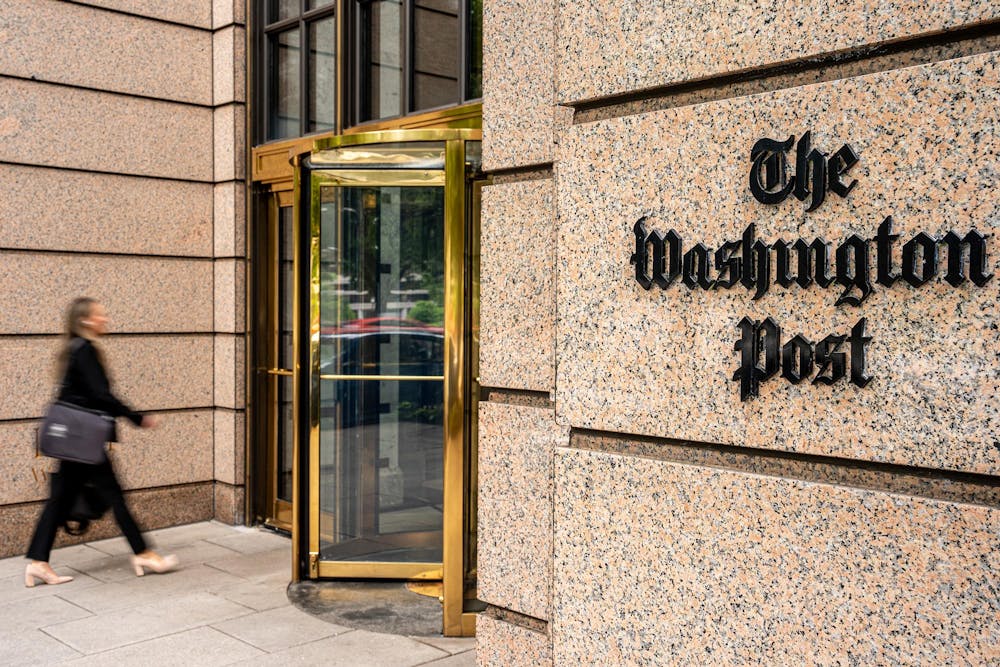
On Wednesday, The Washington Post (owned by the fourth-richest man in the world) fired more than 300 journalists. Hit hardest were the metro section, the sports section and international coverage. For all intents and purposes, this was a gutting.
Now that doesn’t mean we're hearing a death rattle of any sort.
Reporters are out there as we speak risking their lives and working over 80 hours per week for the cause. I’m sure the Post will continue its tradition of excellent journalism, carrying on with its mission.
But the layoffs are a symptom of the larger backsliding. If something doesn’t change, we’re going to live in a successively less democratic and less connected world.
We, as a society, need to work out ways to strengthen journalism. I hope most can agree on that. Doing so will require more than just capital or reporters making funny TikToks; it'll necessitate a deeper cultural shift.
How’d we get here?
No one person is to blame, really. There’s a lot of finger-pointing in my industry about why we’re failing to reach the public, or why the public’s failing to pay attention.
As someone who’s looked at the Indiana Daily Student’s engagement metrics and spoken with people in our community, I’ve come to understand the idea of us “failing to reach people” is farcical. The IDS is. The Post was and still is.
What infuriates me most is the constant stress of “innovation” as an end-all solution to doing so. “Innovation” is not something people sitting in a room can decide to do. Firing hundreds at the Post and cutting resources decade after decade is also certainly not conducive to “innovation.”
To me, the word’s come to symbolize smoke and mirrors thrown together by cowardice. Am I really supposed to believe there’s some grand plan here? The fourth estate must thrive, but we’re not confronting the crisis head-on.
The deeper issue is falling ad revenue and consolidation, which has laid off astronomical amounts of journalists well before Wednesday’s firings. The industry long understood as profitable faced deficits year after year as the digital world grew and grew.
For the owners of news outlets, that presented a live-or-die option between austerity and running in the red. Many chose austerity. Where has that left local news? Well, check out how many stories at Bedford’s Times-Mail actually came from that outlet.
There used to be a culture of wealthy people taking on newspapers or other public services at a loss to give back to their community. To an extent, that still exists. Good patrons just let the news be, unlike Bezos’ infringement of editorial independence vis a vis blocking the Post’s endorsement.
I’m just saying, if I was the fourth-wealthiest person in the world, I’d be OK with The Washington Post operating at a loss, especially as my own net worth grows. And I certainly wouldn’t pretend the newsroom was the problem when hundreds of thousands canceled their subscriptions after breaking editorial independence.
What must be done?
In simplified Keynesian economics, recessions are usually viewed as a symptom of waning aggregate demand (meaning consumer spending, business spending and confidence). To fight recessions, which most agree are bad, Keynesians will argue for government intervention to (guess what!) boost aggregate demand.
Under recessions, that usually means making it easier to borrow money (lowering interest rates) and government investment in infrastructure and other ways to increase employment. Traditionally, this model has worked.
You can think about journalism as being in a crisis of aggregate demand. There’s just not enough incentive to buy in or make revenue work unless you’re the New York Times and own Wordle.
So, the basic platform of a solution to my industry’s woes is kind of simple: take steps to help make journalists’ lives easier and invest in them. Then watch the ripple effect grow. There are tons of ways to do so: donate to non-profit newsrooms, donate to scholarships for people studying journalism. If you’re an administrator at a school teaching journalism, maybe let’s view investment as a public good to society rather than a leash.
And hint hint, wink wink, if you have a tip, let a journalist know.
As for jobs, investment during the crisis of adapting to the online world needs to be seen as a necessity. So, to those with the will: deficit spend.
I’m not concerned about the ability of reporters to report; if anything, I feel the opposite. But journalists deserve to live and work without feeling the fear of what’s coming upon the “voluntary buyout” email and being embalmed with quiet rage after the “terminated” subject line.
The bigger question of how we shift our culture away from the dopamine cages is beyond my 22-year-old mind’s comprehension. But I can’t emphasize enough that the solution is not going to come from austerity.
If there is to be a way forward in journalism, its path will come from time, investment and care.
Andrew Miller (he/him) is a senior studying journalism and history. He is currently co-editor-in-chief of the Indiana Daily Student.



