
Editor's note: All opinions, columns and letters reflect the views of the individual writer and not necessarily those of the IDS or its staffers.
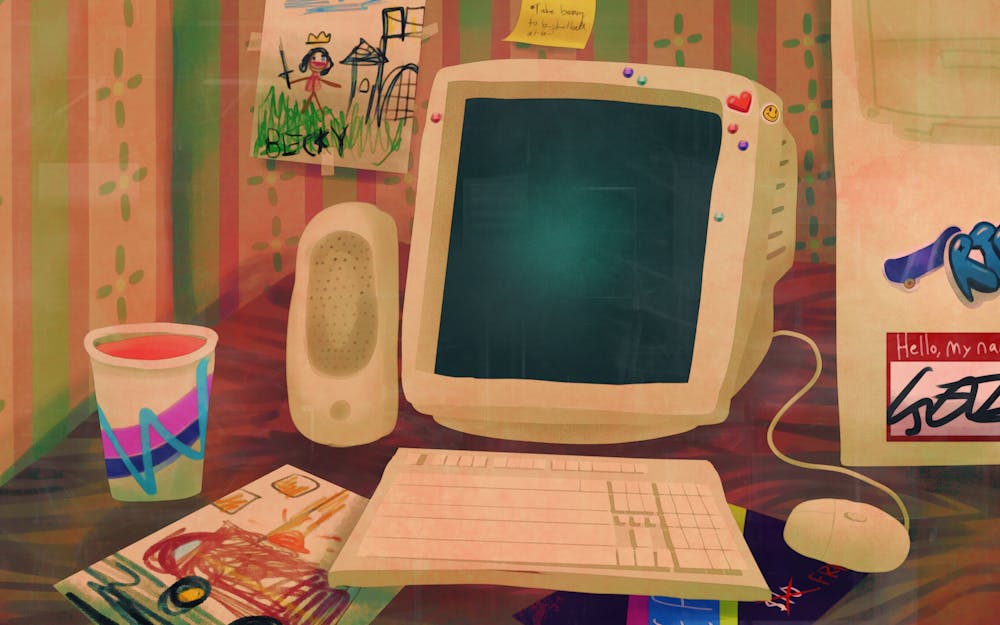
With the popularization of AM broadcasting in the 1920s, cabinet radios became the focal point of living rooms across the United States. In the 1950s, families gathered around the glow of a boxy television set, rearranging the sofa to face its screen. Thirty years later, the home computer arrived reigning atop the glorious throne also known as your dad’s cluttered rolltop desk.
These devices bonded our entertainment to a specific location in the home. By anchoring our technology into place, this setup gave us what we so desperately need today: media in moderation.
Let’s face it: we’ve all gotten stuck in that vicious cycle of closing Instagram just to open it right back up again. Today, our devices are always in our pockets, ready to access with just a swipe. The portability of phones, tablets, and laptops is what makes them so disruptive in our lives. When technology is constantly at our beck and call, we reach to it by default. But what if you had to physically go into another room and log onto a computer to do your scrolling?
You can’t tote around your home computer to use whenever you want to check social media, or hold your television set in bed to binge Netflix until some ungodly hour of the night. Stationary technology allows us to come and go with intention, rather than holding us captive by the internet’s ever-looming presence. Designated media zones in the home like entertainment centers, family computers and turntable setups allow us to consume content in shorter, less random bursts.
Home computers allow us a time and place for media consumption to fight the automatic impulse to reach for our phones. They’re also designed in a way that is more engaging for the brain.
In a 2023 study, 87 participants were given PSAs to watch in either a neutral or bent neck position. As they watched, psychophysiological factors such as heart rate, skin conductance and facial electromyography were recorded to indicate any physical stimulation the participants may have experienced. In this case, the bigger the reaction, the higher the brain activity. The results concluded that participants in a neutral, or straightforward position had higher levels of brain activity compared to those watching in a flexed position.
When you’re facing a television set or desktop computer, you are in a much more alert state than you would be hunched over a phone or tablet. By design factors alone, stationary technology allows us to think more critically about what we see. Smaller, mobile devices are, in contrast, built to pull us in with no way of getting out. In that safe, almost fetal position we assume to scroll on our phones, our brains go on autopilot to handle the mass amounts of information being thrown at us.
Home entertainment spaces allow for more tangible, focused interaction with the media we consume. For example, vinyl record listeners must open the packaging, place the record on the turntable, lower the needle and flip the record over when a side finishes playing. The physical actions required to consume the content create a more engaging experience. Switching dials, pressing buttons and typing on keys all introduce a tactile element to media consumption that creates a more intentional process than tapping on a screen does.
The good news is, these little media hubs in our homes could come back. Just this year, Generation Z began the “physical media movement” to reduce our reliance on digital sources for music, television and film. Beginning this January as a sort of New Year’s resolution, the analog movement has gained traction online, where users share their physical media collections and encourage others to build their own, opposed to using streaming services like Spotify and Apple Music. As a result, physical media sales have spiked.
While there is a lot of nostalgia driving the movement, this trend is more significant than just retro aesthetics. Bringing back set-ups like home computers would give people access to the media they need, while still granting them the freedom to walk away.
Emma Howard (she/her) is a sophomore studying cinematic arts.



