
When awards season arrives, most conversations center around performances, directing styles or the box office. But the adapted screenplay category tells a different story about literature’s long afterlife. This year’s nominees reveal three very different novels, separated by centuries, returning to the screen at a moment when audiences seem hungry for stories that have to do with memory, creation and resistance.
The original works of three of this year’s category leaders include Maggie O’Farrell’s “Hamnet,” Mary Shelley’s “Frankenstein” and Thomas Pynchon’s “Vineland” — adapted as “One Battle After Another.” While the works may not be obvious together, overall, they form a story of how filmmakers continue to reimagine literature in a contemporary spotlight.
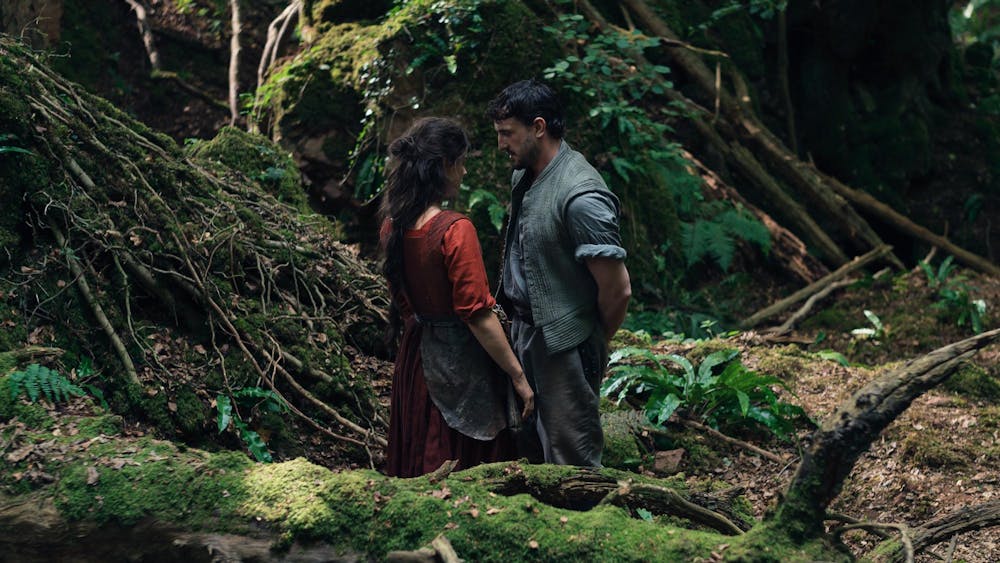
In O’Farrell’s “Hamnet,” what stands out is not Shakespeare, but the quiet spaces around him. Her novel, published in 2020, reframes the life of the playwright through his absence, centering the story around Agnes, played by Jessie Buckley in the film, and her life story following the death of a child. It’s a novel that has less to do with literary legend than it does with emotional texture; the way memory accumulates in objects, gestures and silences.
The film adaptation also feels timely, as audiences seem drawn to stories that dismantle these myth-like figures and restore humanity. “Hamnet” does exactly that by turning one of history’s most monumental writers into a theme around a family’s private loss.
If “Hamnet” is turning inward, “Frankenstein” reaches outward toward one of literature’s oldest and most enduring questions: What does it mean to create something you cannot control?
Mary Shelley’s 1818 novel has been adapted countless times, yet few popular interpretations capture its real philosophical depth. The original text is more of a meditation on responsibility, isolation and the consequences of ambition, not just a horror story.
These are themes that feel increasingly important in an age shaped by new technology and the uncertain ethics that come along with it. Each new adaptation has become, in a way, a mirror of its current times. The persistence of “Frankenstein” on screen suggests that audiences continue to return to the novel not just for nostalgia, but for its ability to articulate types of unease about innovation and identity.
The most unexpected adapted literature among this year’s nominees may be Thomas Pynchon, whose novels have long been considered nearly impossible to adapt. “Vineland,” originally published in 1990 and the source book for “One Battle After Another,” is a satirical exploration of political paranoia and countercultural memory set against the ideals of the late 20th century.
Pynchon’s prose thrives on digression, with tonal shifts and a lot of cultural and political references that do not really have straightforward translation. Adapting this work requires distillation, trying to identify the emotional and thematic core while accepting that some literary aspects must remain uniquely in the book. What makes this adaptation interesting is how it reframes Pynchon’s skepticism about institutions and surveillance for an audience that lives with similar anxieties in new forms.
A shared fascination with aftermath connects these three nominees as well as many other adapted works. Each story asks what happens after a defining moment, whether after death, after invention or after revolution. It also focuses on how individuals rebuild meaning within that uncertainty.
While the Oscars will ultimately reward a film the honor of best adapted screenplay, I think the deeper story is in the endurance of the writing. Literature continues to offer filmmakers a pool of ideas that evolve with each retelling, showing that adaptation is not an act of preservation alone, but also an opportunity to put stories worth telling on the screen for new audiences.


