In many ways, being a sports fan now is easier and better than ever.
More teams and games are accessible via streaming, highlights are online within seconds and athletes can interact directly with their fans. Being a sports fan is no longer limited to the three hours of a game. It has become a constant experience shaped by trade notifications, live reactions and endless online conversations. Social media has turned fandom into a 24/7 job, changing not just how we watch sports, but how we feel about them — for better and worse.
The shift may seem harmless. In many ways, it is. Sports feel bigger now. Louder. More connected. You’re never alone when your team wins, and you’re never alone in a loss. There’s always someone reacting on social media with you.
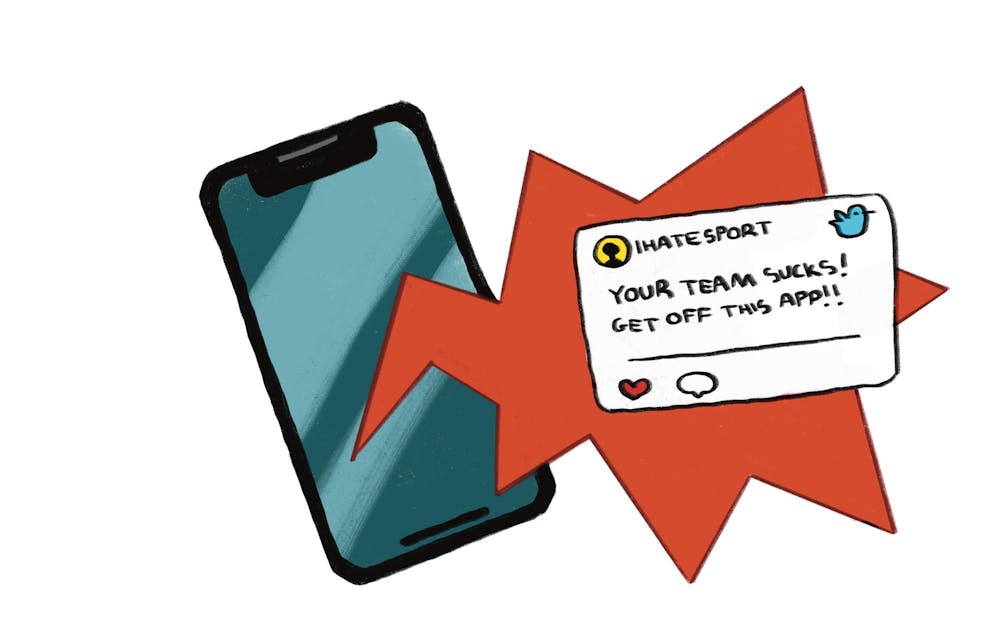
But social media is uncontrollable, and there’s no off switch. Every time I open social media and look at the comments, I see hundreds of burner accounts hiding behind blank profile pictures and random usernames sending some of the nastiest things you could say to a person.
Fandom on social media runs on immediacy. Being a sports fan online means having an opinion right away — not after reflection, not the next morning, but immediately after, or during, the game. Social media timelines move fast, and if you wait, you feel late. Instead of letting games sit with us, we compress them into snap judgments and definitive takes before the emotion has even settled.
That speed has consequences for athletes.
The same platforms that make us feel connected to sports can quickly turn hostile, and what starts as passion can become harassment. Athletes are flooded with direct messages and comments after one bad game. Mistakes that used to fade by the next morning now live online forever. One of the most harassed athletes on social media is Lebron James. In 2021, a study was conducted that found that James received 122,568 abusive messages on what was then known as Twitter.
It happens at the collegiate level, too. Late last college basketball season, former IU basketball player Oumar Ballo said he received death threats and messages wishing him harm through his social media direct messages.
A 2025 study by the NCAA found that 51% of Division I men's college basketball players had experienced harassment on social media due to their performance. What’s even more striking is that 46% of that harassment came in the form of threatening messages from people who had bet on that athlete.
Another way social media has changed being a fan is by blurring the line between access and intimacy. Fans can follow athletes' workouts, family life and what they do during the offseason. That access can make the teams and athletes feel more human and less like superheroes. But it can also create a false sense of closeness — as if fans are entitled to transparency or personal responses from athletes.
The WNBA’s Caitlin Clark and Paige Bueckers both dealt with highly publicized stalking situations, partly fueled by the visibility and access that social media provides.
Clark’s rise from the University of Iowa to the WNBA turned her into one of the most recognizable athletes in the country. With that visibility came danger. A man, identified as Michael Lewis, sent Clark threatening messages and traveled to Indianapolis continuously driving around Gainbridge Fieldhouse with the intention to find Clark.
Bueckers’ case followed a similar pattern. While starring for the UConn Huskies, she was targeted by a man who traveled to UConn's campus and claimed to have a relationship with her. There was no relationship. There was only access to social media posts, interviews and highlight clips enough visibility for someone to build a fantasy and act on it.
What starts as admiration of an athlete can quickly escalate into obsession when fans start to believe that constant access means personal connection.
Fixing the issue starts with individual responsibility. Sometimes all it takes is pausing before posting to separate criticism of performance from attacks on an athlete's character. Not every missed shot needs a final verdict.
Betting sites, schools and social media platforms also need to step up. Stronger moderation tools, clearer consequences for threatening behavior and better protections against gambling-related harassment would send a clear message that abuse is not part of the game.
Some gambling sites have already begun to respond. BetMGM recently expanded its authority to suspend users who harass athletes, coaches or other personnel.
Schools could take similar action if harassment comes from their own students or staff. Codes of conduct already exist for campus behavior. Applying those same standards to online harassment tied to college athletics would reinforce the idea that representing a university as a fan comes with responsibility.
Social media has expanded the meaning of being a fan. It is up to fans to decide what kind of presence they want to be in that space. If we truly care about sports, we should care about the people who play them and treat them with respect online.
Jack Davis (he/him) is a junior majoring in media with a sports concentration and pursuing a minor in folklore and ethnomusicology and a certificate in journalism.