
Editor's note: All opinions, columns and letters reflect the views of the individual writer and not necessarily those of the IDS or its staffers.
You hear shouts outside your window. Cackles echo down the street. The hair rises on the back of your neck. Dragging its legs slowly behind, Halloween approaches slowly, ushering in one of college students’ heaviest drinking events: Halloweekend.
More than a litany of niche yet nonchalant costumes, the Halloween celebrator must come equipped with an understanding of both the pleasures and damages of drinking, as inseparable as they are. While fun in social events and socially prescribed as a norm, it does take its toll on your body — and, no, red wine is not an exception.
To further their debate, let me don my Ms. Frizzle costume and take you on a "Magic School Bus" ride of alcohol’s journey and its effects: short-term and long-term, good and bad. Seatbelts, everyone!
On a night out, you may immediately notice a mixed bag of symptoms — euphoric feelings and vertigo, but also frequent urination and passing or blacking out. But how can you weigh that last shot of throat-burning Jose Cuervo if you don’t know what those symptoms mean?
That sense of euphoria is the release of dopamine in the nucleus accumbens of your brain’s basal forebrain — its processing factory of reward, motivation and pleasure. Each sip of alcohol lights up these reward centers like a cheap Christmas tree, one that might short-circuit your whole house. Your body is constantly having internal conversations, so if alcohol is constantly providing pleasure signals, your brain will stop producing its own; thus, your baseline feelings of reward, motivation and pleasure plummet.
What ensues is often addiction, and that line between drinking enough to let loose and so much that it’s dangerous is blurry. This blurriness is dangerous, even though we are generally aware that tolerance levels vary greatly — for “lightweights” or “heavyweights” — because biologically female bodies are at a higher risk for health effects from lower amounts of alcohol, notwithstanding your genetic predisposition of sensitivity to its rewarding effects.
For example, most of us have experienced or heard stories of vertigo and overflowing bladders: stumbling into cabs, going to the bathroom every five minutes or even peeing their pants. Surprisingly, dehydration lurks behind these funny yet embarrassing anecdotes.
Alcohol stops the release of vasopressin, a hormone that suppresses the production of urine, forcing your kidneys to release more water than they should; not only do you pee more, but this forced dehydration leads to vertigo by impacting the levels of fluid in your ears, vitamin B1 in your body and brain signals for balance and hearing. Vertigo, defined as a feeling of being off-balance, in turn causes many classic symptoms like headache, nausea, dizziness, vomiting or swaying.
These short-term effects, left unchecked, can deteriorate into long-term consequences: chronic dehydration, anemia, balance problems and incontinence for those with weak or overactive bladders. Even in the short term, severe loss of fluids — like vertiginous vomiting — can cause dangerously low blood pressure and a fast heart rate, risking alcohol poisoning or death.
So, while you may enjoy the merry-go-round of vertigo, enhancing the euphoria of dancing or simply staring up at the spinning ceiling in bed, your body won’t sympathize. The sedative sleep that follows, sudden and dreamless, is also a warning sign. It shortens and delays the rapid eye movement stage of sleep, wherein you dream and sleep’s most important work gets done. It improves memory and problem-solving by pruning synapses, regulates mood by processing emotional memories and supports brain development, protecting against dementia.
Long-term alcohol-induced passing out and lighter sleep have been linked to cognitive dysfunction and emotional imbalance, and it has been called a possible contributor to the cycle of addiction. Memory dysfunction follows blacking out, Drinking heavily and quickly on antidepressants or an empty stomach. College students surveyed in 2002 learned later that “they had vandalized property, driven an automobile, had sexual intercourse, or engaged in other risky behaviors.” Not only can you completely (en bloc) or partially (fragmentary) stop having memories while awake and conscious, but your hippocampus is under attack. Injury to your hippocampus impairs your ability to “create memories, remember specific moments or process information like names, dates, places and events,” according to the Cleveland Clinic.
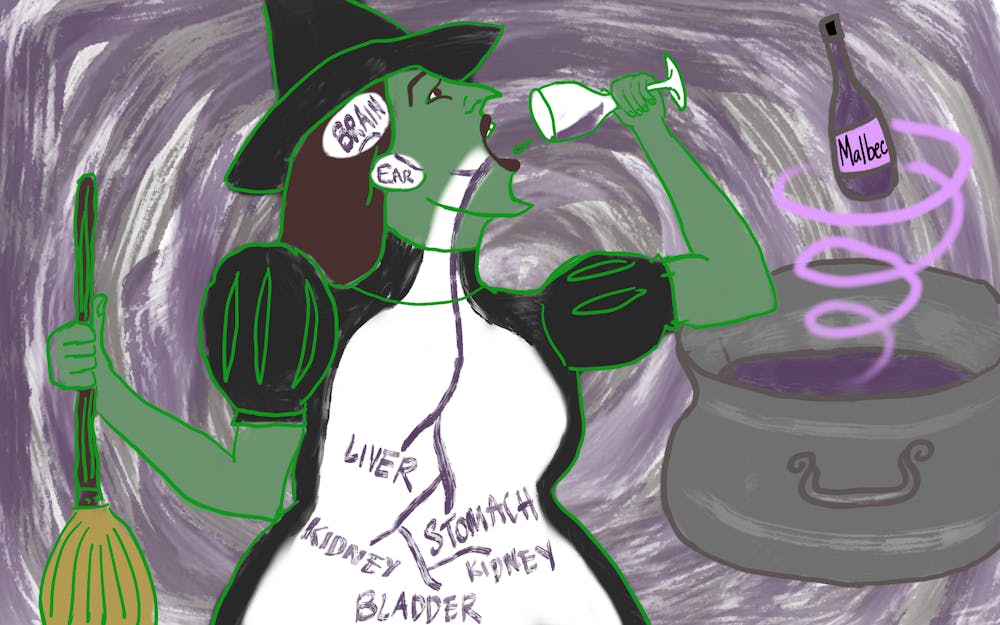
They say to love someone else, you must first love yourself; well, I say to have fun drinking, you must first understand that fun. Sure, dress up as a witch that loves a glass of Spanish Malbec, but not necessarily a cauldron full. Red wine’s antioxidants won’t save you — no drink can counteract what it does. Like Mother Earth, you only get one body. Treat it like you want to keep having fun, in moderation.
Odessa Lyon (she/her) is a senior studying biology and English, pursuing a minor in European studies.



