
IU sophomore Yotam Krikov woke up the morning of Oct. 7, 2023, in Jerusalem to the sounds of sirens. He joked they were being bombed, but a few minutes later, he and 236 other students in his gap-year program were rushed to a bomb shelter.
Two years later, Krikov and around 150 others walked up the candlelit stairs of IU Hillel to the second floor. Together, they held small Israeli flags as they mourned and remembered the victims of the attack at a vigil hosted by IU Hillel, home of the Jewish Culture Center.
On Oct. 7, 2023, a Hamas-led attack left nearly 1,200 people in Israel dead and 251 taken hostage. An additional four individuals had been taken hostage prior to the attack, bringing the total number of hostages to 255.
According to the Associated Press, 148 hostages have been returned or rescued alive, and the bodies of 59 have been recovered. As of Tuesday, 48 hostages remain in captivity, with 20 believed to still be alive. In response to the initial attack, the Israeli military began a ground invasion later that month. The Israel-Hamas war is still ongoing with ceasefire negotiations underway.
The dining room of the first floor of Hillel displayed pictures of the 251 hostages. Underneath the photos were the words “bring him/her home now.” The display was a part of a two-day museum, created by IU Hillel Vice President of Israel Engagement Mack Lapp.
Lapp created the museum as part of his role as an Emerson Fellow with StandWithUs. The fellowship is a one-year program that trains and empowers student leaders on campus to educate others about Israel and combat antisemitism.
In the service area upstairs, the vigil began with a speech from senior Shayna Grossman, president of IU Hillel’s student executive board.
“It’s been two years since the world we knew shifted in a way we never could have imagined,” Grossman said during her address. “Tonight is not just about memory, it’s also about presence. It’s about standing here together, acknowledging both the heartbreak and the strength that have shaped us.”
IU Hillel estimates over 4,000 Jewish undergraduate students attend the university. Grossman said she believes many are feeling the guilt and grief of the ongoing war, but she hopes the vigil is a reminder that there are others feeling the same way on campus.
“Let it remind us that our group is real because our love is real,” Grossman said. “We gather to remember the 1,200 lives taken and to honor the resilience that has carried the Jewish people.”
Many others took the stage during the night. Some spoke of people close to them who passed in the war. One spoke about someone’s family whose bodies were found huddled next to each other in a house they built in a Gazan village.
Others recognized the fighters, soldiers and emergency squads who fought and fell in battle.
Gaza’s Health Ministry has reported that more than 67,000 people in Gaza have since been killed. The health ministry is part of the Hamas-run government, and does not distinguish between combatants and civilians. The United Nations and many independent experts consider the ministry the most reliable source on casualties of the war in Gaza. It has said that women and children make up around half of those killed.
Around 466 Israeli soldiers have been killed, and 2,951 others wounded. The number of Israeli citizen fatalities are unknown.
In September, President Donald Trump released a plan to end the Israel-Hamas war in Gaza and release all remaining hostages. Both Israel and Hamas have signaled support for this plan, the path forward is unclear.
Negotiations between Hamas and Israel in Sharm El-Sheikh, a city in Egypt, are officially underway and are expected to last an unknown number of days. There will also be mediators from the United States, Qatar, Egypt and Turkey in attendance.
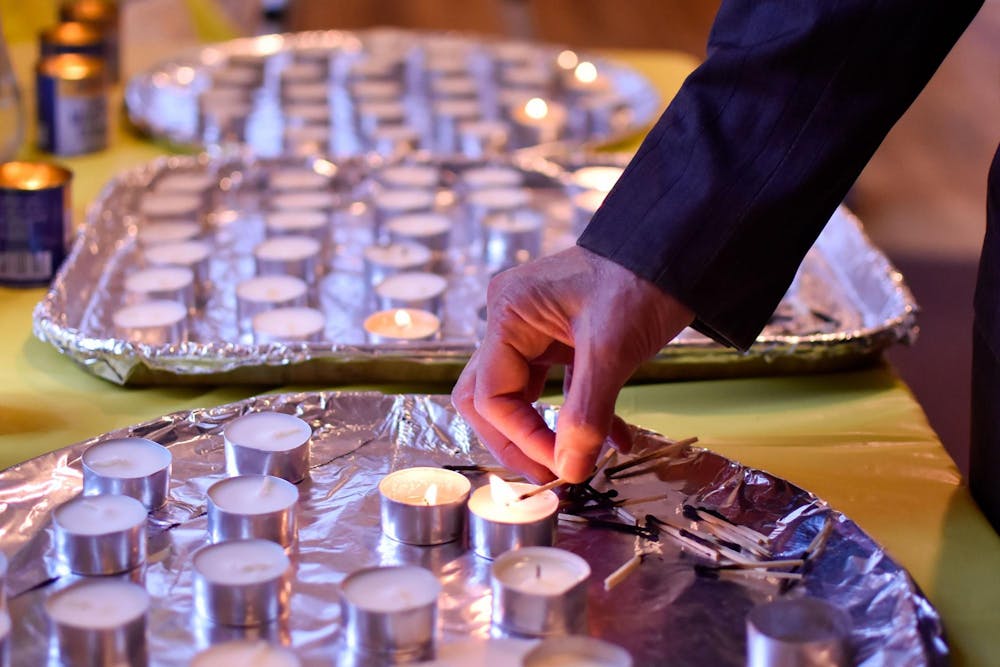
Members of IU Hillel and other Jewish organizations recited seven prayers, one including the theme of hope and peace, each ending with a new candle being lit. Members in the audience held up flashlights in lieu of candles. Grossman referenced that moment at the end of the night.
“As each flashlight was lit, the room began to glow as a reminder that even through pain, light can still spread,” Grossman said in her speech. “When I think about the past few years, I think about how much we’ve all changed. We’ve learned to stand taller when the world feels heavy.”
Grossman told the IDS the events of Oct. 7 made something in her click. It prompted her to be more active and get involved with IU’s Jewish community. She reflected on the opportunity to go to multiple cities in Israel during the summers of 2024 and 2025.
Despite the events of the Israel-Hamas war, Grossman said she felt safe there.
“It’s the only place I can go in the world where I’m surrounded by other Jews,” Grossman said. “Where I can wear my necklace and not be scared.”
Grossman said when the war began, she experienced antisemitism. Mail that her grandmother would send her, filled with items representing Israeli culture, were trashed by others after being left on her porch. She took off her Star of David necklace for a while.
Antisemitism in the United States jumped rapidly following the attack two years ago.
In 2024, the Anti-Defamation League reported 9,354 antisemitic incidents across the United States. It marks a 344% increase over the past five years and is the highest number on record since the ADL began tracking antisemitic incidents 46 years ago.
However, the ADL did change their methodology in 2024 to include rallies that feature anti-Zionist chants and slogans.
Incidents occuring on college campuses rose 84% higher than in 2023, with 1,694 total.
Jeff Linkon, executive director of IU Hillel, said antisemitism has been around long before Oct. 7, 2023. However, he said the attack “hyper-accelerated” everything.
“What’s incredibly alarming today on campus is the alienation and normalization of antisemitism,” Linkon said. “Jewish students on college campuses have been alienated for two years. They’re not connecting with people of differing views and they’re not having engagements with people who are willing to have meaningful dialogue.”
Linkon said he’s concerned Jewish people growing up are going to hear the word “Judaism” and think about fighting antisemitism instead of learning about the history and culture of Israel.
Sarah Harari, an IU Hillel staff member, said the events of Oct. 7 impacted her socially. Many of her non-Jewish friends posted stories on social media that left her feeling hurt.
“I tried really hard to have positive or healthy debate with them but suddenly so many relationships closed their doors,” Harari said.
She knew coming to IU to be a part of Hillel would be about her supporting students that were going through the same thing.
Linkon said the vigil at IU Hillel did exactly that. The night was about supporting those in Israel, but also acknowledging that no one is immune to the impacts of the war. He said Israel is central to the Jewish community.
“It’s something that is ancient and rooted in our identity for generations upon generations,” Linkon said. “But that somehow classified us as responsible for the actions of the government. Our students certainly aren’t responsible for this war.”


