
Editor's note: All opinions, columns and letters reflect the views of the individual writer and not necessarily those of the IDS or its staffers.
When I was 12, I had certain thoughts and behaviors that I did not consider unusual. In hindsight, I think I washed my hands a lot. After a point, it had become a ritual to wash them at least once every 30 minutes and about three or more times before touching my computer or notebooks. I had also developed a fear of the color red, leading me to wash my hands just at the sight of it on everyday objects.
It was only when my mother saw my palms become flaky and almost develop cracks from all the vigorous hand washing that she realized something was off. As a medical professional, her doctor’s eyes were alarmed. She inquired, and I told her about some of my behavioral patterns, which, until then, a pre-pubescent middle schooler like me thought were normal.
The truth was they weren’t. It was only due to her active intervention that we saw a psychiatrist who diagnosed me with obsessive-compulsive disorder, colloquially known by its abbreviation OCD. OCD is often misunderstood in popular culture as the tendency for someone to be orderly by arranging their pens a certain way or alphabetically organizing their bookshelf. I believe this misconception of the condition is quite common and leads to invalidating the seriousness of the issue.
In my personal experience, OCD has been more about intrusive thoughts. For instance, even today whenever I leave my apartment, I make sure to check if the bathroom faucet is running or not. I do this by closing and opening the bathroom door exactly three times — sometimes more, depending on my mood. I recognize the irrationality of doing this, but I still do it because my brain constantly buzzes with the thought of my apartment getting flooded. My rationale for legitimizing this action is attempting to achieve greater accuracy in reaching reality through multiple observations.
Through medication and behavioral therapy, I have overcome most of the worst aspects of my condition, like compulsive hand washing. However, there are still days when some of those symptoms return to varying degrees, but my therapist and I have developed ways to handle them. Certain behaviors feel usual to us, and it isn’t just individual ignorance that makes them usual; it’s also a lack of intervention from people around us that fuels our habits. We often don’t feel like ourselves; we recognize that to a point, but we don’t act upon it until a loved one points them out to us.
Today’s mental health discourse is often characterized as an individual problem, which diminishes the role of community in helping people counter their conditions. Professor of critical psychiatry at University College London, Joanna Moncrieff, in her work “The Political Economy of the Mental Health System,” critiques this narrow biomedical perspective on mental health issues. She suggests mental health issues are not like physical issues, best explained by chemical abnormalities inside an individual’s brain. Instead, they are deeply entangled with social, economic and political realities.
She argues that mental healthcare has grown in a capitalist system prioritizing efficiency and discipline. By labelling mental distress as medical and situating the problem solely within the individual, it obscures the contribution of social isolation, socio-economic inequalities and racial discrimination in increasing the rates of mental suffering. This perspective challenges the prevailing biomedical model, which often dominates treatment and public perception. It calls for a deeper acknowledgment of how our environment creates conditions for distress, just as any biological cause.
This critique underscores that addressing mental health issues requires communal and systemic solutions. In part, such community spaces allow us to recognize distress in others as readily as we notice it in ourselves, creating a foundation for shared healing rather than solitary endurance. Moncrieff’s critique highlights a deeper material issue that requires policy changes, which potentially limits our immediate agency, but our hands aren’t completely tied; there are ways in which we can develop communal methods to support our peers.
At IU, we have existing resources such as care referrals that promote communal support. However, that mustn’t be the end of it. We should actively work toward creating conditions of acceptance and spaces where everyone feels welcomed and noticed. This could be achieved through schools that teach early emotional literacy, workplaces that offer accommodations for individuals experiencing mental distress or even a student organization on campus that brings people together and educates them about active interventions and emotional care.
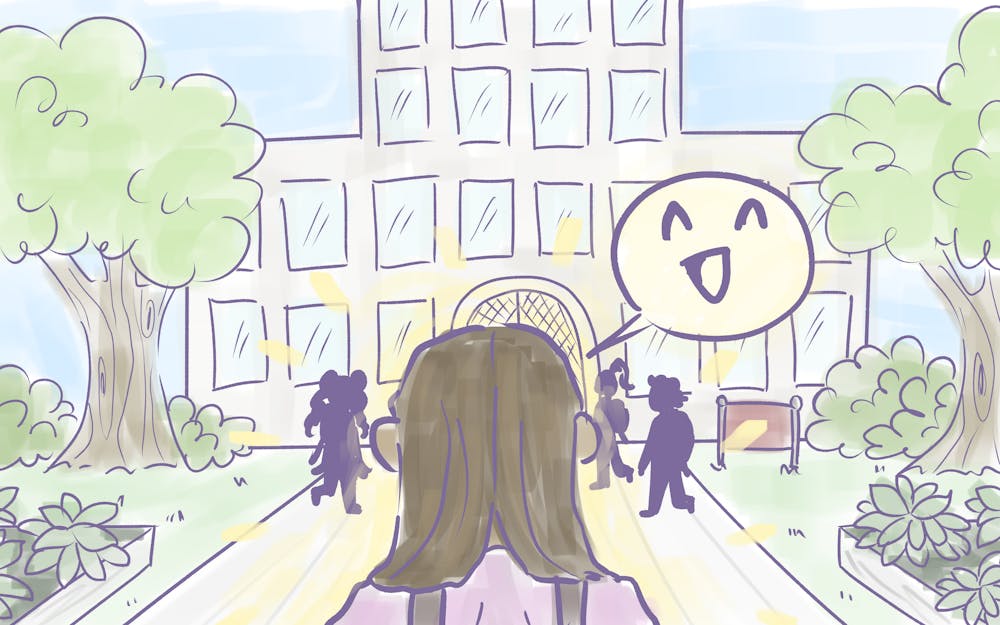
Individual biomedical treatment matters and is backed by scientific literature. However, the existence of that treatment would be of no use if my mother hadn’t noticed my condition in the first place. With us living away from our immediate families, we must foster communities that notice and care for us.
So, this semester, don’t just make your mental health great, work toward caring for others and building a community that looks after everybody’s well-being, because when things don’t go our way, we have no one else but our community.
Advait Save (he/him) is a junior studying economics and sociology.



