
Editor's note: All opinions, columns and letters reflect the views of the individual writer and not necessarily those of the IDS or its staffers.
At Indiana University, the Hoosiers have a proud athletic tradition. From Simon Skjodt Assembly Hall to Memorial Stadium, fans cheer for skill, teamwork and victories. But when it comes to politics, student athletes are expected to have a level of neutrality and “stick to sports.”
It’s a phrase that sounds harmless, but its implications are far-reaching. Athletes here, like everywhere else, are expected to excel on the field while remaining neutral on pressing issues. Telling an athlete to “stick to sports” can undermine what they stand for and can end conversations before they even have a chance to start.
Yet athletes have always had powerful voices. Muhammad Ali refused to be drafted into the Vietnam War. Colin Kaepernick kneeled during the national anthem to protest racial injustice. And right here at IU, student athletes have leveraged their platforms for good, promoting voter registration and racial equity initiatives. Even something as simple as this can cause scrutiny, mirroring the pressure professional athletes face on a national stage.
While these initiatives at IU didn’t face major backlash, the same cannot be said for other collegiate athletes. And while sports are inherently political, from the military endorsements to the laws that directly impact athletes, the expectation seems to be that your talent is celebrated, your opinion is not.
The NCAA has an interesting history when it comes to its stance on student-athlete activism. In 2021, the NCAA released survey results that showed three-quarters of athletes believe in a responsibility to be an engaged citizen, and the NCAA has claimed that their stance is in support of student-athlete activism.
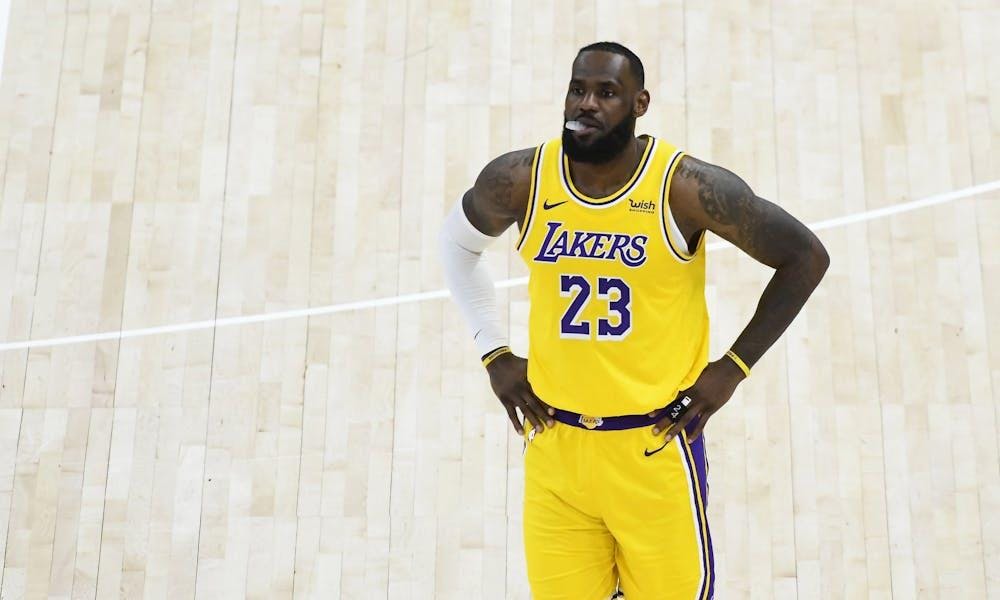
However, the media doesn’t seem to see it this way. On all scales, from collegiate to professional, the expectation is to stay politically neutral. For example, basketball legend LeBron James expressed his support for Vice President Kamala Harris during her 2024 presidential campaign. This garnered controversy on a similar level as his 2018 comments on race and President Donald Trump, in which Fox News host Laura Ingraham infamously told him to “shut up and dribble.”
On the other end of the aisle, Nick Bosa, star defensive end for the San Francisco 49ers, garnered controversy for publicly endorsing President Donald Trump after the team won a Sunday Night Football game, for which he was fined for violating the NFL’s uniform policy for wearing a hat that contained a personal message: “Make America Great Again."
Why are athletes expected to remain neutral if they clearly have a voice? James can get a kid to buy his shoes, but he shouldn’t try to get their parents to vote. Athletes on all levels are more than performers; they’re students, citizens, and community members. Their experiences shape their perspectives, and when they speak out, their voices carry weight. When Kaepernick kneeled for the anthem, it sparked a conversation on racial inequality. IU athletes advocating for their causes might not reach national headlines, but they reach their communities.
The ironic part is that many NCAA schools, including IU, try to be seen as a free speech domain; however, IU was recently revealed to be anything but. A report done by FIRE found that IU is ranked in the bottom three out of 257 other universities for freedom of speech. So, while the NCAA seems to support student-athlete activism, it doesn’t mean individual colleges will.
IU President Pamela Whitten is regularly seen at IU athletic events, and the athletic staff speaks highly of her; the same can’t be said for the student body. Last year, Whitten was given a vote of no confidence by her own faculty, with 827 members of the faculty out of 948 who attended voting in favor of the no-confidence motion. Students consistently protest her actions. Whether it be on campus, social media or anywhere, protesting is a powerful form of expression; telling someone they shouldn’t do it because it’s bad for their branding or their sport seems like a slap in the face to who they are.
Ultimately, the expectation that athletes should “stick to sports” undermines both their voices and the communities they influence. Student-athletes at IU and beyond are more than performers; they’re also citizens, scholars; and people who experience the same things we all do. When athletes speak out, whether on campus or on a national stage, they spark a conversation, inspire action, and raise awareness for their causes. Celebrating their talent while diminishing their voices sends a contradictory message that being excellent is expected, but civil engagement is optional. We need to recognize that athletes can lead, teach, and speak. Letting them do so benefits not only the athlete but also the communities they’re uplifting.
Jacob Fry (he/him) is a junior studying political science.



