In recent years, I have noticed that there has been a wave of younger people getting into film photography, bringing the old-fashioned practice back into a modern era.
I personally fell in love with film photography because of how gratifying it is. When you wait for weeks to see the final image after you’ve taken it, it makes good results all the more satisfying. Film also adds a softness and realness to photos that you simply can’t get digitally.
This isn't the easiest hobby, but it’s easy to fall in love with. Bloomington is a great place to get into film photography because it provides beautiful scenery to photograph, so you’re sure to find inspiration at every corner.
But, before you get started shooting on film, here are some important things to know and tips I have learned from personal experience.
Film can get expensive
The first thing you should know is that film photography can be an expensive hobby. Film cameras themselves can range anywhere from $30 to over $4,000. While you may be tempted to get a cheap film camera, it is much more difficult to get good results with them.
My first camera was a Kodak Ultra F9, which is in the cheaper range for a new film camera. While I got satisfactory results from my first film roll, my next three had many pictures either half or fully blacked out. Earlier this year I decided to get a new, nicer camera and it made a huge difference. I got the Canon Rebel G from my local photography store, and while I bought it used, it's worked great so far.
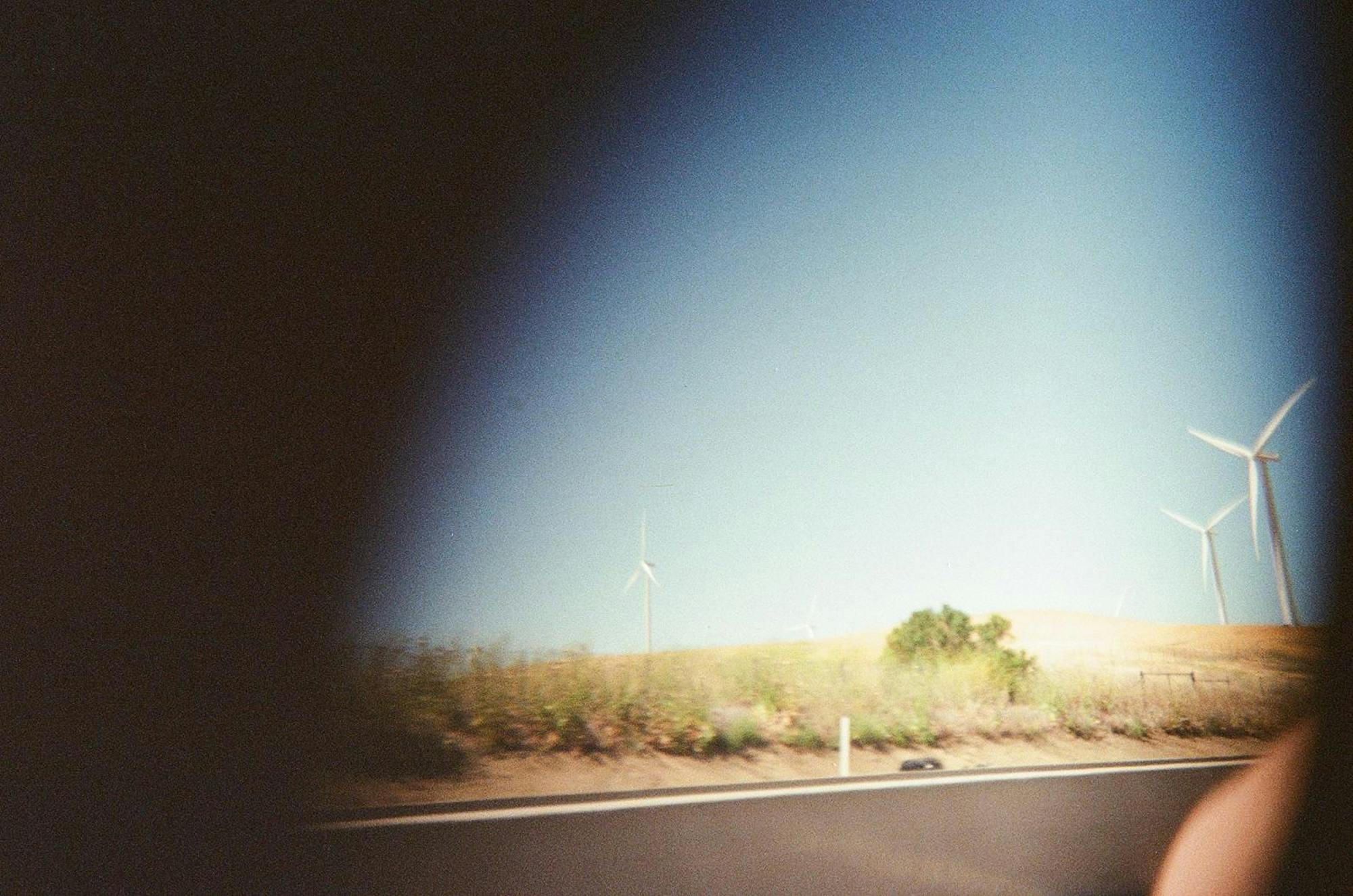
A partially black out image of wind turbines on the side of the road June 6, 2024, in the San Francisco Bay Area in California. Columnist Sophie Albert shot this photo with a Kodak Ultra F9 film camera.
Used cameras are a great way to get good quality cameras at a cheaper price. However, it’s important to purchase them from a business that has knowledge and experience in cameras.
You'll also need to buy film rolls. While these rolls typically cost $7 to $20, the cost can add up quickly. You then need to get your film developed after taking pictures which usually ranges from $10 to $20.
There aren’t currently any film developing studios in Bloomington. The closest one is Roberts Camera in Indianapolis, which has drop off and mail in options. However, it’s also easy to find other labs online where you can mail in your film. It is also possible to develop your own film, so it’s always feasible to give it a go yourself.
Choosing film
There are many different types of film out there, so it’s crucial to get the right one for your camera that will achieve the look you want.
The most common film format is 35mm, and while it can be helpful to investigate other formats, 35mm is a great starting point.
It’s also essential to choose the correct film speed. Film speed refers to the film’s ISO, which determines its sensitivity to light. An easy way to interpret ISO numbers is to remember that a lower ISO should be used for subjects in bright lighting while a higher ISO is more suitable for darker environments.
If you plan on mostly shooting outside, it’s best to choose ISO 100-400. But if you are mostly going to be shooting indoors, try ISO 400-1600. Higher ISOs also have higher grain, so if you want a grainier look, try choosing a higher ISO.
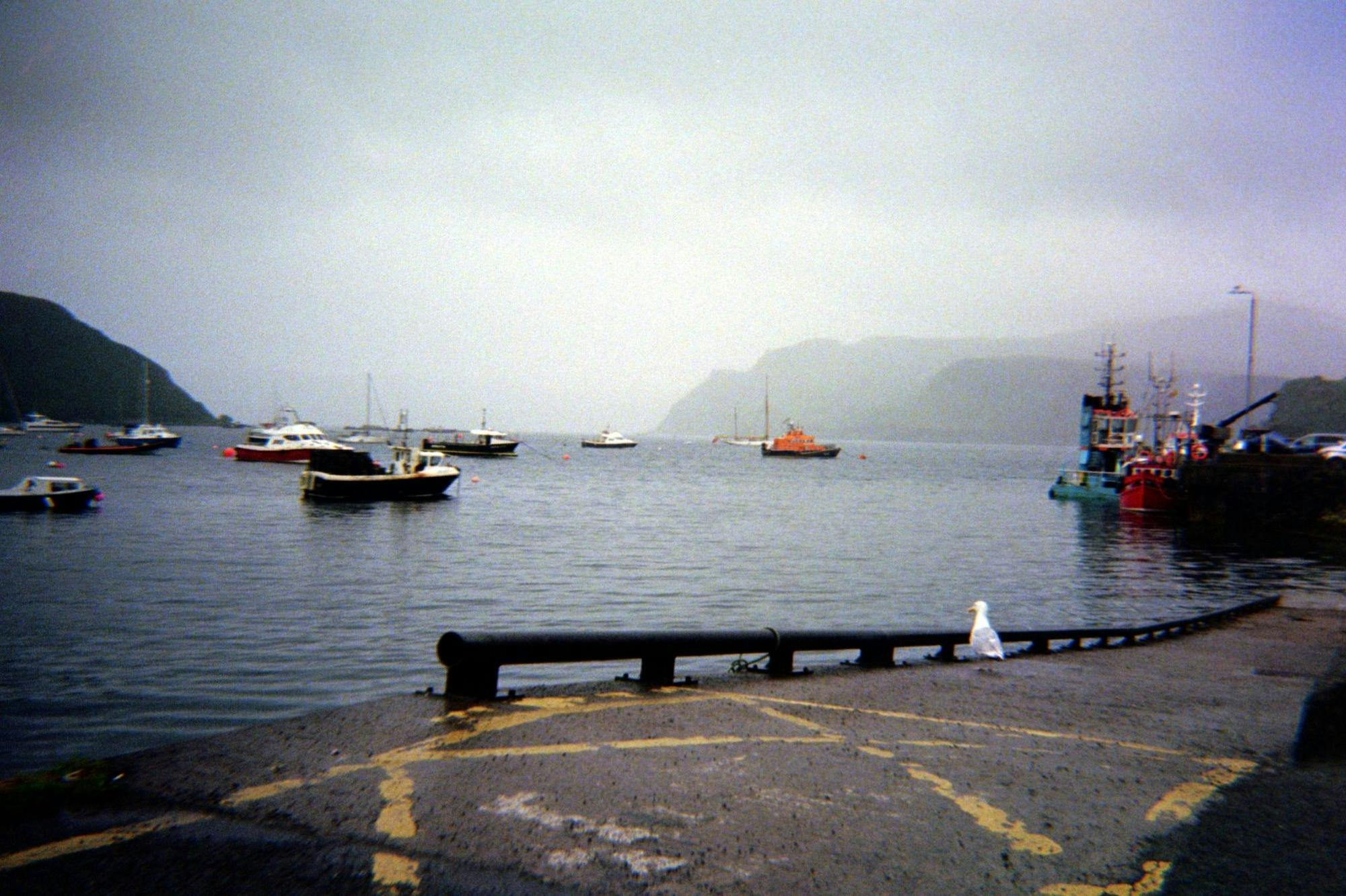
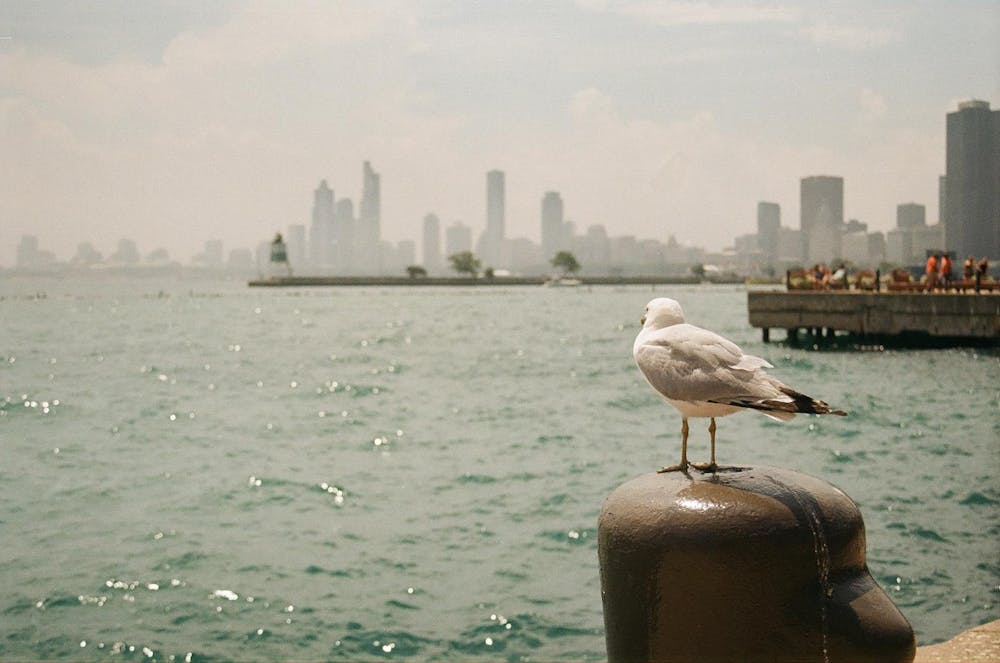
A seagull stands at the edge of a dock June 26, 2023, in Portree, Scotland. Columnist Sophie Albert used a Kodak Ultra F9 and 35 millimeter color film to take the photograph.
You must also choose if you want color or black and white film. I have shot using both, and I love qualities in both of them, so I usually alternate. However, choosing either type of film means you are committed to it for the entire film roll. You cannot mix and match on the same roll.
Be intentional when shooting
When going through a roll of 35mm film, you only have 36 pictures, so it’s important to use them wisely.
It’s helpful to test a picture using a digital camera first to better visualize how a photo will turn out on film. Sometimes the picture I’m visualizing in my head doesn’t work in real life, so playing with it on digital first can save yourself from getting a picture you’re not happy with.
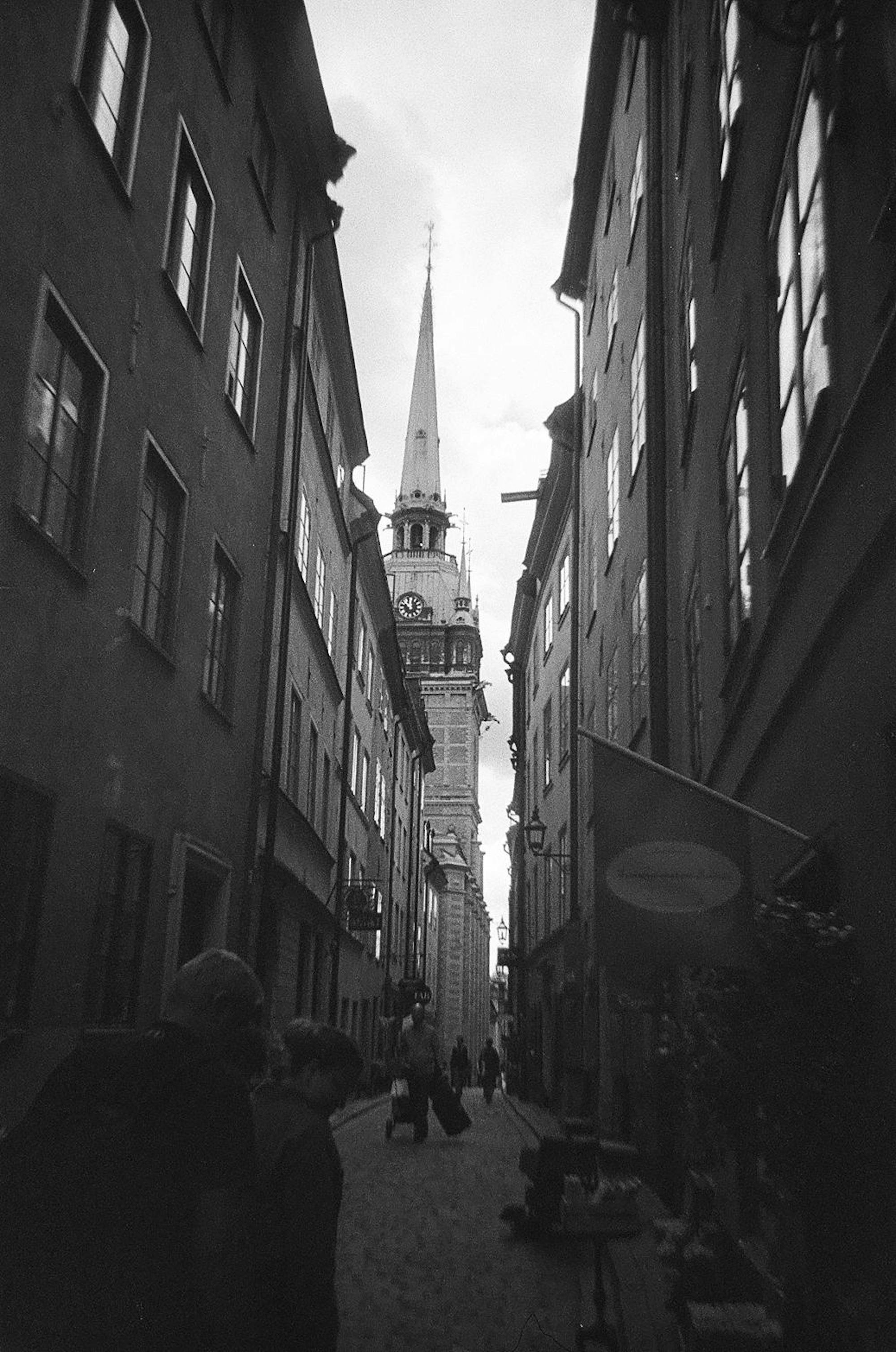
A clock tower is shown June 18, 2025, down a small street in Stockholm, Sweden. Columnist Sophie Albert shot the image using a Kodak Ultra F9 with 35 millimeter black-and-white film, giving the image more of an aged look.
It takes practice and patience
It can be daunting to start film photography since there are so many technical aspects to consider, but the best way to get started is to just go out and take pictures. These don’t have to be works of art, as long as you are taking pictures.
Just like anything, shooting on film is a learning process in which there is a lot of trial and error, so it’s important to not get discouraged if you don’t immediately get the results you’re hoping for. Personally, it’s taken me two years to be happy with my results, but it has made the process all the more gratifying.
Bloomington is a great place to get practice since it’s easy to walk outside and find great photo opportunities. On IU’s campus, my favorite place to photograph is the area around the Sample Gates. I love the red brick road that breaks off into different passages, the old, beautiful buildings and the statues. Downtown Bloomington also provides great scenery for photos with its vintage homey feel.
I encourage you to go out, explore different parts of Bloomington and get inspired to shoot some pictures. Remember, the more pictures you take, the better you will get.
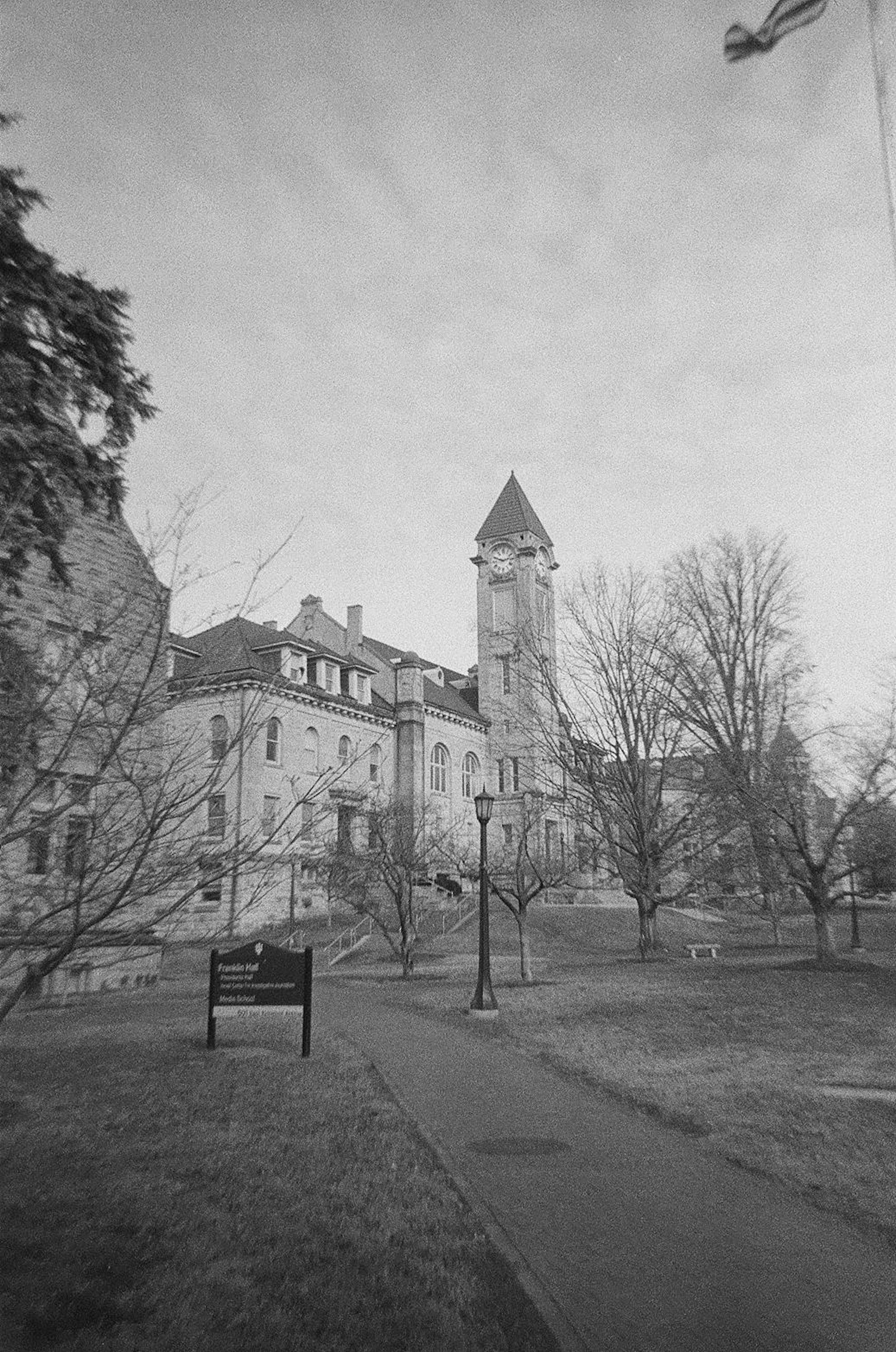
The Frances Morgan Swain Student Building is pictured Feb. 21, 2025, on Indiana University's campus. Bloomington's historic buildings have been a great place for columnist Sophie Albert to practice her film photography.