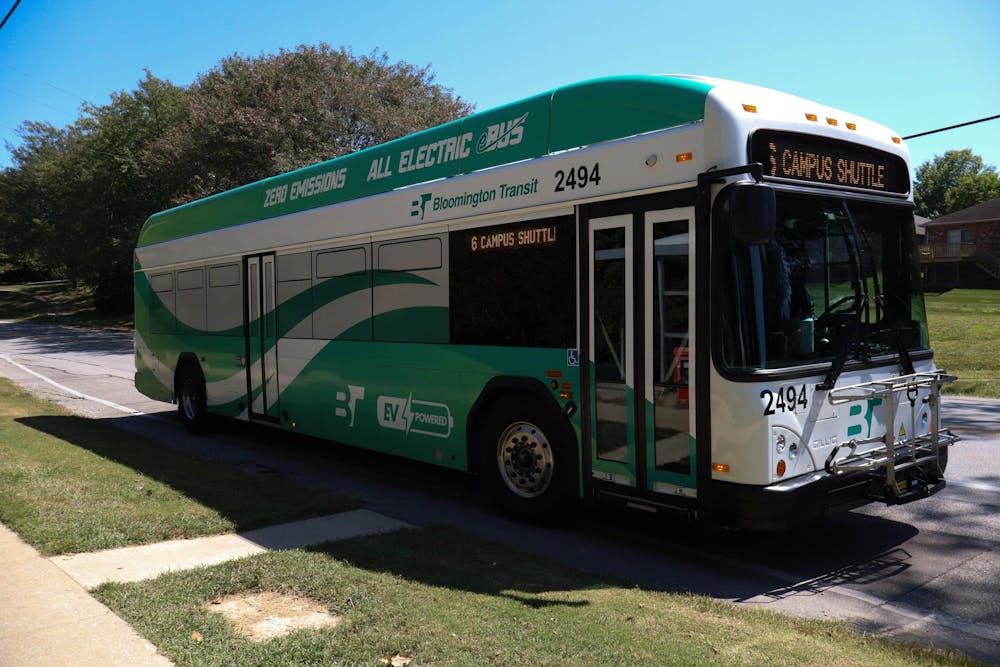
Bloomington Transit added 16 electric buses to its fleet before the start of Indiana University’s fall semester, BT General Manager John Connell said.
In August 2022, the BT Board of Directors passed a resolution adopting goals to transition 60% of the BT bus fleet to battery electric buses, which run with onboard rechargeable batteries, by 2030. Those goals complement the City of Bloomington’s Climate Action Plan passed in 2021, which aims to reach carbon neutrality by 2050.
BT began gradually introducing the new vehicles in 2024, bringing the total number of electric buses in the active fleet to 18 out of 48 vehicles, Connell said.
Transportation in Monroe, Bartholomew and Brown counties accounted for over 1.5 metric tons of emissions in 2022, according to a Sept. 3 report by the Project 46 Southern Indiana Regional Climate Alliance.
Connell said BT began transitioning its fleet to electric in 2021 with the purchase of two 35-foot battery electric buses, which can run for approximately eight and a half hours.
In 2024 and 2025, BT purchased 16 40-foot battery electric buses. These can run for 12 hours on a single charge, making them a better fit for BT’s schedule, Connell said.
Cold weather can reduce an electric bus’s range, BT Planning and Special Projects Manager Shelley Strimaitis said.
While the electric buses implemented in January were not disrupted by the cold temperatures, Strimaitis said BT is still watching to see how the new buses handle this year’s weather.
“We just aren't really quite sure what happens when there is super extreme cold weather,” Strimaitis said. “We're holding on to a number of our diesel fleet, just as kind of like a backup in case there's kind of a major weather event.”
Connell said the electric buses cost about $1 million apiece.
In May 2022, the city council approved an increase in the Monroe County income tax which provided $3.8 million yearly for transit investments geared towards climate preparedness and mitigation. It’s possible that allocation could change following the passage of a state bill which reorganized how local income taxes in Indiana work.
Bloomington Assistant Director of Sustainability Shawn Miya said in a written statement that BT’s transition to electric buses contributes to the City of Bloomington’s goals for reducing emissions.
In August 2022, the Federal Transit Administration supplemented that funding by awarding the Bloomington Public Transportation Corporation $7 million to purchase electric buses, install charging infrastructure and train workers.
Connell said that over time, the electric buses may save money on operating costs. He said their electric buses operate at 27 cents per mile, while the diesel vehicles run at 80 cents per mile.
Whether the buses save money in the long term will depend on the life of the battery packs, Connell said, which should last 12 years.
“It's new technology, and we'll have to wait and see,” Connell said.
Strimaitis said the buses also benefit from the cheapening price of solar and wind energy, while providing a buffer against potential increases in gas prices.
Connell said BT has plans to purchase two additional electric vehicles over the next several years, but that depends on how much federal funding they receive.
“I'm cautiously optimistic that the funding levels will remain pretty steady to where they've been,” Connell said.