
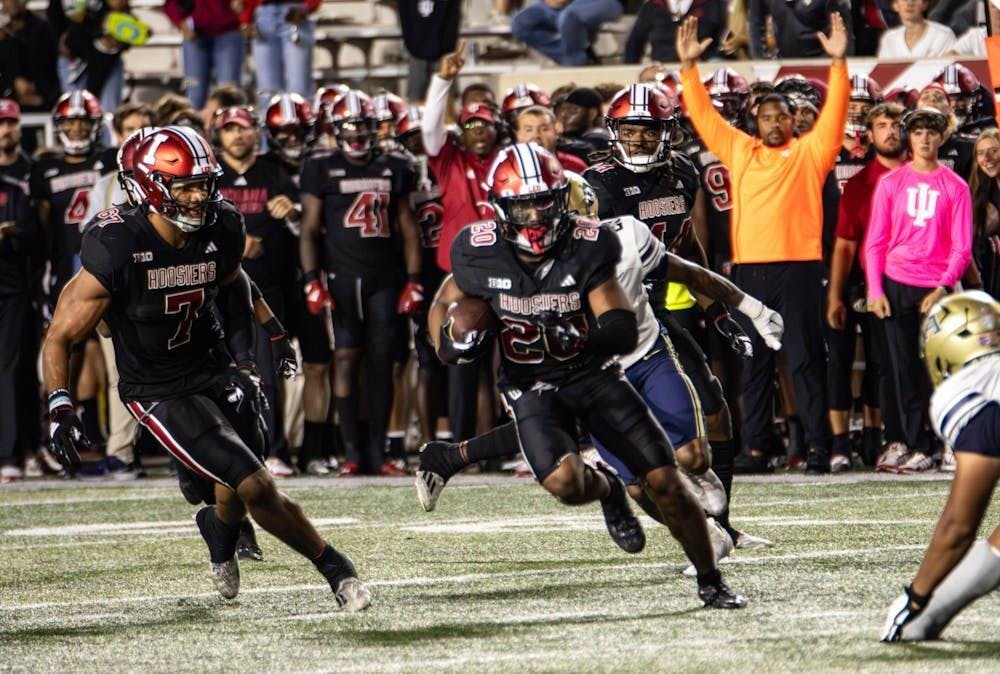
Indiana football safety Louis Moore has filed a lawsuit against the NCAA for his eligibility this season, as reported by ESPN. In a hearing Wednesday, Judge Dale Tillery granted a temporary restraining order against the NCAA, finding “there is evidence Moore will be harmed irreparably if he is not able to join the Indiana football team.”
The ruling allows Moore to join the team for 14 days. A full hearing will be held on Aug. 27. If an injunction is granted, Moore will be allowed to remain with the team for the full season.
Moore started at Navarro Junior College, playing there from 2019-21. The 2020 season was cancelled due to the COVID-19 pandemic. After junior college, Moore enrolled at Indiana in 2022 before transferring to Ole Miss for the 2024 season and then back to Indiana, hoping to play in the 2025 season.
After a federal judge granted Vanderbilt University quarterback Diego Pavia an injunction for an extra year of eligibility, the NCAA Division 1 Board of Directors approved a blanket waiver granting an extra year of eligibility (2025-26) to former junior college transfers in Pavia’s position.
Moore transferred believing he’d qualify for the extra year since COVID-19 caused one of his seasons to be cancelled. Despite this policy, the NCAA denied Moore’s initial request for a waiver, the decision which led Moore to file the lawsuit.
Following the denial of his waiver in June, Moore was ineligible to play. He argues that his time playing at Navarro (2019-21) should not count against him, while citing potential losses in earnings of around $400,000. Moore is being represented by Dallas-based attorney Brian P. Lauten.
“The NCAA rules are now subject to the Sherman antitrust act,” Lauten told the Indiana Daily Student. “The NCAA cannot restrict the right of student athletes to pursue name, image and likeness contracts and deals.”
The Sherman Antitrust Act, enacted in 1890, is a federal statute designed to prevent monopolies by prohibiting actions that restrict interstate commerce and prevent competition. The Supreme Court ruled in NCAA v. Alston (2021) that the NCAA rules limiting education-related compensation violated Section 1 of the Sherman Act.
Regarding the Diego Pavia case, Lauten said, “the exact same situation is presented here and the outcome should be the same... No school should have an advantage by having the rule selectively and inconsistently applied.”
In denying Moore’s waiver, the NCAA is attempting to enforce a bylaw that states that time spent in a junior college counts against their NCAA eligibility.
“Restricting junior college eligibility at non-NCAA schools basically penalizes the student athlete for not going to an NCAA school,” Lauten said. “And [it] also penalizes the junior college because their athletes are dissuaded from coming there.”


