The IU Office of Sustainability tweeted that work would begin at 8:45 a.m. and encouraged volunteers to help out.
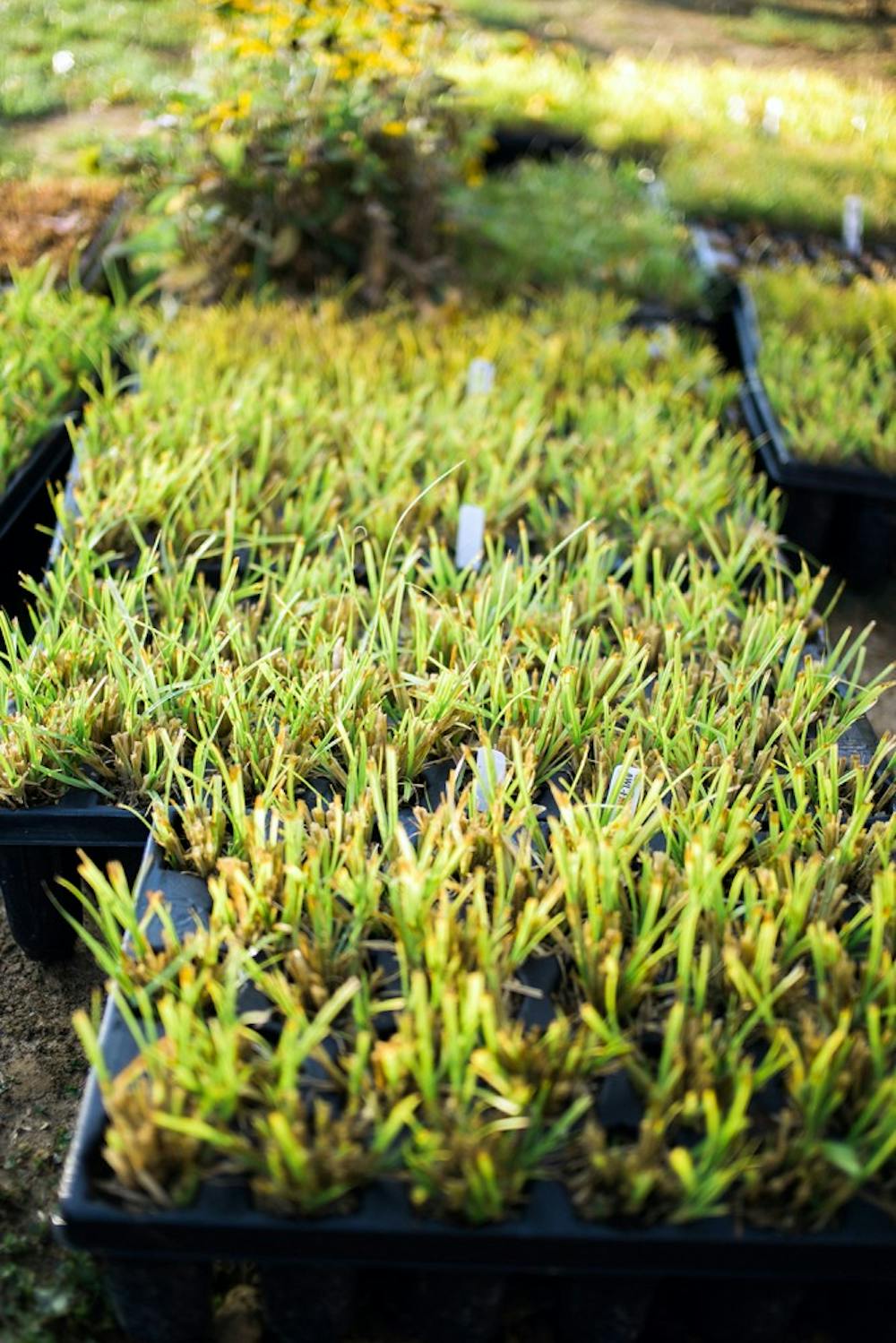
Volunteers worked for three hours, planting 1,250 specialty plugs, all chosen for their ability to retain water, according to the ?University.
The project was a partnership between Campus Division and the Office of Sustainability.
There were 150 possible rain garden locations on campus identified this summer, according to the ?University.
Due to the increase in impervious surface on campus, the runoff at IU-Bloomington has increased by more than 150 million gallons throughout the past decade.
Meghan Ploch, an IU Office of Sustainability intern, is leading the initiative.
Ploch is a graduate student in the School of Public and Environmental Affairs.
A rain garden is defined by the City of Bloomington as a garden of water-loving plants planted in special soil.
Rain gardens typically thrive in sunny areas but can be planted in shade, according to the city.
Gardens like these optimize rainfall, reducing the need for irrigation and storm sewers. They also reduce runoff.
Rain gardens are typically composed of plants native to their area because these plants require the least maintenance and attract native wildlife, according to the city.
“IU has given so much to me,” student volunteer Scott Klein said in an IU press release. “I hope this rain garden will help pay forward and inspire future students and visitors to improve and appreciate the campus environment.”
Anna Hyzy