
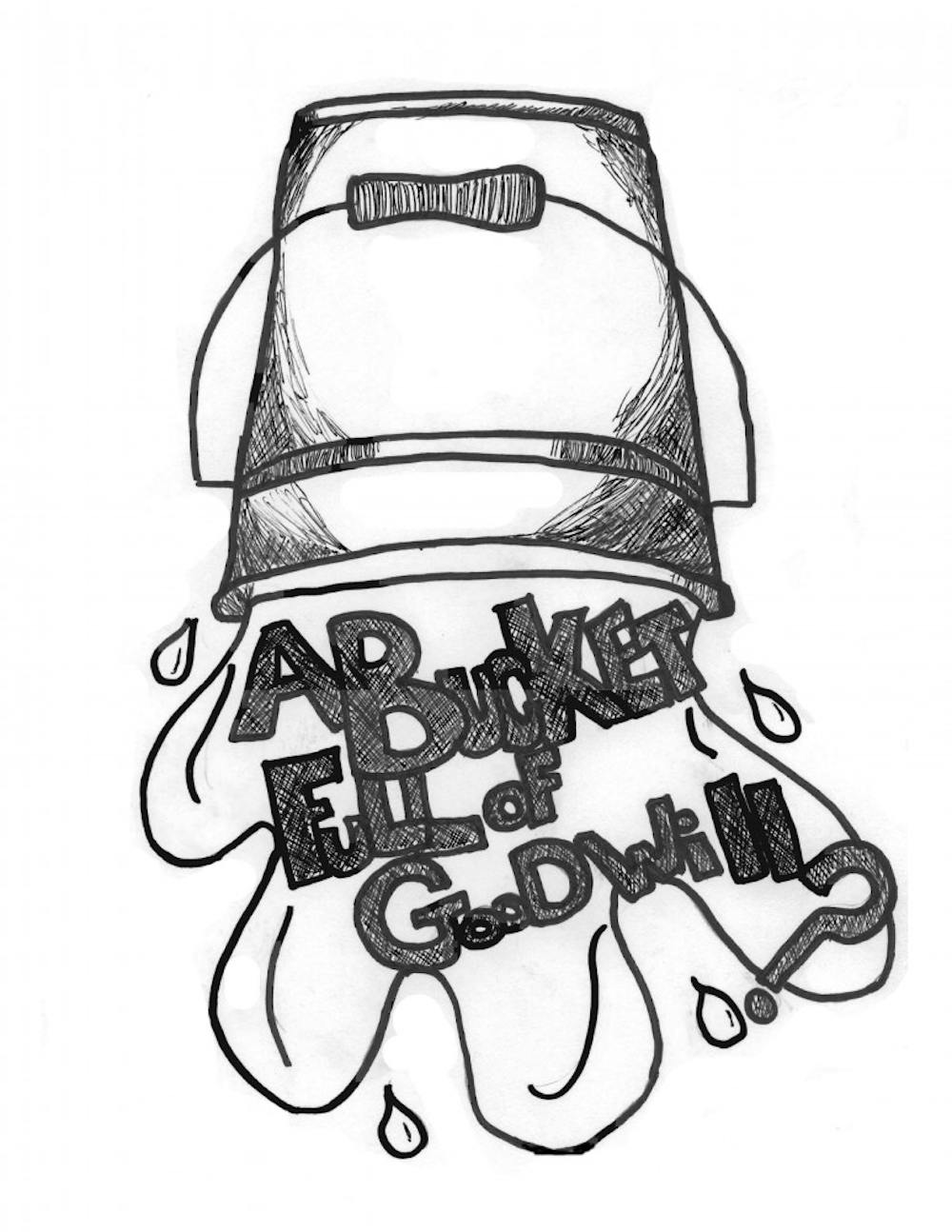
By now most of us have seen one, two or 87 videos of friends, family and colleagues undertaking the ALS Ice Bucket Challenge.
The challenge began as a way to raise funds and awareness for amyotrophic lateral sclerosis, also known as Lou Gehrig’s disease or ALS.
ALS is a neurodegenerative disease. It affects the nerve cells that give the brain its ability to control muscle movement, leading to paralysis.
The ALS Association credits the viral jumpstart of the Ice Bucket Challenge to Pete Frates.
Frates was a Division 1 college athlete. In 2012 he was diagnosed with ALS. Now 29 years old, Frates and his family used Facebook and Twitter to send the challenge viral.
People who participate in the challenge dump a bucket of ice water over their heads. In turn, they nominate people who either accept the challenge or donate money to the ALS Association. Or they can do both.
Lady Gaga, Bill Gates, Benedict Cumberbatch and Oprah are among the high-profile public figures who stepped up to the plate.
For a few glorious seconds we, the people, got to see our stars and heroes gape in shock.
And then there was Charlie Sheen. Sheen pretended to lift a bowl of ice water over his head.
When he turned the bowl over, money fluttered to the floor. It was $10,000, to be exact.
“Ice is gonna melt, but this money is going to actually help people,” Sheen said in the video.
The beauty of the ice bucket challenge is the sense of solidarity it brings to the cause.
Not everyone can donate $10,000. But anyone can dump some ice water over his or her head.
The ice bucket challenge does run the risk of becoming another social fad.
But we shouldn’t let that keep us from doing the challenge for the right reasons.
In fact, the Indiana Daily Student was nominated for the challenge earlier this week. After careful deliberation among management, it was decided that it would not be appropriate for the staff, being a news organization, to participate.
There are bound to be varied opinions as to whether or not a news organization should or should not participate in the challenge. As journalists, the IDS staff is dedicated to providing an open forum for its readers to engage with the news and each other while maintaining objectivity.
Participating risks compromising the principals the staff maintains and any future stories it may print regarding the challenge.
The IDS does not criticize those participating in the challenge. The Editorial Board recognizes it as a successful means to raise awareness of ALS and collect donations.
As of Aug. 25, the movement has raised at least $79.7 million, according to the ALS Association. The Editorial Board hopes the number continues to grow, and as people continue participating in the challenge, they do it for the right reasons.


