
The Bloomington City Council moved to initiate a resolution last night by a vote of 8-0 and one abstention to require “standardized restaurants” to obtain a permit from the Bloomington’s Board of Zoning Appeals.
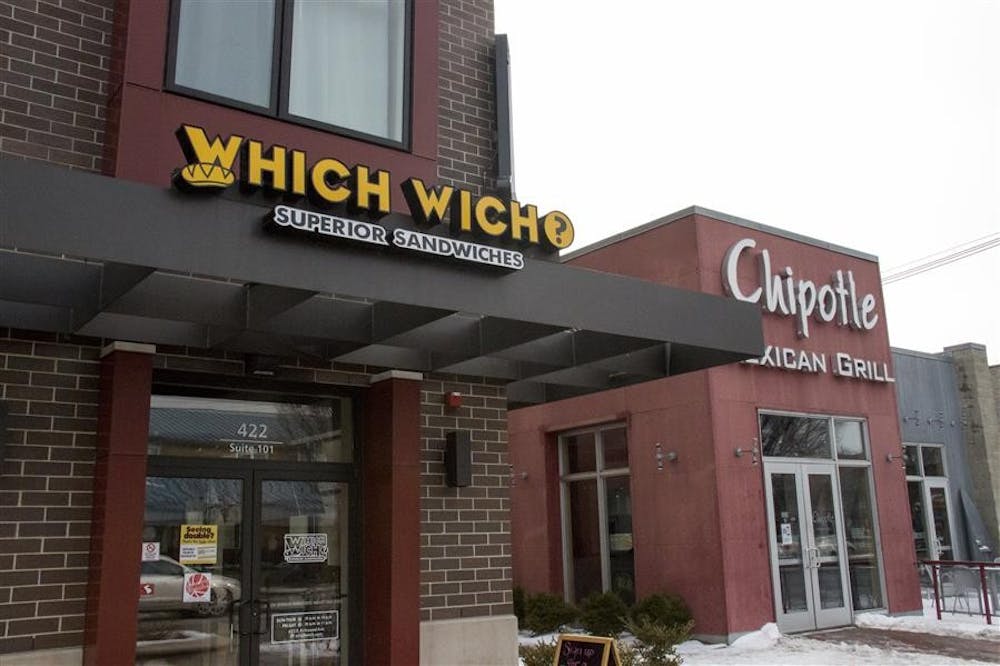
The resolution would require chain restaurants to obtain a permit before locating or expanding within the Courthouse Square or University Village Overlay districts, which encompass the majority of the downtown area.
It directs the Plan Commission to prepare an ordinance, which it will create during a hearing. The commission will certify the proposal with either a favorable, unfavorable or no recommendation before the proposal is returned to the council for debate.
The resolution is an effort to protect Bloomington’s culture and economy, according to a memo directed to the City of Bloomington Common Council.
“The main point I want to convey here is that these are the areas that are considered the core of our downtown and the makers of our downtown,” said Tom Micuda, director of the Planning Department, at the meeting.
The two main downtown districts overlay and contain the historic courthouse square, Buskirk-Chumley Theater, one-of-a-kind shops and locally-specific restaurants, Micuda and Assistant City Attorney Patty Mulvihill pointed out in the memo.
Multiple individuals spoke against the resolution, including Liz Irwin, director of advocacy and public policy at Great Bloomington’s Chamber of Commerce, who said she was speaking on behalf of the 1,000-plus members of the Chamber.
“Why push this resolution for a vote without proper time for response and input? This seeks the solution to a problem that does not exist,” she said. “Unnecessary restrictions on business would cause uncertainty and distract from the appeal of doing business in downtown Bloomington.”
Both the memo and resolution express concern that the popularity of these areas will draw in standardized restaurants that will become excessive and harmful if not properly regulated.
The Unified Development Ordinance, which governs land use and development within Bloomington, does not currently regulate or define standardized restaurants. However, the city has proposed a definition.
A standardized restaurant is “a restaurant devoted to the preparation and offering for sale of food or beverages to the public for consumption either on or off the premises, which is required by contractual or other arrangement to offer standardized menus, ingredients, food preparation, employee uniforms, company logos or exterior design,” according to the resolution.
The BZA would consider whether the petitioning restaurant contributes to the balance of local, regional and national-based businesses in the area, has a distinct visual appearance that complements the historic character of the area and will not result in over-concentration of chain restaurants in the area.
These standards were proposed after an examination of other communities’ regulation of the creation and expansion of standardized restaurants in a way that maintains those areas’ “unique character,” according to the memo.
Scott Tibbs, a District 1 resident, claimed he was speaking in support of private property rights and the free market.
“The point is to make it more difficult for standardized restaurants to come into Bloomington and I don’t think it is the role of government to decide for private property owners what will go onto the property that they pay taxes on,” he said.
Scot Davidson, region sales manager at Old National Bank, said he believes the proposal will create more vacancies in the downtown area, in turn harming the economy.
“We view the proposed ordinance as an unnecessary burden for our clients and the overall health for our Bloomington area,” he said.
Council members, including Dorothy Granger, Martin Spechler and Susan Sandberg, argued it is important to push the proposal forward for further discussion, whether or not an ordinance will pass in the future.
“I think that we do need to be forward thinking,” Granger said. “We should approach potential problems, we should think what our future would look like and I think that this discussion will move that forward.”
City tightens restaurant permits
Get stories like this in your inbox
Subscribe



