Despite concerns about constitutionality and the costliness of similar programs in states such as Florida, Indiana wants to try its hand at drug testing its poor.
House Bill 1483 would require Temporary Assistance for Needy Families recipients to take a written test that estimates their likelihood of substance abuse. Those who test most likely will be placed into a pool, and half will be randomly selected for drug testing.
Anyone who tests positive will keep their benefits if they enroll in a rehabilitation program — any rehabilitation program.
Their benefits will be contingent on testing clean at least two months in a row during a four-month period.
If they fail the first test, their benefits will be taken away for a three-month
period.
Testing positive a third time will get their benefits taken away for good.
The Senate version ends welfare benefits after the first strike until treatment is successfully completed.
The program would cost an estimated $2.6 million in its first year.
Addiction isn’t logical or rational. A lack of income could be the intervention some addicts need, but others could possibly put themselves and others into more danger to get their fix.
By taking away their benefits without providing any guidance, the Indiana Senate could be sentencing some of these people to death.
Let’s try to help our fellow Hoosiers in a more meaningful way.
Conquering addiction is truly a struggle, and welfare recipients have fewer resources available to aid them in this battle.
If Indiana were truly committed to its poor, it would be more discriminatory as to which treatment programs users can enroll in or sponsor its own.
It would provide more lenient time frames for recovery.
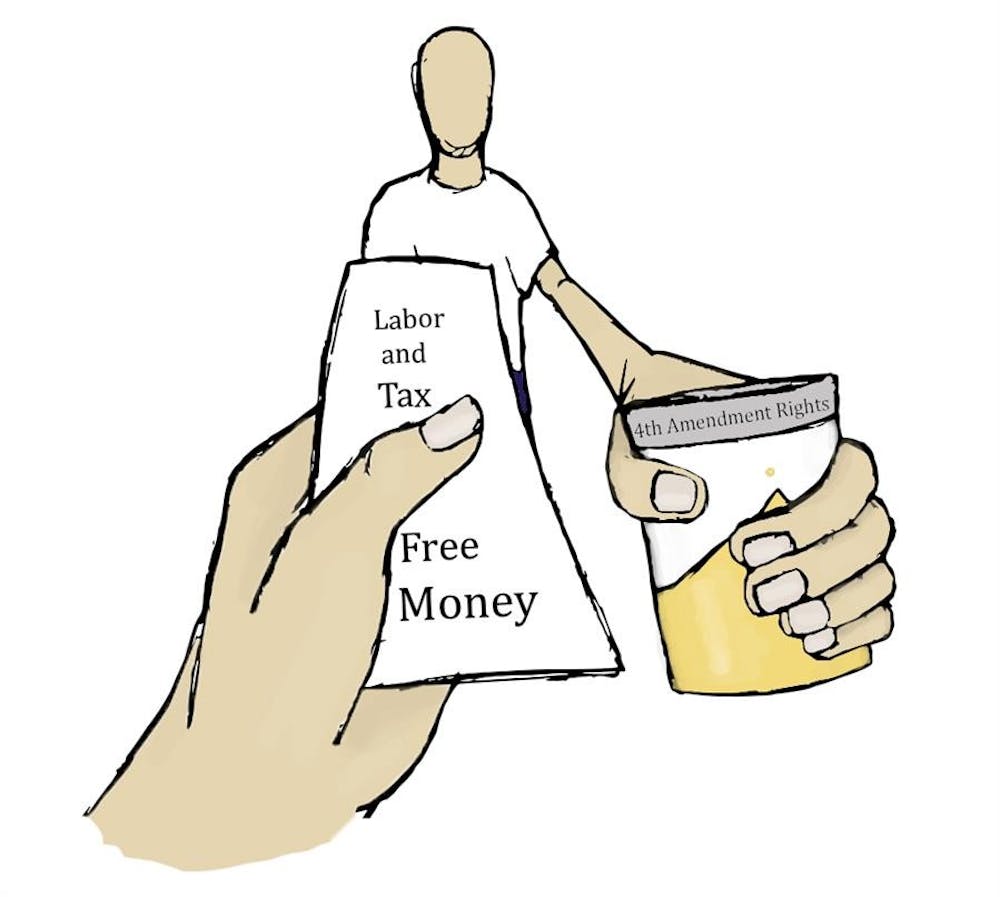
Indiana also needs to better observe its residents’ constitutional rights.
The written test proposed by legislators claims to have a 94-percent success rate in identifying individuals with a substance abuse problem.
But a written test alone is weak justification for a search. Predictive effectiveness has never been sufficient cause for search and seizure.
Instead, Indiana could use this test to identify high-risk individuals whom they investigate further, by asking friends or family if there are any problems, looking up criminal records, hospitalization records, phone records — any records, really.
When gathered evidence truly justifies a search, then a drug test can be lawfully administered. Sure, this sounds expensive, but fewer tests will be administered and fewer lawsuits will be filed.
And when exactly did we stop protecting the rights of individuals because violating them was cheaper?
Lawmakers have already made it clear that helping individuals with substance abuse problems is a goal by barring these tests from use in prosecuting those who test positive with them.
Our focus in instituting broad drug screening programs on welfare should be to help people, not to ensure some cynical “effectiveness” quality of TANF or to stigmatize welfare recipients.
Under a program written with the welafre of these recipients at heart, more people will get the help they need.
Maybe more people will be able to stop receiving welfare. Maybe the incidence of drug-related crime will decline.
Our lawmakers already want to spend this money. Let’s spend it well.
Drug testing our poor
Get stories like this in your inbox
Subscribe