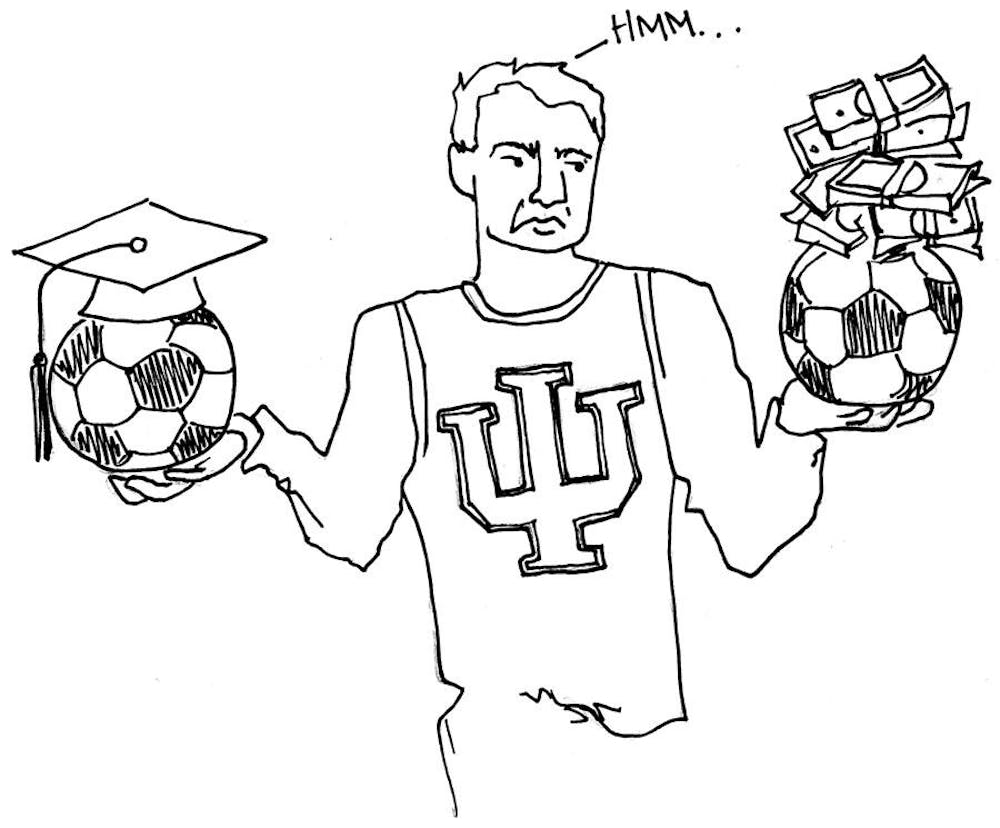
Athletes who are drafted into the pros before finishing their college degrees have a tough decision to make.
These players are promised hundreds of thousands if not millions of dollars to do what they love. Most people never get the chance to live out their dreams, even for free.
What could possibly complicate this choice?
On one hand, there is the allure of fortune and glory. On the other hand is the fact that, according to Sports Illustrated, 78 percent of NFL players and 60 percent of NBA players are bankrupt or close shortly after retiring.
Athletes outside the NFL and NBA have struggled including baseball players Lenny Dykstra and Jack Clark, boxing legend Mike Tyson, golfer John Daly and skater Dorothy Hamill.
The curse of the lottery has a cousin and its name is pro sports.
The financial cost of waiting to be drafted until finishing a degree may seem insurmountable, as an offer to play one year does not necessarily guarantee an offer to play the next. Still, the alternative is not promising.
Despite NFL workshops and financial boot camps offered by third parties, athletes make predictable mistakes when it comes to money management.
As kids who have never had very many digits in their personal bank accounts, sudden access to millions of dollars leads to irresponsible and extravagant spending sprees on things such as jewelry, cars and mansions.
They often rely on family members or childhood friends to manage their finances even though they can afford experts.
Some former friends become hangers-on, and athletes feel pressured to cater to an entire entourage of people’s needs.
The investments they make are usually irresponsible and show preference for flashy ventures promising impossible returns to boring stocks and bonds.
And unlike most careers, athletes can usually expect their salaries to decrease during time.
Of course, these behaviors are avoidable, but the best way to avoid them is to be financially literate.
Education is an important step toward financial literacy.
Young men quitting school to play are often leaving behind a degree that could help them get back on their feet after their athletic career or prevent financial ruin in the first place.
Promising yourself that you will finish your degree after you spend a few years in sports is a nice idea, but actually returning will be difficult, especially if you are broke.
Monetary gain is obviously not the only reason athletes pursue their dreams with their degrees because after all, these are their dreams.
Ultimately it is the athletes’ decision as to whether they should circumvent their education to play ball, but it should be an informed decision.
The awareness of the pitfalls of a professional athletic career is a great way to avoid them.
To all those soon-to-be pros out there: don’t blow it.
Going pro at going broke
Get stories like this in your inbox
Subscribe