AMC should think about changing its name. Originally an acronym for “American Movie Classics,” the cable station now boasts some of the most beloved shows on television, including “Mad Men,” “The Walking Dead” and “Breaking Bad.”
AMC still airs classic movies, but these critically acclaimed shows are what reel in most of its viewers these days, and they are making AMC the best channel for TV dramas.
It all started with “Mad Men,” which has snagged an Emmy for “Outstanding Drama Series” each season since its inception in 2007. The combination of powerhouse characters such as the infamous Don Draper and the immersion into the tumultuous 1960s has captured the imaginations of audiences everywhere. Its strong start allowed AMC to begin work on other shows, propelling the channel into TV glory.
Following “Mad Men” was “Breaking Bad” in 2008 and “The Walking Dead” in 2010. These three are starkly different in their plotlines, minimizing redundancy. This not only helps AMC maintain its devoted fan base but allows it to expand its viewership.
The proof is right there in the ratings.
Take the recent finale of zombie thriller “The Walking Dead.” The dramatic second-season ending racked up nearly 9 million viewers for its finale — an increase of 3 million from the previous season. It was also the most-watched show on basic cable that week, beating the runner-up by 3 million viewers.
Not only do the critics love AMC shows, as evidenced by awards and reviews, but the larger American audiences love them, too, as shown in these ratings.
These numbers prove the channel’s popularity and success, but what makes these shows better than the likes of HBO, Showtime or even other basic cable channels
like FX?
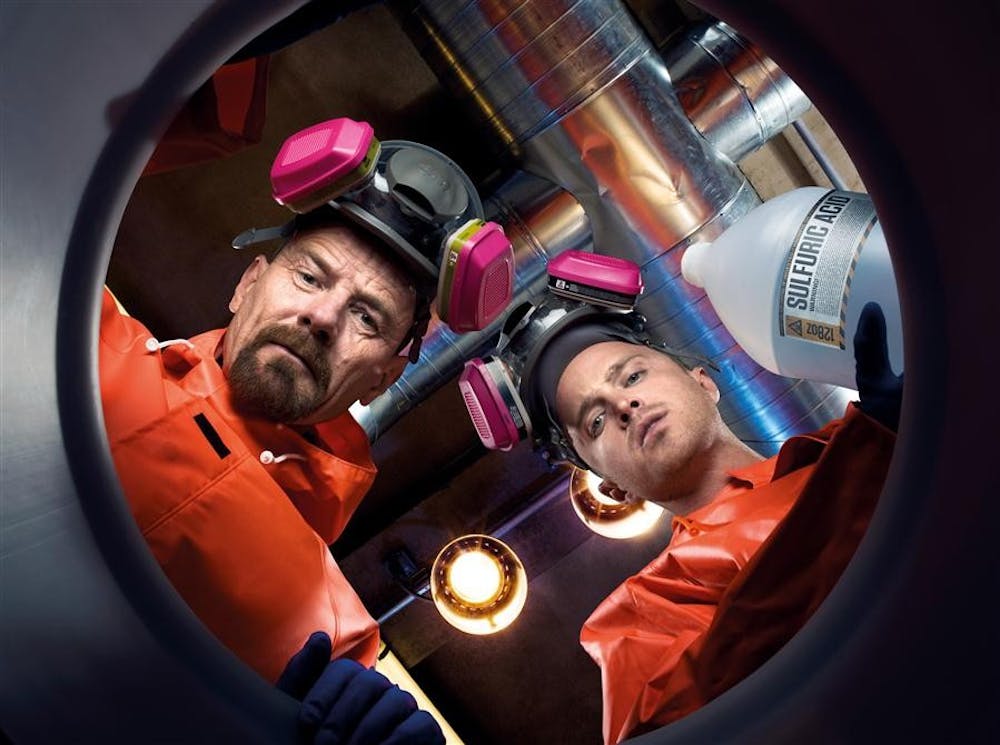
Let’s look at the last of the three aforementioned shows: “Breaking Bad.”
All of television’s other “drug shows,” for lack of a better definition, happen within the context of police or crime thrillers. While crime certainly plays a role in “Breaking Bad,” there are other forces at work in the show, too. It also looks at federal regulations, international relations and science.
Within that elaborate plotline, viewers meet a defining character in Walter White, a teacher-turned-meth-kingpin. White stands out among TV characters with the same
notoriety as Draper.
No other channel on television is creating characters so developed.
But the last key element that firmly plants AMC’s original programming atop the rest of the field is its cinematography.
It rivals that of movies, challenging the rules and norms of traditional TV. NBC doesn’t exactly put that much attention to detail into its programming, despite its attempts to copy AMC’s success with TV dramas.
NBC’s “The Playboy Club” failed last fall after trying to mimic the 1960s era of “Mad Men.” Similarly, FX hopped on the horror TV bandwagon with “American Horror Story” after “The Walking Dead” became a hit.
These networks are trying to capitalize on success found by a self-proclaimed “movie” network. But maybe they are focusing on the wrong thing.
Perhaps the acronym’s meaning takes a backseat to the fantastic shows AMC gives its viewers. In fact, AMC isn’t trying to call itself a TV or movie channel anymore — just an entertainment outlet.
Indeed, story does matter to AMC, and it should matter to us, too.
AMC's big three
Get stories like this in your inbox
Subscribe