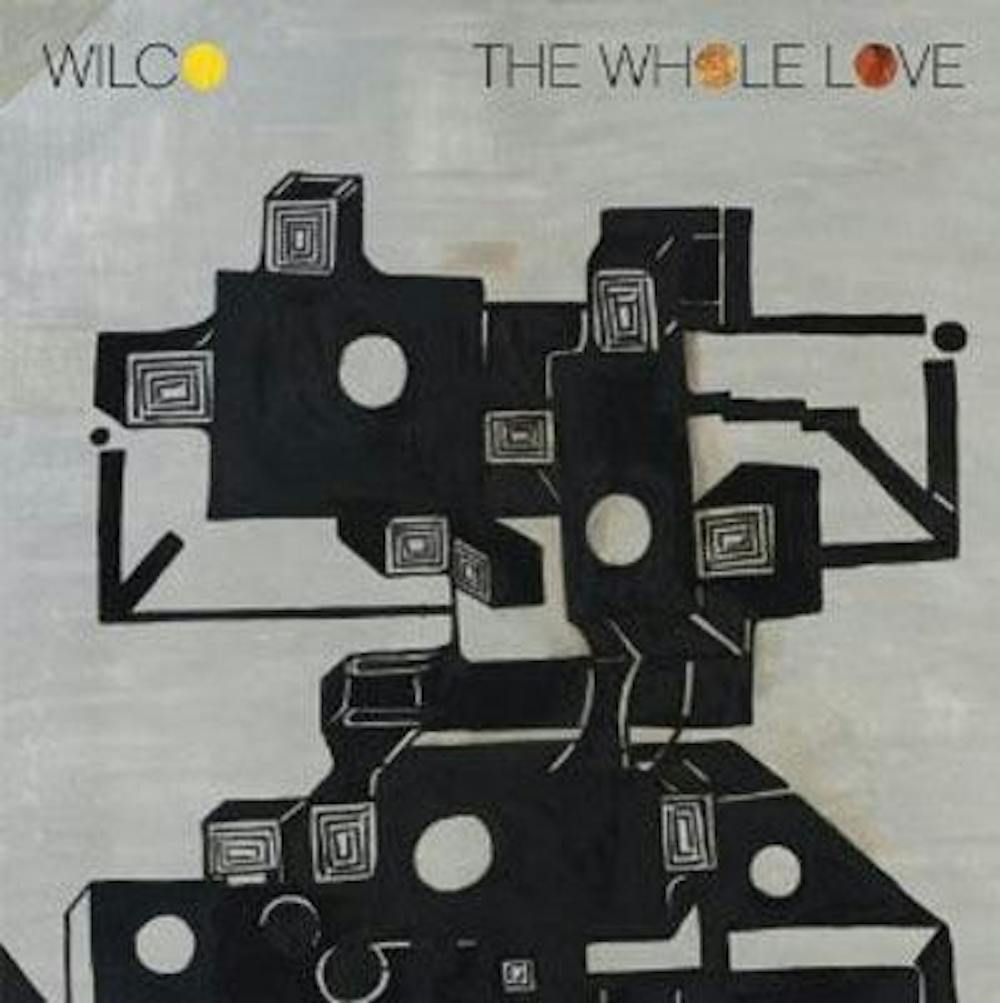
“Maybe you’ve noticed I’m not afraid of everything that I’ve done,” Jeff Tweedy says on “Standing O,” the ninth track of Wilco’s eighth studio album, “The Whole Love.”
Around the turn of the century, Tweedy cemented Wilco among, if not atop, the most forward-thinking American bands by fully committing to a new identity with each new album, twisting traditional American genres into countless new, psychedelic and delightfully ambiguous sounds. Whether a welcome surprise or an unforeseen disappointment, nearly every one evaded predictions fearlessly.
Now 44, Tweedy is nowhere near as fazed by criticisms — most recently for his "dad rock" sensibilities — as he once was. For his audience, this growing indifference became the main source of intrigue leading into “The Whole Love.” And what he delivers here is an album that, unlike earlier Wilco albums, doesn’t strictly adhere to any obvious common thread, but like every Tweedy effort, still brings more than its fair share of tremendous high points.
It opens with a song that can best be identified as the “anti-dad rock.” Seven-minute “Art of Almost” is the album’s conversation changer, conceived as if to deliberately quash talk of Wilco going soft. Evolving from a tense, electronic-heavy beat into a turbulent release carried by a blistering solo from lead guitarist Nels Cline, "Almost” succeeds as the band's most engagingly noisy work since 2004.
The rest of the tracks are nowhere near as instantly curious as “Almost” but include some exceptional highlights. Second track “I Might” switches gears into an up-tempo thumper of a four-minute pop song, centered on a muddied bass riff from John Stirratt.
“Born Alone” finds the band at their most anthemic. Letting loose another all-out wailing guitar hook from Cline, it matches the fervent hammering of The Flaming Lips’ “Do You Realize??” and pulls statement-of-purpose themes from Bruce Springsteen’s “Born to Run” inside four minutes.
“Capitol City,” however, brings the heartfelt momentum to an abrupt halt, flirting dangerously close with The Beatles’ “When I’m Sixty-Four” and ultimately seeming like little more than “Almost’s” obligatory counterpoint: “... but so what if we are ‘dad rock?’”
Still, “The Whole Love” manages to go out on its highest note. On the 12-minute lyrical adventure “One Sunday Morning,” Tweedy channels his younger folksong writer for an eloquent narrative involving a character coming to terms with his deceased father and the religious differences that separated them. Well beneath his voice is a slow, subtle swelling of gentle and ornate guitar and piano parts that blend in headphones like foliage colors, exhibiting a masterful balance between restraint and attention to detail.
The power behind Tweedy’s unassuming singing voice has always been his bread and butter. Regardless of whatever identity he decides to take on, he consistently succeeds when he allows the songs at their most naked to speak for themselves.
All speculation on definitions aside, he still certainly has that.
Wilco 'Whole' again
Get stories like this in your inbox
Subscribe