Revisiting something you loved many years ago can sometimes be rough. There is a real sense of fear that the nostalgia you have for it could be crushed by the realization that the thing you revisit may not actually be as good as you remembered.
This is the way I felt when I reread the first series I ever bought in its entirety, “Preacher.”
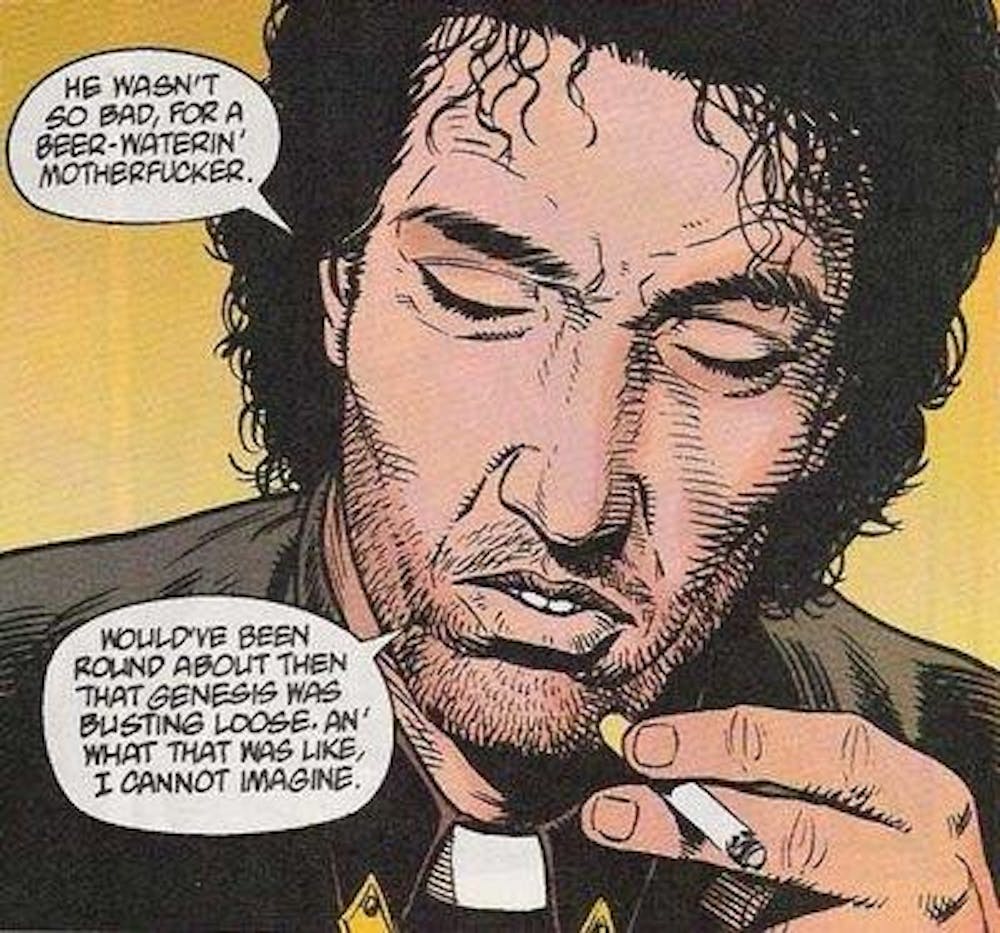
Written by Garth Ennis and illustrated by Steve Dillon, “Preacher” tells the story of a pastor named Jesse Custer who inadvertently becomes possessed by Genesis, the child of an angel and a demon.
Finding out that God “quit” and left heaven the moment Genesis was born, Custer sets out with on-and-off girlfriend Tulip and Irish vampire Cassidy on a journey to literally find God.
It’s a pretty high concept for a plot. Remarkably, though, it feels accessible as Ennis builds a cast of hilarious supporting characters who help to ease the occasionally daunting religious themes. The high concept ends up feeling like a framing device to tell a great story about three close friends and how their friendship develops through the years.
The element of comedy is illustrated no better than the main villain of the series, Herr Starr. Starr works for a secret Christian Illuminati-type group that is desperate to get its hands on Custer.
Starr starts off as intimidating but grows increasingly more hilarious and insane as he loses any shred of dignity he had going after Custer, such as when he acquires an unflattering scar across his head that looks like a certain male appendage. Every piece of dignity lost is another piece of great comedy to the reader.
One of the reasons I was hesitant to return to the story was because of its sometimes insane vulgarity. Ennis is known for going to disgustingly juvenile places, but in “Preacher,” it actually works.
The ridiculous vulgarity combined with the comic’s Western movie style elements transforms it into something unusual.
Do be warned, though, that despite the vulgarity being used wisely, some elements are bound to offend everyone in some way or another.
The best and most shocking thing to find when rereading the series is how strongly the three main characters develop through the series.
Cassidy, especially, becomes one of the most complex characters in any comic, ever.
He initially seems like a bland, booze-hound stereotype, but he slowly grows into someone you feel bad for, hate and love all at the same time.
Cassidy also shows Ennis’ attention when planning out the series. Without spoiling it, Cassidy evolves through a plot development that could seem shocking and out of place, but rereading earlier issues reveals that trait was always there. Ennis just waited to really bring that character trait to the forefront.
The one negative of the series is Dillon’s artwork. It isn’t that it is bad, it’s just that it is extremely plain and unremarkable. Most characters share similar facial traits that can make them indistinguishable from each other. He does, however, pay great attention to fight choreography, and the many fist fights Jesse and Cassidy get into have a pulpy Western attitude to them.
Revisiting “Preacher” was a great surprise for me. The vulgar elements in my nostalgia were shocked by the great deal of character development. Going back to things you used to love can indeed be rough, but sometimes it ends up revealing things you didn’t know existed in the beginning.
Revisiting ‘Preacher’ reveals more than just vulgarity
Get stories like this in your inbox
Subscribe