Status quo is the bane of comic book creators. A Latin term that refers
to the current state of affairs, in comics it’s the essential things
about a character that everyone knows. To creators and publishers, it’s
that sense of familiarity with a character that grows bland even though
fans love it.
Fans like their characters to stay the same. They want Spider-Man to be
married to Mary Jane to fulfill a sense of nostalgia. To comic creators,
though, it can represent a narrative dead end that needs changing for
more story ideas.
The status quo change can happen in a number of ways with varying
degrees of approval from fans. Something like shifting character origins
to a more modern era (like Iron Man) is usually met with approval since
it can be done easily and better fits the character’s current mythos.
Tweaks that aren’t taken well are the ones that change something dramatically in a completely ridiculous way.
The
best example of this is when Peter Parker and Mary Jane made a deal
with the devil to save Aunt May from dying. Their end of the bargain was
to erase their marriage. It was as awful as it sounds, and fans still
see it sorely despite the aftermath leading to the best Spider-Man
comics in years.
The major status quo changes, like the massive DC reboot this month,
occur through something called event comics. Event comics are the big
summer blockbusters of the comics world. Different events and plots
happening in a publisher’s universe finally connect, and the status quos
of a lot of characters are changed for not-quite forever.
Publishers pump out a number of short tie-in miniseries to help
illustrate how widely the event comic is changing the universe. For
example, the main series of “Flashpoint” didn’t show you how different
Batman was, so DC insisted you read the Flashpoint Batman tie-in.
The tie-ins can be fun and some great stories can be told
with them, but they can also make a huge dent in the wallet just to
follow the main plot.
The best event comics are those that get single
elements right. They have tie-ins that are good and add to the main
story, which is easy to follow without having to read the tie-ins. The
main series keeps a breakneck pace like a summer blockbuster and the event concludes with an
entirely new story that changes the status quo for the universe
involved. All these qualities culminate in making you feel like you just
witnessed something important.
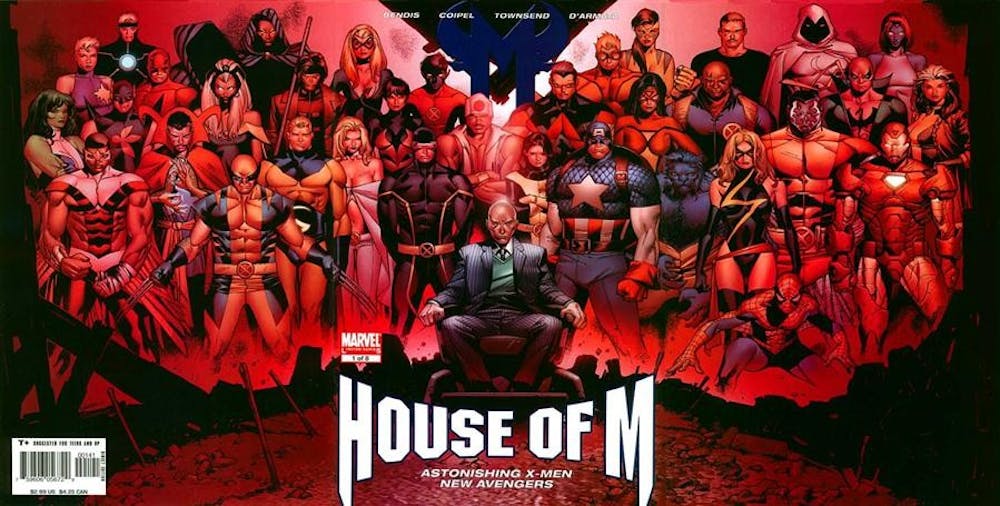
To me, the event comic that best illustrates how to do make one correctly is 2005’s “House of M” from Marvel.
To
be brief, “House of M” showed a universe where mutants were the
majority and humans the minority. It was great to read how drastically
the X-Men’s lives were altered because of this. The fallout from it,
culling the mutant population down to a slim 198, led to a greater sense
of danger for the X-Men that is still felt to this day in their comics.
Again, status quo changes can be a good or bad thing. They can create great, fun stories or dramatically stupid plots.
Regardless,
the characters will always end up reverting to the status quo
eventually, but in the meantime, why not throw a wrench into their
stories, like changing The Punisher into a Frankenstein monster (as in
“Franken-Castle”) for some fun new ideas?
Challenging the comic book status quo
Get stories like this in your inbox
Subscribe