
On the first anniversary of the magnitude 7.0 earthquake that shook Haiti and rocked the world to attention, Haitians still shuffle among rubble and live in tents.
And what do we Americans do?
We ask what happened to our money.
We gave hundreds of millions of dollars. Two IU student groups gave $25,000 to one organization, Partners in Health, alone.
The news tells us that little has changed in Haiti, and we’re angry because last time we saw that sad place on the news, we gave. More earthquakes could be in Haiti’s future as tectonic plates continue to shift, said IU Professor of Geological Sciences Michael Hamburger.
But Haiti was there between those news broadcasts, and its survivors shambled along, frustrated too that they couldn’t do more for themselves and their country.
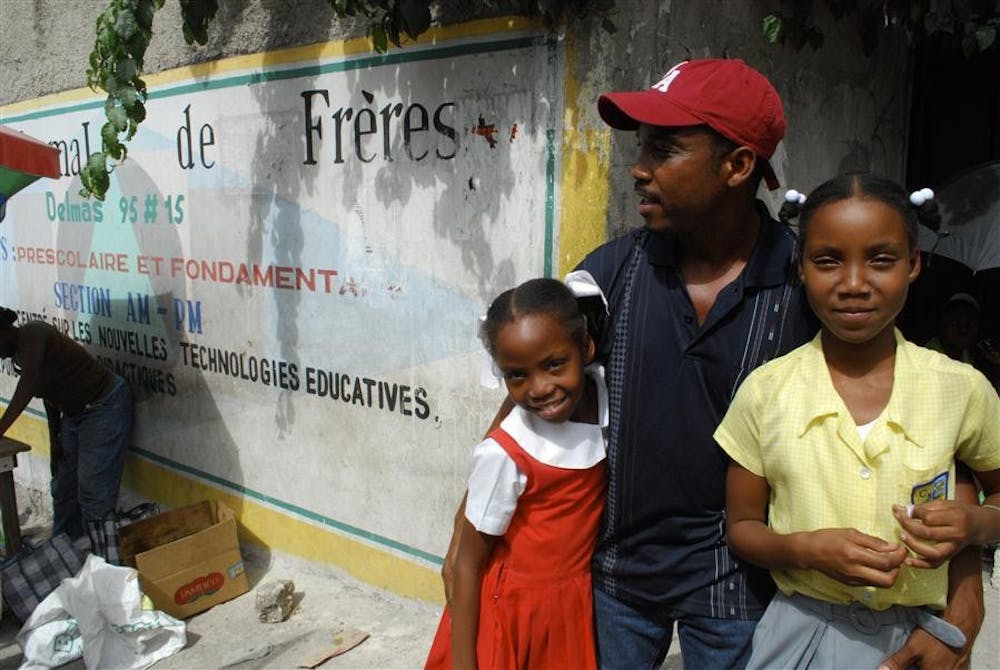
Like us, when Haitians see a desperate situation, they respond. Haiti is a country that gives.
A mother gives birth to a screaming child, then stands up, sweating, and drags her IV across the floor to a chair. There is one bed for birth. She made room for the next woman in line.
A man looks up from his rows of corn, sees you are a guest, and yells to his wife to buy cold Coca-Cola for these travelers, using the handful of gourde coins they’ve saved.
I saw these scenes in my two visits to Haiti in the past two years.
We ask, “We threw you money, why didn’t you fix yourself?”
We should be asking, why does a country just an hour and a half from Miami by plane look like a war zone? And why, after endless media coverage, did we stop paying attention?
We grew tired of your brokenness. We grew tired of your crying because we only see what we gave you, not what you give us.
At IU, you give us The Creole Institute, the foremost research center on the Creole language in the world, led by Albert Valdman, a renowned linguistic scholar.
Haiti, you gave us Nick Andre, a former IU Creole professor and father of five who sang and performed at arts events around Bloomington before moving home to take care of his family.
You inspired our local organization, Bloomington for Haiti, to arrange a film festival at the end of this month to honor your people.
You sent us your children, adopted as babies into this community.
You gave us Solfils Telfort, a research assistant at the IU Creole Institute. He was born in Haiti and grew up there before attending IU in 2008.
He has never grown tired of Haiti, nor of the Skype conversations with his family who lives in Cape Haitian, far north of the earthquake-shaken Port-Au-Prince.
Today, he asks why the world only pays attention to his country when there is a disaster.
Haiti is a place, not a tragedy. The Haitian earthquake was a tragedy, but the country is not. There is hope because Haiti is a place that gives.
Column: IU-Haiti tie remains strong
Get stories like this in your inbox
Subscribe



