
Director Murray McGibbon never directs college productions. He directs plays.
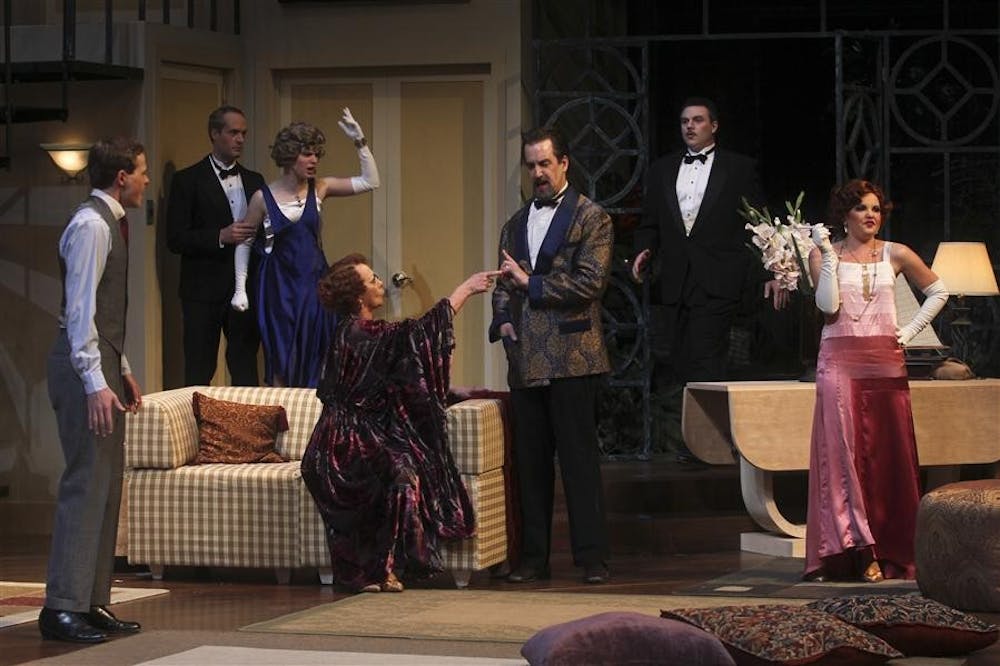
On Nov. 12, the Ruth N. Halls Theatre will become the venue for a band of ill-behaved British characters from the 1920s, engaging in a fast paced comedy of bad manners in Noel Coward’s play “Hay Fever.”
McGibbon, who has been teaching and directing theater at IU for 15 years, came to Bloomington from South Africa with a passion for Coward.
In addition to being a famous playwright, Coward was also a singer, composer and director.
If you were to examine McGibbon’s CD collection or attend one of his acting classes, you would find evidence of Coward.
“It’s a labor of love,” McGibbon said. “He is a playwright I adore.”
McGiboon said directing “Hay Fever” has been an exciting challenge for him as he has guided a cast of college students to become a comical bunch of eccentric Brits from the 1920s.
But there is nothing complicated to this play, which McGibbon described as a “gentle walk in the park, a stroll down the Champs Elysees.”
McGibbon said the beauty of the play is that there is no concrete message.
“If you are human and know how good it is to laugh, everyone can enjoy it,” McGibbon said.
IU’s production will also feature the American debut of renowned British actress Sandra Duncan.
Born in Liverpool, England, and trained at the Royal Academy of Dramatic Art, Duncan has entertained countless audiences in England and South Africa, where she won 15 “best actress” awards.
After working with Duncan in South Africa, McGibbon asked her if she would be interested in making the trip to the Midwest.
Duncan replied with an enthusiastic “Yes.”
After arriving in Bloomington on Oct. 7, Duncan’s first steps on U.S. soil have been filled with four intense weeks of rehearsals.
The members of the IU Department of Theatre and Drama is thrilled to have Duncan as part of their production. McGibbon describes her as being in a class of her own.
After playing the role of Judith Bliss at the Pitlochry Festival Theatre in Scotland 12 years ago, she said this production is a completely different play than her previous
experience.
“The students are not professionals, and it’s wonderful.” Duncan said. “It’s everything I hoped and more.”
With a less rigid production, Duncan said she has more opportunities to become an extra outrageous character.
“It’s a very silly play — saucy and light,” Duncan said.
In her British accent, Duncan described Bliss as a “scaffy” woman who can switch into drama mode at the drop of a hat.
“This has been huge fun for me,” Duncan said. “It’s been strenuous, but it has kept me active.”
This weekend, McGibbon said the actors will take the audience to a stress-free, humor-filled environment, just as Coward intended his audience to experience the play years ago.
“After London was bombed to bits in World War II, Coward wrote plays to cheer
people up,” McGibbon said. “His plays still cheer people up. It’s pure, unadulterated fluff.”
The play, which is considered a period piece, is one that Duncan feels the audience should embrace. Whether it is curiosity or desire, the style of “Hay Fever” should not be missed.
“It’s all a big laugh,” Duncan said. “I hope they’ll enjoy it.”
Laughter delivers best medicine for ‘Hay Fever’
Get stories like this in your inbox
Subscribe



