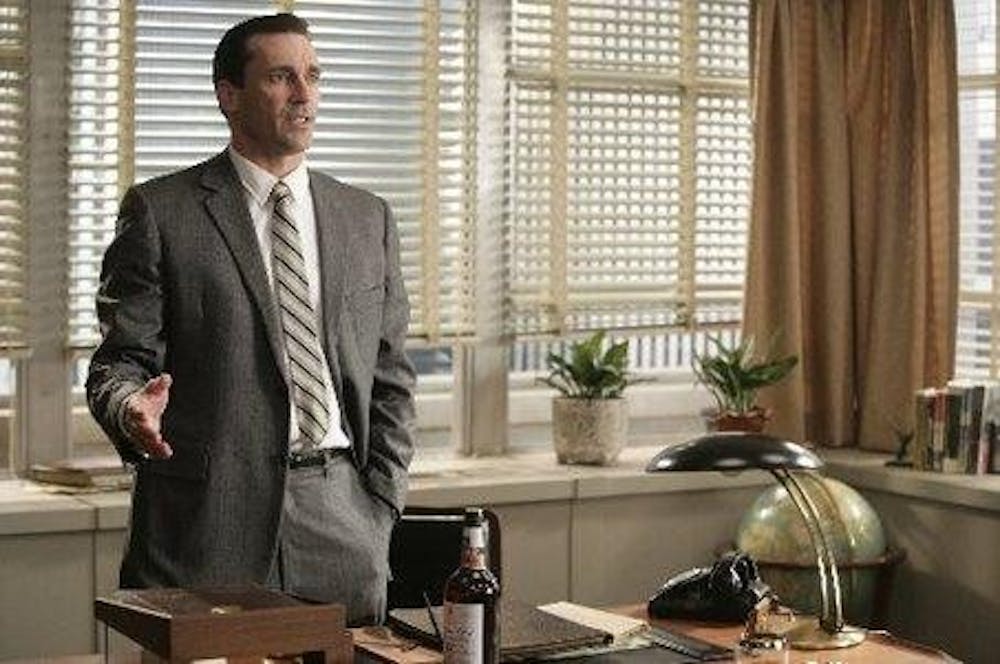
Boozing, schmoozing, smoking and sexing are all integral parts of TV’s “Mad Men,” titled after the nickname its ad men characters received in the 1950s and 1960s.
But for a show heavily laden with all these offending elements, the show gives viewers a voyeuristic, although fictional, look into the nature of the advertising business.
In a recent interview with Portfolio magazine’s Greg Smith, chief creative officer at the Via Group in Portland, Maine, he estimated that about 30 percent of the interns in the company’s program were in some way inspired by the show.
He added though, that many were in some way disappointed when they didn’t find Don Draper and company sipping whiskey all day in the office.
To some within the industry, that’s a disappointment.
Along those lines, Ted Nelson, CEO of the advertising firm Mechanica LLC, contended the show causes damage to the industry.
“It trivializes the real and important work that agencies do,” he said.
Much of the industry sentiment appears to be divided along this line: dissatisfaction with the show’s “celebration” or even acknowledgment of the industry’s sexist past and excitement that the show has revived interest in an industry that has needed some image rehabilitation for some time.
Though the show attracts about 2 million viewers in its Sunday night time slot, it accumulates about 7 million total with its reruns during the course of the week, according to TV by the Numbers.
Paired with its critical acclaim, it has become ubiquitous, spawning spoofs on “SNL,” “30 Rock” and even “Sesame Street.”
“Mad Men” has even taken control during commercial breaks.
The show is obviously a magnet for advertisers with its infinite possibilities for product placement and advertisements that are aware of the show surrounding it. That is, companies such as Clorox ran ads during the breaks that alluded to the show surrounding them.
This season, along with a tonal shift in the series, the show has inspired companies such as Dove and Vaseline to produce ads that are direct adaptations of the show itself.
They depict two creative members of an ambiguous advertising agency banging their heads against the wall for ideas. Eventually, they’re inspired by some variation of a “hot girl” holding the product. Then the spot ends, hopefully with comedic effect.
It’s some of the first advertising of its kind; however, critics debate the merit of the ads. A recent column in Newsweek claimed that Don Draper would hate the ads for their shallow approach and lack of awareness about the viewers.
With a strong cast of feminist characters on the show, why would those viewers also enjoy ads so mindless and shallow?
Good or bad, the ads are a relatively new approach that might not have been possible without the content of the show.
The 'mad men' behind the ads
Get stories like this in your inbox
Subscribe