We’ve all probably had the embarrassment of realizing some unflattering portrayal of ourselves exists on the Internet. Maybe a “friend” put up some pictures on Facebook from that bar crawl last weekend that you’d rather not remember. Or perhaps you realized the other day that your ancient MySpace is still publicly in existence.
Worse still, maybe you’ve been the victim of some kind of cyber gossip or attack. It’s possible that you’ve even been threatened.
So maybe you can imagine what it would be like to have your classmates and peers comment on your personal Web site in derogatory and threatening ways. “Faggot, I’m going to kill you,” reads one comment. “I want to rip out your fucking heart and feed it to you,” is another.
That was reality for a California teen identified as “D.C.” in court documents. His Web site, which he created himself to promote his pursuit of an acting and singing career, was littered with hostile and offensive commentary regarding explicitly descriptive scenarios of bodily harm and mocking his perceived sexual orientation.
Last week, a California appeals court ruled that the threatening posts were not protected as free speech, which allowed “D.C.” and his family to proceed in a case charging the posters with defamation and hate crimes.
“On the Internet, the First Amendment is a local ordinance,” IU law professor Fred Cate told the New York Times. He was not referring to the case in California but rather a recent case in Italy.
Last month, an Italian court ruled that Google executives had violated Italian privacy law when they failed to block a video showing an autistic boy who was bullied by other students; it was online for two months in 2006.
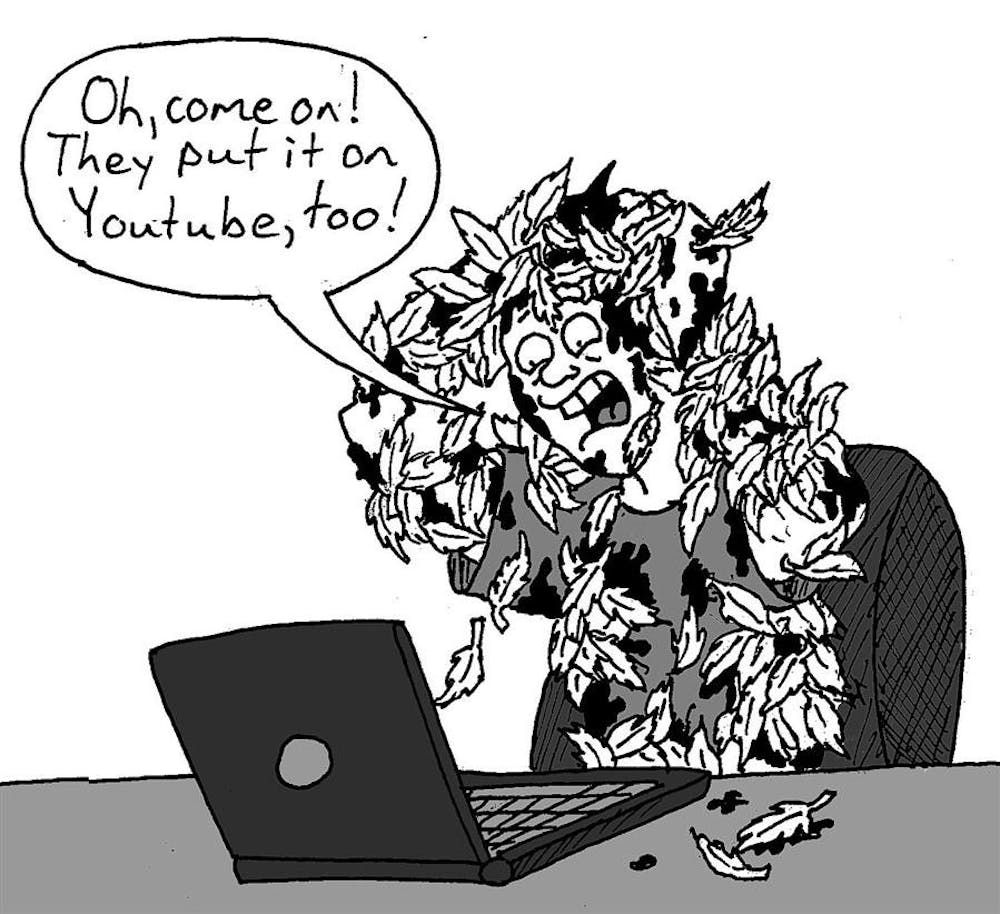
So this is not a national phenomenon but rather a global one: Who on the Internet bears the responsibility for despicable and sometimes harmful postings? Furthermore, how much responsibility do they bear?
We stand behind both the California court and the Italian court. The Internet is, for the most part, a public sphere. Content that is allowed to appear there should be no different from what you are allowed to display anywhere else publicly.
In that sense, the Internet needs a set of rules of its own. While a newspaper or TV show has its own standards to uphold, the World Wide Web is a free-for-all, where someone can be instantly besmirched, degraded and humiliated in front of literally every person they know.
Until now, we’ve reserved this privilege for celebrities and politicians.
We believe, however, that we’ve yet to really experience the profound effects cyber bullying and lack of accountability online could have on adolescents, teens and even normal adults. “D.C.,” for instance, dropped out of his school and his family relocated to North Carolina, all because of the fear and discomfort due to the online postings of his peers.
We agree that hate speech should be disallowed from the Internet just as it is in other public forums. Furthermore, legislation should aim to protect an individual’s privacy and pride in cases such as D.C.’s.
Eradicate cyberbullying
Get stories like this in your inbox
Subscribe