Seven and a half hours is a grueling amount of time to spend in a room with ideologues and bureaucrats, especially if each one has already decided the outcome of their time together. Thursday’s health-care summit took a step beyond the pain of knowing the answer before the question, to the surprise of only having a halfway predictable outcome.
This summit hyped up and blinded with lights the idea that our government is capable of working and is able to do so by synthesizing a multitude of ideas to make decisions on behalf of the American people.
The very idea of having such a meeting seems revolutionary, and yet it serves as a more conciliatory gesture toward a core of Republicans who might soon face another form of reconciliation, within the walls Congress.
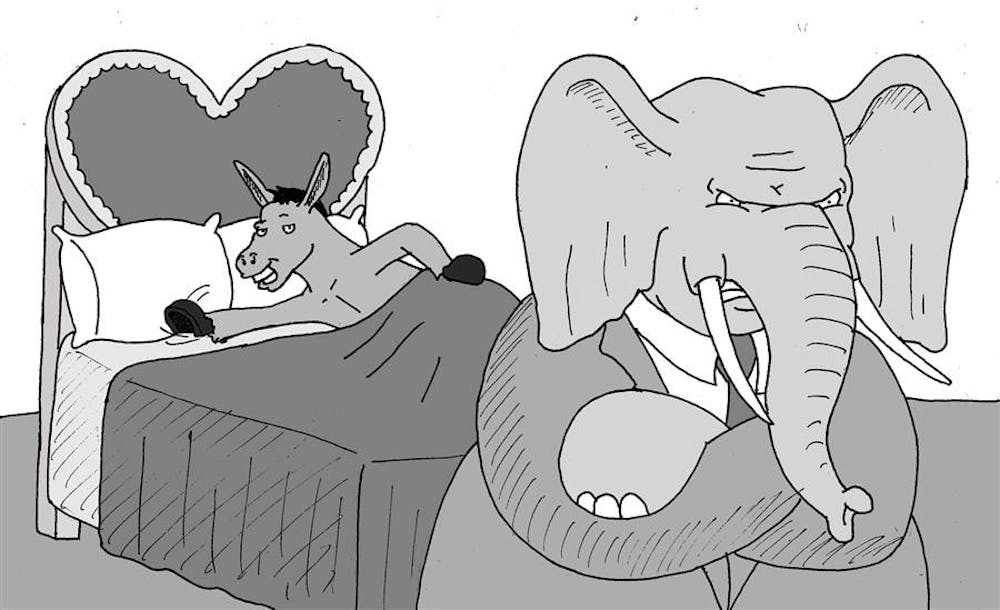
The predictable outcome for what seemed to be a first date could have been foreshadowed by the large square table at which our top lawmakers were seated.
The Republicans argued adamantly that they are not, in fact, the party of “no” but spent the majority of their time spouting talking points. They ended up talking at the Democrats instead of talking with them.
The Democratic side of the room offered a bill on 70 percent of which both parties agree. This was never enough for the Republicans, for whom the remaining 30 percent represents a light at the end of a tunnel of socialistic ideas.
What might have seemed politics as usual in Washington was interrupted by a genuine push for bipartisanship by the Democratic majority despite a Republican minority and its baby-step approach involving smaller bills that piece together to result in comprehensive reform.
The idea of inching forward is not one championed by President Obama, as he highlighted in his closing remarks after moderating the discussion. “Baby steps don’t get you to the place where people need to go. They (the American people) need help right now.”
Right now is the time to rekindle the curiosity in taking bold, not baby, steps toward bipartisanship, and this summit shows exactly how that can be done. The Democrats have begun to explore the similarities between themselves and their potential partners, the Republicans.
It will take a few more dates in the public arena before a relationship can be solidified — and even though that relationship is destined for a break-up before November, it all starts with a little bit of bi-curiosity in a homo-political world.
Republicans should get truly bi-curious
Get stories like this in your inbox
Subscribe