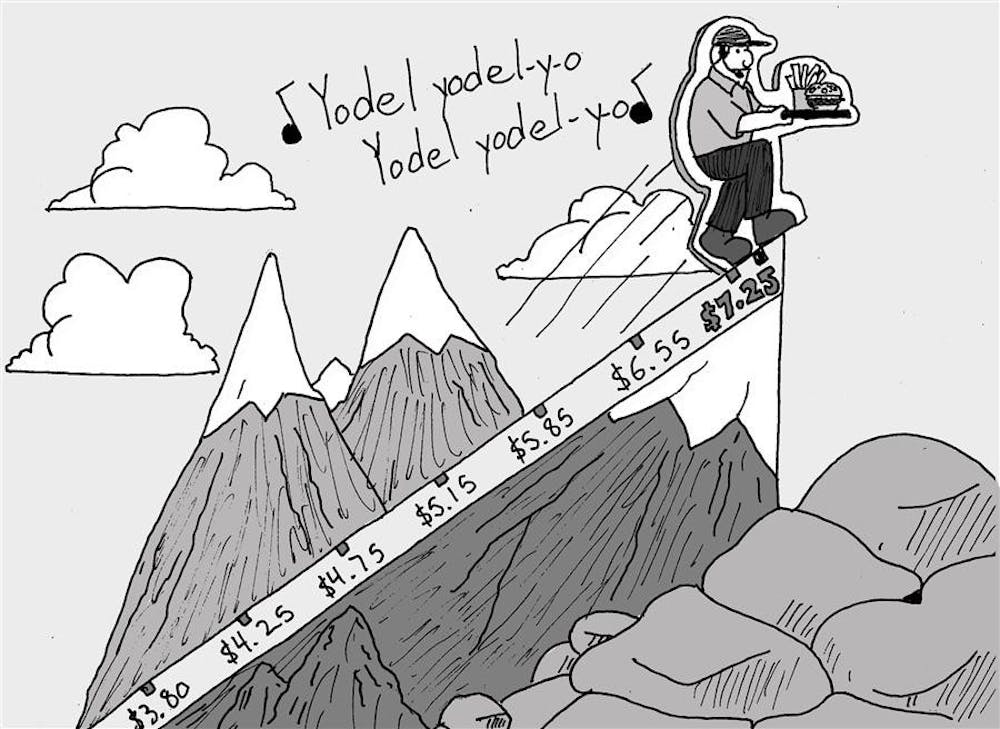
From the time most of us first started working in burger joints and gas stations, the minimum wage in America has been steadily increasing to its current rate of $7.25 an hour. The few of us who wound up with more money can extol the benefits all we want, but the question remains: What does raising minimum wage actually do for the economy?
In a newly released study, Ball State University’s Center for Business and Economic Research goes about answering that very question. The news isn’t promising.
According to the study, from 1999 to 2009, the increases in the federal minimum wage might have contributed to the loss of approximately 550,000 jobs. Just who were the newly unemployed? The study showed that the majority of those workers were unskilled teenagers, a hardly surprising piece of news to any high school student who has tried to find and keep a decent job in the last five years.
Even more alarming is the disproportionate effect on the minority population, with the unemployment rates for black teenagers rising from 28.5 percent in December 2008 to 43.6 percent in December 2009 (a year during which the minimum wage rose from $6.55 to $7.25).
In light of the results of studies like that conducted by Ball State, maybe it’s time for legislators to reassess the real costs and benefits of current minimum wage laws.
The idea of raising the wages for persons on the edge of poverty is perhaps a noble one, but it is not necessarily beneficial in its application. Not only does it not often have a negative effect on the very people it is supposed to help — unskilled workers — it has unforeseen effects on many other groups of workers.
Faced with a higher cost of labor, businesses are less likely to hire, widening the gaps between the employed and the unemployed. For workers who have recently been laid off, the battle to get back on one’s feet and support one’s family becomes even more difficult.
Work-force prejudices, such as those against the younger generations and minorities, are brought to the forefront as businesses find better and better financial reasons not to hire at all unless they need to.
In reality, minimum wage laws can do just as much harm as good. Before forcing laws based on popular folk economics, government leaders should turn to the statistics at hand and analyze the real-time consequences.
In continually pushing for higher and higher minimum wage laws, they only show their misunderstanding of true economic need in favor of good campaign bromides.
Minimum wage hike is good politics, bad policy
Get stories like this in your inbox
Subscribe