The upfront price for love was $37.50 for sophomore Bryen Yim.
Yim ended up spending hundreds of dollars, after all expenses were covered, for his new beagle, Riley Madison. But he doesn’t think the price is an issue when he comes home to an excited puppy.
“If all your roommates were gone, you’re never alone,” Yim said. “There’s always a dog to cheer you up.”
Yim decided to purchase a dog after watching and helping his roommate be a foster parent for a dog.
“It made me realize how great it was to have a dog,” he said.
Yim is one of many students who decide to own pets during college, despite the expenses.
“I see her like a baby,” Yim said. “Whatever you give a baby has to be worth it, and for me, I don’t want to give her the cheap stuff.”
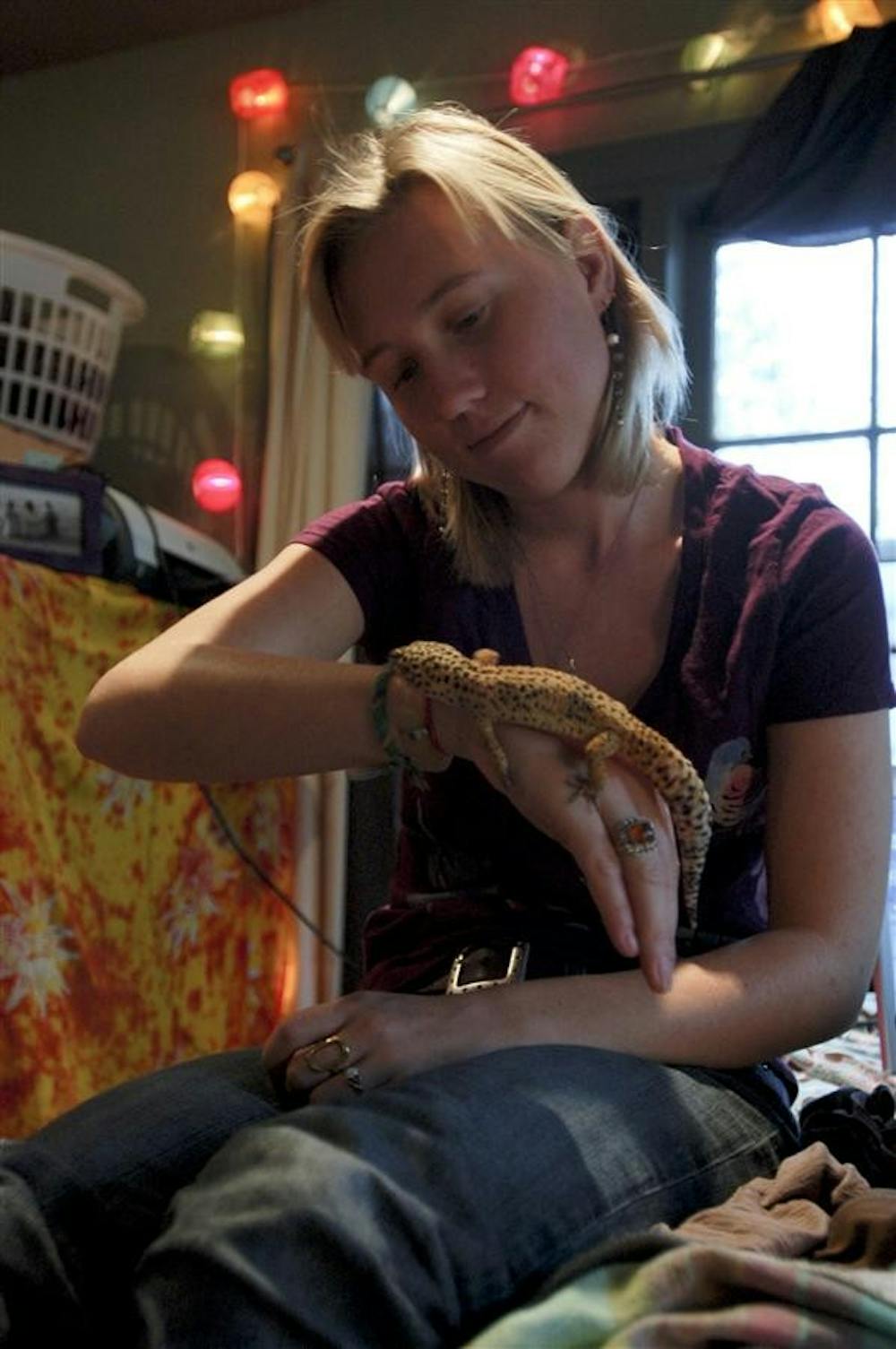
Junior Mary Mesteller also has a pet living with her, but, instead of a dog, she has a leopard gecko named Zippy.
“He was a really spontaneous, freshman-year kind of purchase,” Mesteller said.
She bought Zippy in April 2008 from a dealer in Terre Haute.
Before Zippy, she had two other lizards, but one died and one escaped. After her first two, she still had the equipment so she decided to try again.
“Everything that’s expensive was a one-time purchase,” Mesteller said.
For Yim, the expenses were higher because he had never owned a dog before. He had to buy the crate, bed, food, training treats, collar and leash.
He also purchased pet insurance for $18 per month and recommends all dog owners do the same because of the comprehensive coverage.
“To me, it’s worth it,” he said. “It’s a big relief off my shoulders.”
Another cost students face when having pets is deposits or monthly payments to their landlord or apartment complex.
Yim’s apartment complex, the Village at Muller Park, has restrictions he has to follow.
Muller Park employee Brittany Holman said residents are only allowed to have dogs, cats, fish and birds, and there is a non-refundable deposit required.
Yim had to pay $300 for his deposit because Riley Madison is less than 24 months old. He also has to pay an extra $20 per month for his dog.
His roommates also had to sign off on the pet when they registered it with the Village.
Holman said this helps avoid potential problems with roommates not all agreeing to having the pet. She also said they give pet owners tips to help avoid conflicts with neighbors.
Mesteller, however, has avoided paying extra to have Zippy live with her.
When she first bought him, she lived in the dorms, where lizards are not allowed, but she said her resident assistants were OK with the situation.
After living in the dorms, Mesteller said Zippy was going to live wherever she did, regardless of the rules.
“Zippy really wasn’t a factor on where I was going to live,” she said. “I was going to have him no matter what.”
But living arrangements are not the only factor students consider when buying a pet. Time is also a big factor.
Riley Madison requires Yim to wake up two hours earlier than normal and block out time during his day to take her for walks and to play with her.
“I always keep a good eye on her,” he said.
While Yim is in class, Riley Madison is put in her crate until he returns or a roommate comes home.
“In school I worry about her,” Yim said. “The first day, I couldn’t stop.”
Mesteller doesn’t find herself giving up too much time for Zippy, though.
“Zippy is really low-maintenance,” she said.
She also said if she did have the time for a high-maintenance pet, she would like a cat. But with vacations and frequent travel, she knows this isn’t an option for her.
The Bloomington Animal Shelter, a popular place for students to adopt pets, tries to help students realize the responsibilities of a pet before they purchase it to avoid animals being returned.
“We do a more in-depth consultation with students to make sure they understand everything,” shelter director Laurie Ringquist said.
They also check with landlords and roommates before approving the adoption.
Ringquist said they see a decent number of students bringing animals they purchased at a local pet store. She thinks this happens because the pet stores don’t talk with the students before letting them buy an animal.
She suggests students who can’t afford or handle a pet to volunteer at the shelter because then they can be around animals without having major responsibilities.
“People get attracted to the cute, fluffy faces but don’t realize the consequences,” she said.
Despite expenses, students turn to animals for company
Get stories like this in your inbox
Subscribe