Five years ago Jo Burgess, director of the Wylie House Museum, made a trip to Arlington, Mass., to visit a little-known relative of the Wylie family, Morton Bradley Jr.
While this was Burgess’ first trip to see Bradley, staff of the IU Art Museum and IU Foundation had visited him many times. At one point during most visits, Bradley would make a point to trudge up to the attic of his estate, returning with a small gift for the museum cradled in his hands.
In the course of her visit, Bradley never invited Burgess up into the attic treasure-trove containing possessions of IU’s original first family.
But soon she wouldn’t need an invitation. When Bradley died in 2004, he bequeathed his entire estate to IU, giving Burgess her first glimpse of the Wylie family relics hidden away for years.
The Wylie House Museum, located on the corner of Second and Lincoln streets, was built by Andrew Wylie, the first president of IU, in 1835. He lived in the house with his wife and 10 of their 12 children before his half-cousin Theophilus Wylie moved in. Today the house is used as a museum displaying a collection of early to mid-19th century American furnishings, including many Wylie family artifacts.
While the Wylie House Museum has been staged to appear like the inside of Andrew Wylie’s house, Burgess said a lot of the recreation was guesswork. It wasn’t until she stepped into Bradley’s attic that she truly got to know the Wylie family.
That’s when she found the letters.
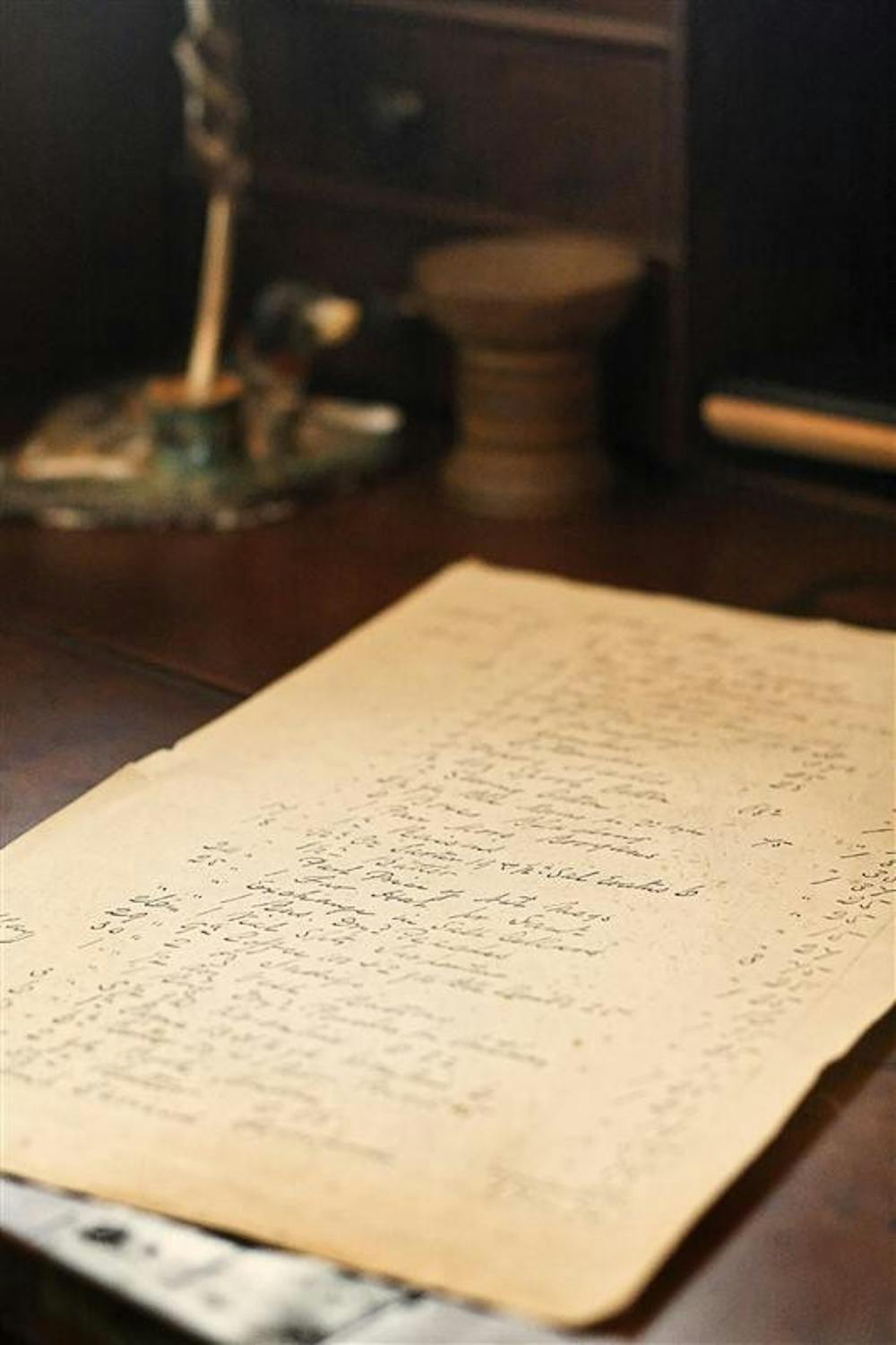
“There were seven crates of letters,” Burgess said. “They were big, wood crates stuffed full of letters all packaged and tied up in white strings.”
She almost immediately started reading the correspondence and was shocked by what she discovered.
“It was every historian’s dream,” she said. “They wrote about everything and it was so rich and deep. The whole Wylie family kept letters, so you got both sides of the correspondence, and that’s so rare.”
Most of the letters described day-to-day life. Burgess said she was amazed by how much detail the Wylie family put in the letters. They wrote about what they were eating, how they cooked and preserved food, what they bought and how they raised their kids.
“I think what amazes me the most is just how despite what is going on in the world today, human relations haven’t changed that much,” Burgess said. “People deal with the same things, raising kids, aging parents, managing money, looking for work, family squabbles. It’s people and that’s interesting.”
It wasn’t long after Burgess started reading and transcribing the letters to a more legible format that she quickly realized the job required more time than she could allocate.
“I realized it was going to take longer than I have left in my career to finish reading them at that rate,” she said.
The solution was to go on sabbatical. Burgess recently returned from a two-week break devoted entirely to the letters. So far she has transcribed almost 2,800 pages. And she has only transcribed 48 of the 80 years of correspondence.
While Burgess is the only Wylie House Museum staff member reading the original letters, interns from the IU School of Library and Information Science assist in logging the entries for future retrieval.
School of Library and Information Science intern Erin Dobias spends about 12 hours a week working on the letters. She said each intern is assigned a year to read – Dobias has the year 1883 – and enter into a database. After reading each transcribed piece of correspondence, Dobias enters basic information, a summary and keywords for future referencing.
Dobias and Burgess said reading the correspondence is like watching a soap opera. The letters are full of gossipy family drama and financial woes.
“Reading about the health-related stuff is interesting to me,” Dobias said. “They think the weather, or going somewhere with better weather, will cure everything.”
After dedicating so much time to reading the letters, Burgess said the Wylie’s have almost come to life.
“They’re like my family now,” she said.
Documents shed light on IU’s original first family
Wylie House Museum holds family artifacts
Get stories like this in your inbox
Subscribe