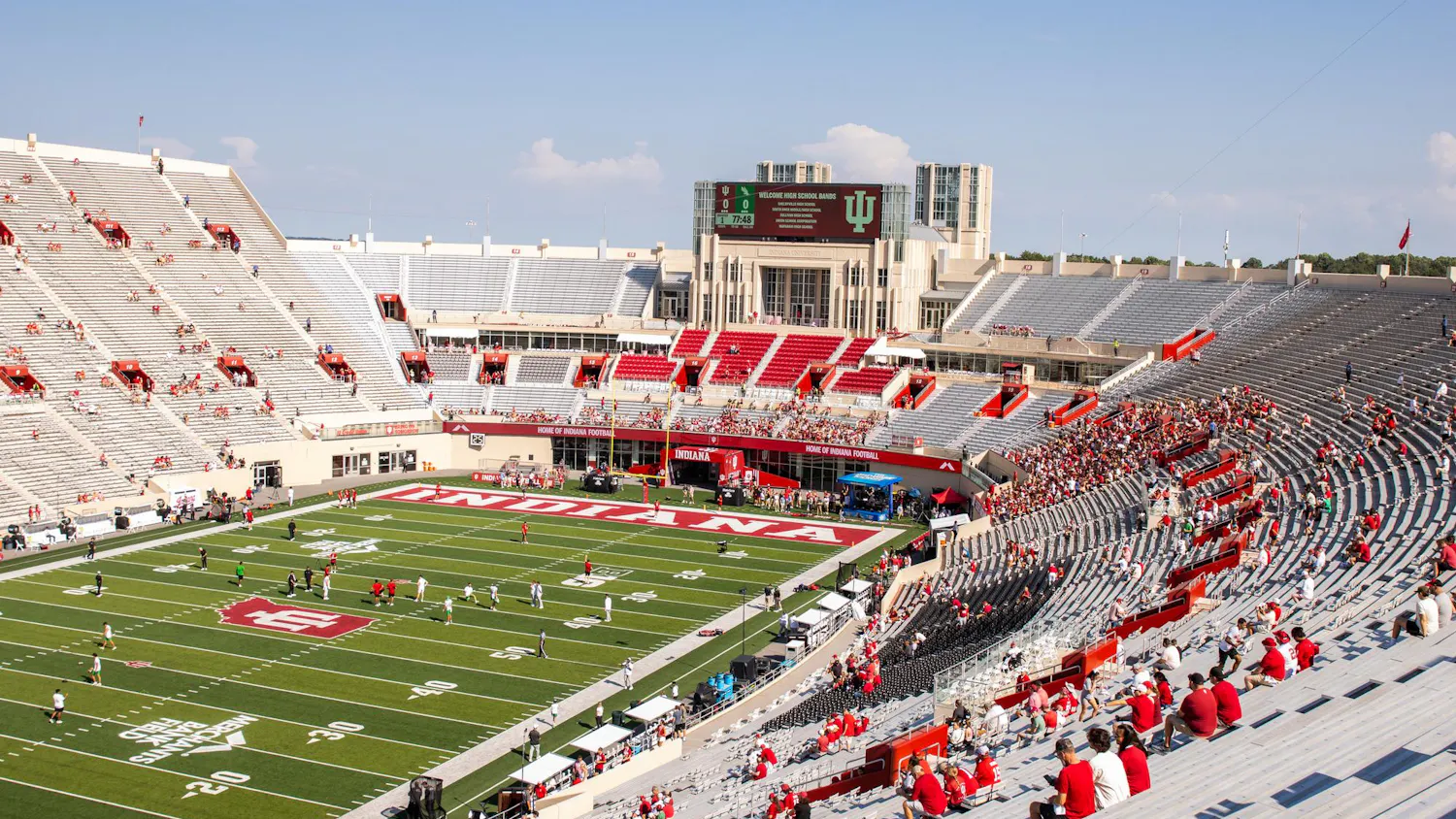
In a recent speech introducing his leadership team, IU President Michael McRobbie cited IU’s recent drop in the U.S. News and World Report college rankings as a sign of IU’s “static” conditions. At the same time that it frets over its slide from 70th to 75th, IU trumpets its status as a program “to look for” – whatever that means. But what kind of relevance do these rankings really have?\nEvery August, U.S. News publishes its rankings, sending college administrators, high school counselors and prospective students – as well as their parents – into a frenzy. It’s the most prominent in the growing pile of rankings for colleges, each with different weightings of every last scrap of data.\nThe researchers for these rankings are doing their homework, but their eventual findings are dubious. Scanning the lists of data that composes the U.S. News rankings, one finds everything from SAT scores to the alumni giving rate and everything in between. Yet, by breaking down schools into unimaginative, one-dimensional “tiers,” U.S. News forces all universities into competing for one spot as “the best.” \nSome reformers, like rankers at The Washington Monthly, want to change the way the rankings are compiled by resetting the priorities of institutions aiming for higher spots on the rankings. Yet, their rankings have come under further criticism from other rankers, leading one to wonder: Do any of these rankings mean anything for the average student? Are we affected daily by the number of papers published by faculty?\nIt’s the quest for “the best” that taints every one of these rankings, condemning a multifaceted experience to one number. Eighth Biggest Party School, 11th Best Business School, 58th Best College – all are rankings based on the premise that the sum of the mounds of data can be objectively ranked. Of course, “the best” university for one magazine or another doesn’t necessarily correspond to “the best” or even a good university for a particular student. The urge to rank has brought about the mentality that one should seek out “the best” university rather than the right university. \nSo, when anyone, including IU administrators, refers to the U.S. News rankings as a sign of our direction as a university, the danger of confusing ranking for performance becomes far greater. Even though McRobbie included a caveat about the variety of views on the subject, we shouldn’t allow rankings to dictate the action IU takes. IU doesn’t have Harvard’s gargantuan endowment or Texas A&M’s ROTC program. As a result, trying to compete with entirely different schools on a fixed scale stifles the image of what our school should be.\nThe rankings must serve as just one guide, rather than a rigid framework that universally defines quality. IU should try to fulfill its unique mission to educate, not simply submit to the painful hazing ritual of the U.S. News rankings. For parents and prospective students, the information the rankings compile should drive judgment more than the wobbly rankings themselves.
Who evaluates the evaluators?
WE SAY: College rankings tell misleading tales.
Get stories like this in your inbox
Subscribe