A recent U.S. Court of Appeals ruling might open the door to limitations on college students' First Amendment rights in Illinois, Wisconsin and Indiana. \nOn June 20, the U.S. Court of Appeals for the 7th circuit voted 11-4 to overturn a lower court ruling in Hosty v. Carter. This could effectively allows First Amendment restrictions on high school journalists, which were established by the Supreme Court in 1988 with Hazelwood School District v. Kuhlmeier, to be applied to college students as well. \nIrwin Gratz, president of the Society of Professional Journalists, expressed dread with the court's decision. \n"This ruling was exactly the ruling we hoped we would not get," Gratz said. "We hoped the Hazelwood ruling, which we didn't like to begin with, would not apply to college students ... Hazelwood is directly antithetical to the principles of the First Amendment." \nDave Adams, IU journalism professor and publisher of the Indiana Daily Student and the Arbutus, said the case is "murky" at best and that the Hazelwood comparisons could be incorrect.\n"For some of these news reports to say that it takes the Hazelwood standard and applies it to college and university situations, I don't think it does," Adams said. "There's one sentence that kind of says that, but the whole case is really about 'they don't know whether it does or not.'"\nThe Student Press Law Center, a group which promotes student press rights, has been following the case closely since 2000. \nMark Goodman, executive director of the SPLC, said he was disappointed in the way the case was handled.\n"This court just made a mistake," Goodman said. "The dissenting opinions make it clear how these judges failed."\nAccording to the dissenting opinion of four of the circuit judges, Governor's State University newspaper The Innovator chose to publish hard-hitting stories that were critical of the school administration.\nIn the case summary, the dissenting judges said the ruling flew in the face of the \nconstitution. \n"Few restrictions on speech seem to run more afoul of basic First Amendment values," the summary said, adding, "College students -- voting-age citizens and potential future leaders -- should feel free to question, challenge and criticize government action." \nAdams, who is also head of the SPLC Board of Directors, said he was worried about the vague content of the case, \n"I'm afraid it's going to be over-misinterpreted in that many public colleges and universities are going to use this as an attempt to silence expression," he said. "That's what happened with Hazelwood."\nGoodman said the ruling could apply "in any context to a subsidized venue on a college campus." He added that it could give school officials the right to prevent students from bringing certain speakers to campus or showing certain films. \nThe dissenting judges in the case shared this view. \n"This court now gives the green light to school administrators to restrict student speech in a manner inconsistent with the First Amendment," they wrote. \nGoodman said the SPLC is going to actively inform student journalists what they can do to preserve editorial authority.\n"We're going to encourage college journalists to demand administrators to sign off on policies that give papers editorial freedom and independence from the university," he said.\nGratz said he agreed with Goodman, adding what he thought were appropriate measures students could take when their press rights were threatened. \n"Once you're in that situation, take extra steps with the administration to establish bonds of trust," he said.\nHe added that student journalists could regularly meet with administrators to discuss the content of their publications, even if students find they are constantly crossing a line with administrators.\n"It is helpful to know where the line is in advance," Gratz said.
Student free speech rights 'murky' after case
College papers, yearbooks could face limited liberty
Get stories like this in your inbox
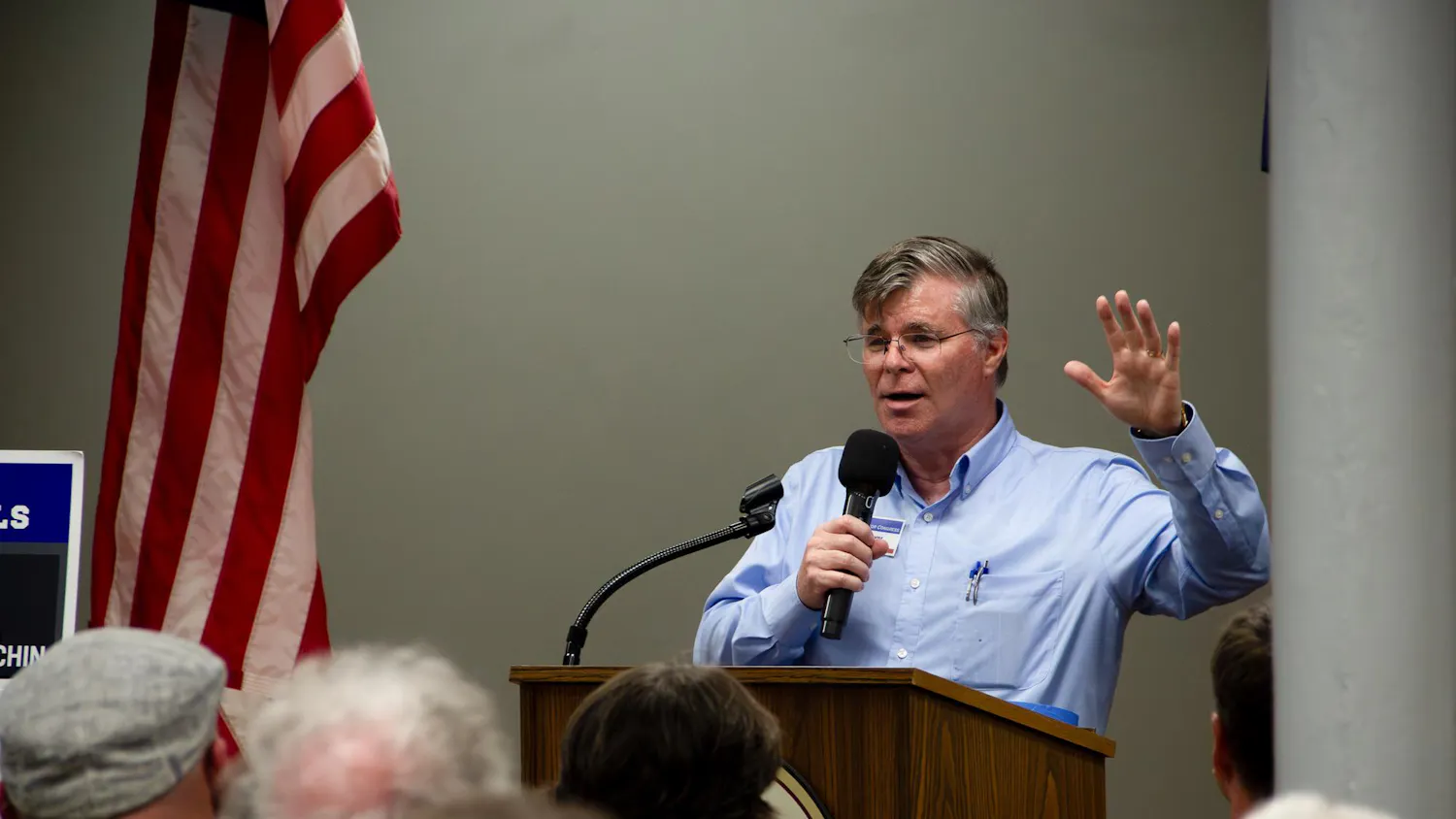
Subscribe