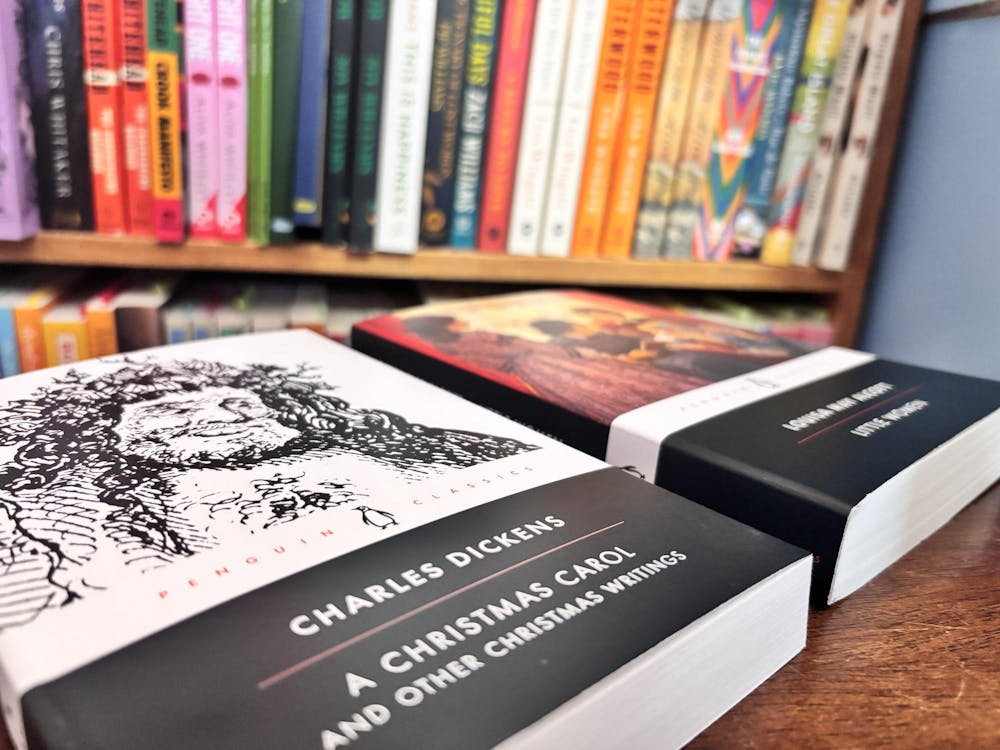
There is a clarity that descends upon the world when winter arrives. The oranges of autumn fade into shades of silver and white, the air gets colder and we begin to retreat toward the warmth of a cozy armchair and a good book.
In this season of long nights and cold frosts, it's nice to seek out stories that offer either the warmth and comfort of a sanctuary or the icy, sharp thrill of a world buried in the white snow.
While the modern holiday book displays are often crowded with current bestsellers, I think the true magic of the season is found in classics that have braved the cold for generations. This winter season is a good time to rediscover some great page-turners that perfectly capture the resilience, mystery and quiet wonder of the cold.
Though Alcott's tale of the March sisters spans several years in the novel, it's heart is forever tied to a snowy New England Christmastime. From the famous opening lines of a choir of sisters grumbling about a "Christmas without any presents," the novel immediately begins to establish itself as the ultimate guide for finding joy within the four walls of your home.
The genius of “Little Women” is in its portrayal of winter as a season with its own living temperament. There is a quiet beauty in the “Merry Christmas” chapter, where the sisters wake up to find colorful books under their pillows only to immediately sacrifice their indulgent breakfast for the starving Hummel family. Whether Jo is shoveling paths in the snow to reach the lonely boy next door or the girls are performing “The Witch’s Curse” in their chilly attic, the biting cold outside only serves to make the setting of their home feel more sacred. Alcott’s book is about the interior light we must find for ourselves when the sun sets early, an important lesson to learn as the days get shorter, shifting into the holiday season and the new year.
It is easy to let the many film adaptations dull the sharp edges of Charles Dickens’ 1843 masterpiece, “A Christmas Carol.” To return to the original text, however, is to rediscover a frighteningly effective ghost story.
Dickens’ prose is remarkably well developed, driving the reader through one single and very transformative night for main character Ebenezer Scrooge.
What makes it truly page turning is the constant sensory-rich descriptions. The “frosty rime” on Scrooge’s wiry chin and the sputtering copper where the Cratchit’s meager pudding boils are both vivid examples. Perhaps most importantly in the story is the terrifying and silent finger of the Ghost of Christmas Yet to Come pointing toward the weed-choked grave. It remains a perfect winter read because it reminds us that the season is not just for celebration; it also calls for the necessary melting of frozen hearts.
For those who find the sweetness of the holidays a bit too cheesy, Agatha Christie offers a sharp alternative. In this 1938 classic, Christie traded her usual “cozy” tone for an intuitive locked-room mystery.
The plot is set when the tyrannical patriarch Simeon Lee — a man who takes cruel pleasure in taunting his own children — gathers his alienated family at his home, Gorston Hall, for the holidays, only for the reunion to be shattered by a terrifying, “pig-like” scream. When the door to the study is broken down, the family is met with a scene of chaos in overturned furniture, smashed china and Simeon dead in a staggering “pool of blood.”
The atmosphere is one of an unrelenting high-stakes tension and suspense. With the snow piling up against the manor walls and a house full of relatives with bitter motives, the novel is a masterclass in closed-circle mysteries. Christie’s book is the perfect intellectual puzzle to solve while curled up by the fire. It puts a cold and calculating mind at work, even behind the most festive decorations.
If you wish to truly feel the existential power of the elements, there is not a more harrowing account than “The Long Winter” of Laura Ingalls Wilder’s “Little House” series. Based on the Hard Winter of 1880-1881, the young adult novel tells of the Ingalls family’s survival in the Dakota Territory, surrounded by howling blizzards for seven long months.
This is a perfect survival thriller, with a narrative rhythm dictated by the wind and the exhausting tasks of staying alive. Grinding wheat in a coffee mill for hours just to make a single loaf of bread and twisting tall marsh grass into “sticks” for fuel until their hands are red and swollen are just a couple examples of what it takes the characters to survive in this book.
Wilder’s style makes you feel the ache of the cold and the mental weight of isolation in a simple way, as the supply trains stop running and the kerosene lamps go dark. It is a testament to human endurance that makes the simple comforts of a modern winter feel like a luxury and is a wintry book to read for anyone, young and older.
As the frost keeps covering the windows of campus or in your own home, remember that local Bloomington booksellers are ready to help you bring together your winter reads. Both Morgenstern Books & Café and Book Corner hold beautiful editions of these timeless tales. May the holidays be bright and the winter be filled with stories to keep you cozy and the cold at bay.