
Three retired Indiana University faculty members filed a lawsuit against the Board of Trustees on Wednesday over BOT-19 and a section of Indiana code, which bar retired faculty from engaging in faculty governance.
The former professors, Steven Sherman, Alex Tanford and Russell Skiba, called for declaratory and injunctive relief to prohibit the board from enforcing the policies.
In an April budget bill, Indiana established IC 21-38-11-3, which limited votes taken in faculty governance organizations to current employees. The board enacted BOT-19 in June, stating that only current faculty can participate in faculty governance.
Tanford, a former law professor, said retired faculty serve on a wide range of committees all over campus and not only want to give back to the university, but are asked by deans and department chairs to serve.
“The retired faculty are the ones who have time and experience and knowledge about how this campus works,” Tanford said. “I don’t know what the university is going to do without us.”
One example, Tanford said, is retired professor Steven Sherman, who has served on the benefits committee for around 30 years. That experience, he said, has provided deep knowledge on how to deal with problems and university benefit negotiations.
IU did not immediately respond to a request for comment.
The plaintiffs are seeking a judgment that BOT-19 is unlawful because they claim it goes beyond the trustees’ legal authority, and that IC 21-38-11-3 is unconstitutional because its addition to the budget bill violated the Indiana Constitution’s single-subject rule. This rule limits acts to one subject that is clearly expressed in the title to guarantee transparency.
The budget bill was titled: “AN ACT to amend the Indiana Code concerning state and local administration and to make an appropriation.” The court documents argue that because faculty governance organizations are defined as advisory and have no direct effect on university finances or administration, IC 21-38-11-3 is unconstitutional.
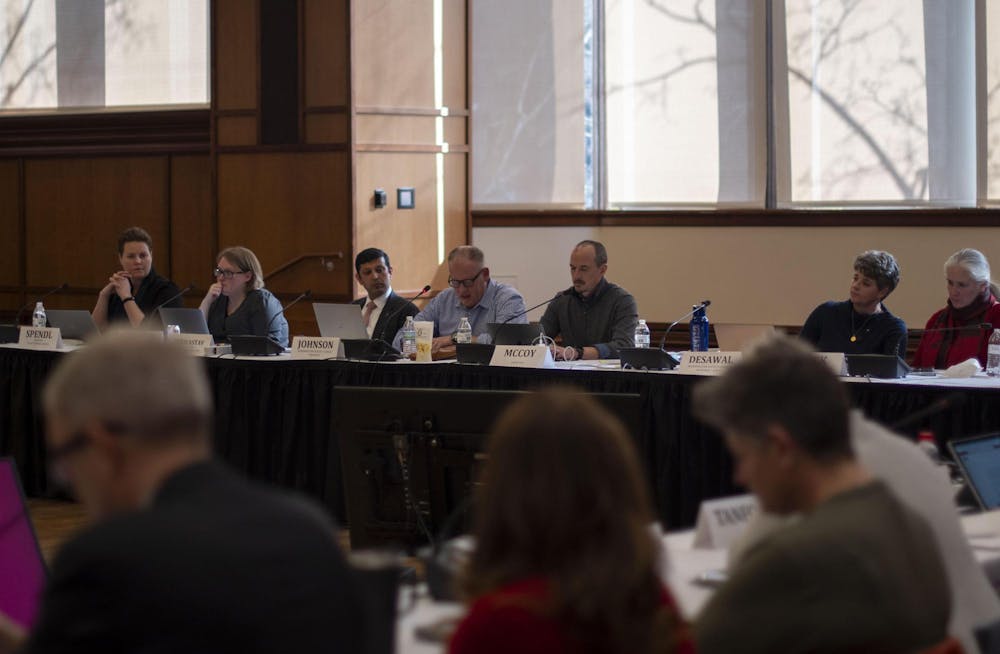
Sherman and Tanford were elected to serve as voting members of the Bloomington Faculty Council as the two retired faculty representatives until June 2026, positions that have been in place for more than 40 years. The BFC is an elected group of faculty, administration and students who make decisions on behalf of the Bloomington campus’ faculty. The new policies prohibit the retired faculty from participating, even in a nonvoting capacity.
Skiba plans to run for an emeritus seat on the BFC for the 2026-2028 term and has volunteered to serve on several BFC committees. Due to BOT-19, he has not been appointed to any.
According to the plaintiffs’ motion for a preliminary injunction, the retired professors believe they are likely to succeed in their claims that BOT-19 is unlawful, and IC 21-38-11-3 violates the single-subject rule. The plaintiffs argue irreparable harm will occur because Sherman and Tanford were elected to serve on the BFC but cannot do so unless the injunction is granted.
“No statute gives the Trustees the power to decide who can serve on faculty councils, committees, boards and other faculty governance bodies or to interfere with the Faculty Council’s process for appointing qualified members of committees,” the document says.
The plaintiffs claimed no public notice or opportunity for discussion was given for the provision in the budget bill, according to court documents.
Tanford said the plaintiffs did not talk directly to university leadership prior to filing the lawsuit and added that there is not anyone that they could go to.
Many retired faculty are angry and have not received any explanation from the university for the policies, he said.
“Once we speak up, lo and behold, we get disenfranchised,” Tanford said. “We’re not just going to sit by and let the administration — without being challenged — take the university in directions that we think are ill advised.”
A hearing on the motion for preliminary injunction will be held on Sept. 3. If granted, Sherman and Tanford would be allowed to continue serving on the BFC until a final legal resolution.


