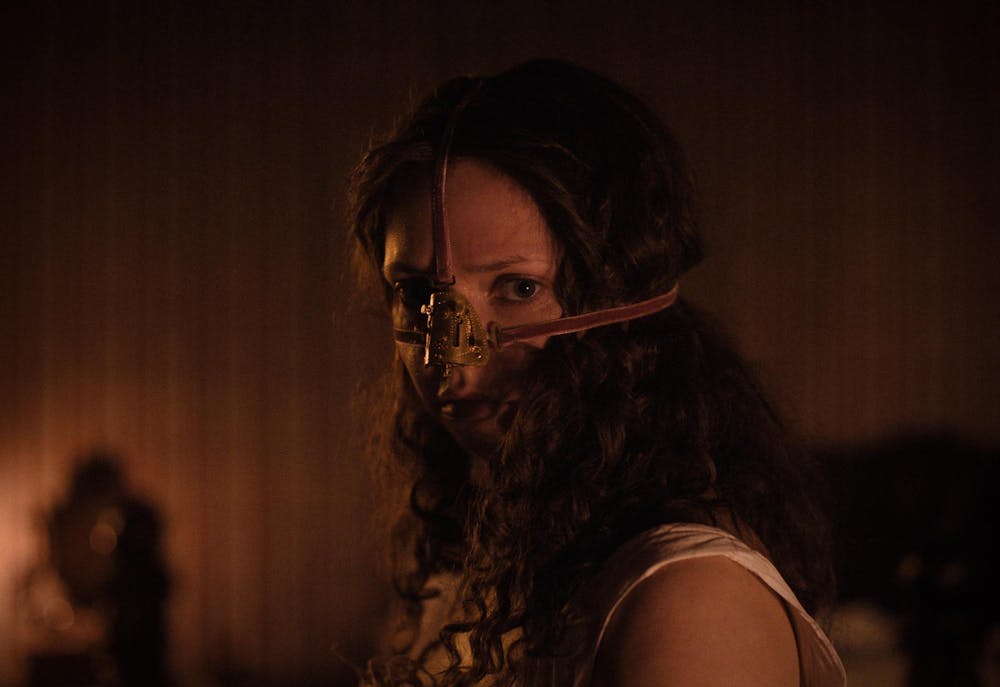
“The Ugly Stepsister” is the newest Cinderella adaptation that takes a body horror twist on the classic story. While the film successfully reworked the original, the filmmaker, Emilie Blichfeldt, could have pushed its visual style further.
“The Ugly Stepsister” follows Elvira (Lea Myren), one of the stepsisters from the Brothers Grimm fairytale “Cinderella.” Elvira is determined to marry the prince but must go to drastic measures to transform herself into what society deems to be beautiful.
The Norwegian film hit theaters in the U.S. on April 18 after premiering at the 2025 Sundance Film Festival, and it has received positive reviews from critics and audiences, with people praising the film’s distinctive take on the fairy tale.
Focusing this story on the stepsister was an interesting perspective on the classic tale. I personally don’t think I’ve seen a Cinderella story from the perspective of one of the stepsisters. I think it provided the plot with more depth by exploring this character that is so often depicted as a villain.
In approaching all the characters from a neutral perspective, not putting any of them on a pedestal, I think the film was able to properly explore the complexities of each character and their role within the well-known story. It portrays the characters as much more morally grey, even Cinderella, who is normally viewed as the victim and hero of the story. I don’t even think this film places any character in the role of the “villain,” treating societal standards themselves, and Elvira’s insecurities, as the real villains of the story.
The film actually shows three distinct journeys of transformation, not just the magical bibbidi-bobbidi-boo of the original, which is where “The Ugly Stepsister” really shines. The most well-known transformation is Cinderella’s, in which she goes from rags to riches with the help of fairytale magic. But this film centers on Elvira’s transformation, which shows the gory reality of what changing one’s appearance without the flick of a magic wand actually looks like. Through this transformation, we see Elvira leave more and more of her real self behind as she tries to fit in with societal standards and yet is never good enough. Even after changing her nose, removing her braces, eating a tapeworm to lose weight, sewing on new eyelashes and getting a completely new wardrobe, the prince still does not choose Elvira, and she is left only with fractured pieces of her original juvenile self. This is a great contrast to the final transformation of Elvira’s sister, Alma, who is shown becoming more and more herself, rather than turning into something society wants from her.
The different explorations of transformation really help flesh out the original story as they provide a richer message than someone magically turning her life around with the help of a makeover from a fairy godmother.
However, I do wish the film had spent more time on Alma’s transformation as it was really only seen in background. Arguably, it’s the most important transformation of the movie as it is encapsulates the true heart and message of the film — that changing yourself to meet others’ standards is dangerous. I think the film could have been even more impactful if it had explored her character and transformation in more depth.
The film was also advertised to have a very distinctive and disturbing style, similar to the 2024 body horror film “The Substance.” Going into the film, I was expecting a very in-your-face and over-the-top film that mixed the Victorian-era with a modern twist, but honestly, I don’t think they leaned enough into this campy style.
Some of these modern elements were present in the music and a few of the costumes, but I think the film would have been a lot more effective and memorable if it had a stronger visual style. I think they could have played around more with the editing to achieve this. And while the costumes were gorgeous, I wish they had gone a bit more over the top with them — maybe more similar to the costumes in the Snow White adaptation “Mirror Mirror.”
This was Blichfeldt’s first feature film, so I think it was a very strong debut. Regardless, I hope she can lean into more eccentric and over-the-top elements in her future work, as the rest of the film had all the potential to be as impactful and unforgettable as the stylistically one-of-a-kind “The Substance.”